2025: Irreversible Changes in the Crypto Market


Original Article Title: 11 Themes of 2025: The Year It Changed for Everyone
Original Article Author: Stacy Muur, Crypto Researcher
Original Article Translation: Deep Tide TechFlow
Abstract:
· Institutions Become Margin Buyers of Cryptocurrency Assets.
· Real-World Assets (RWAs) Transcend from a Narrative Concept to an Asset Class.
· Stablecoins Emerge as Both a "Killer App" and a Systemic Weakness.
· Layer 2 Networks (L2) Consolidate into a "Winner Takes All" Paradigm.
· Prediction Markets Evolve from Toy-like Applications to Financial Infrastructure.
· Artificial Intelligence in Crypto (AI × Crypto) Shifts from Hype Narrative to Actual Infrastructure.
· Launchpads Industrialize, Becoming the Internet Capital Market.
· High Fully Diluted Valuation (FDV), Low Circulating Supply Tokens Proven Structurally Uninvestable.
· Informational Finance (InfoFi) Experiences a Boom, Expansion, then Collapse.
· Consumer-Grade Crypto Returns to the Mainstream, But Through New Digital Banks (Neobanks) Rather Than Web3 Applications.
· Global Regulatory Landscape Gradually Normalizes.
In my view, 2025 was a turning point for the crypto space: transitioning from a speculative cycle to a foundational, institutional-scale structure.
We witnessed a repositioning of capital flows, infrastructure reorganization, and the maturation or collapse of emerging sectors. Headlines about ETF inflows or token prices are just the surface. My analysis unveils the deep structural trends that underpin the new paradigm for 2026.
Below, I will dissect the 11 major pillars of this transformation, each supported by specific data and events from 2025.
1. Institutions Become the Dominant Force in Crypto Capital Flows
I believe that 2025 witnessed institutions taking full control of liquidity in the crypto market. After years of observation, institutional capital finally surpassed retail, becoming the market's dominant force.
In 2025, institutional capital not only "entered" the crypto market, but crossed a significant threshold. The marginal buyers of crypto assets transitioned for the first time from retail to asset allocators. In just the fourth quarter, the weekly inflows into a U.S. Bitcoin spot ETF exceeded $3.5 billion, led by products like BlackRock's IBIT.
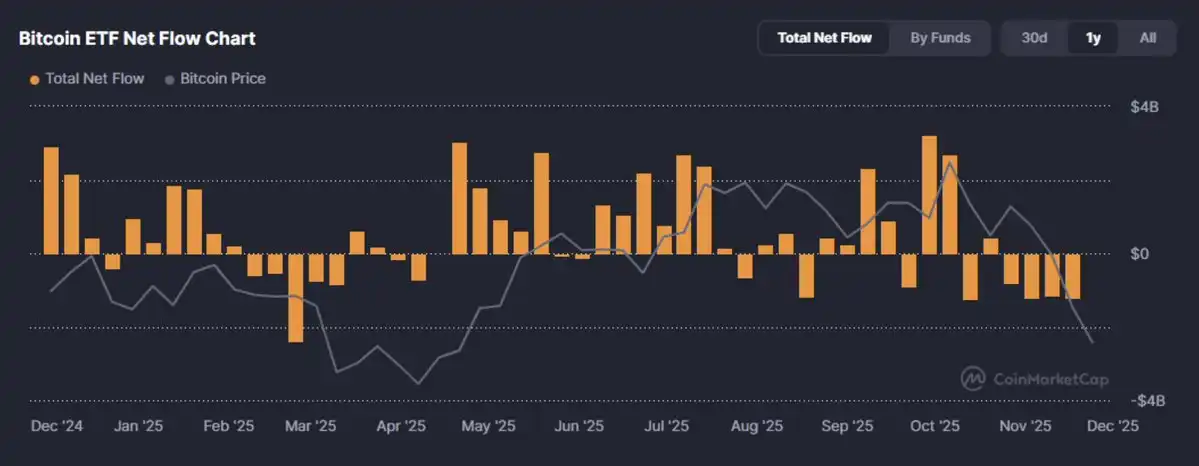
These capital flows were not random, but a structurally authorized reallocation of venture capital. Bitcoin is no longer seen as a curiosity-driven asset but rather as a macro tool with portfolio utility: digital gold, a convex inflation hedge tool, or simply an uncorrelated asset exposure.
However, this shift also brought a dual impact.
Institutional capital flows are less reactive but more sensitive to interest rates. They have compressed market volatility while also tethering the crypto market to the macroeconomic cycle. As a Chief Investment Officer put it, "Bitcoin is now a liquidity sponge with a compliance shell." As a globally recognized store of value, its narrative risk has significantly decreased; however, interest rate risk still exists.
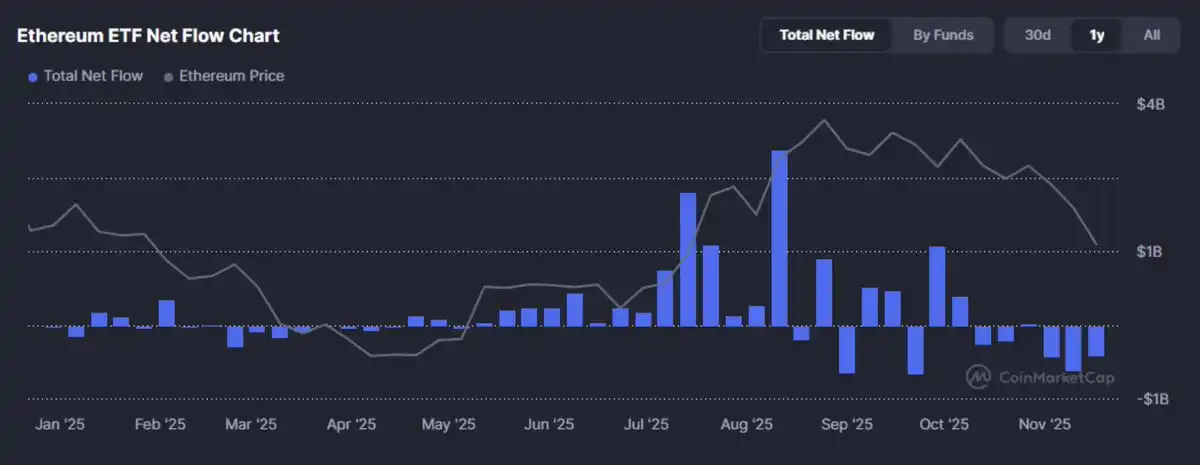
This shift in capital flow has far-reaching effects: from fee compression on trading platforms to reshaping the demand curve for yield-bearing stablecoins and Real World Asset (RWA) tokenization.
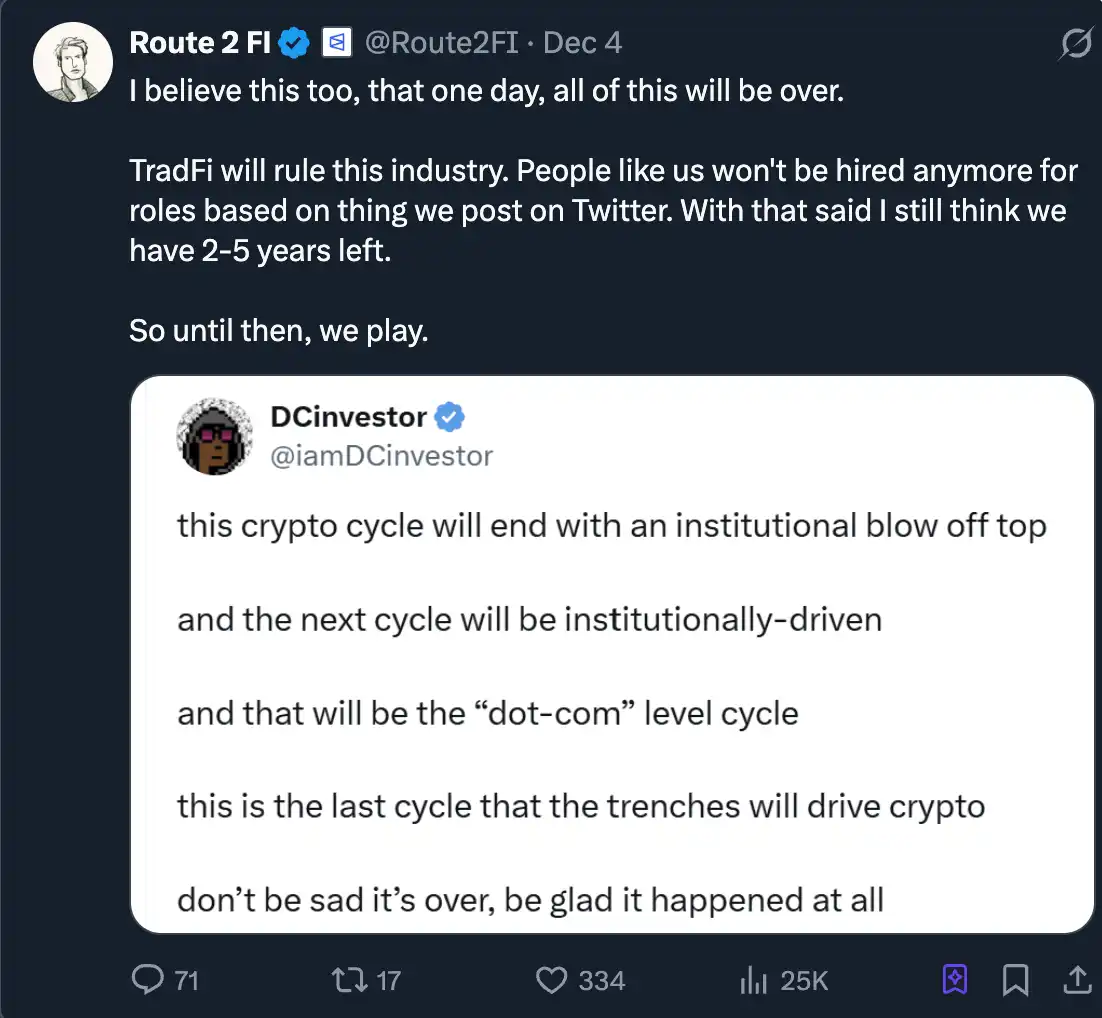
The next question is no longer whether institutions will enter, but how protocols, tokens, and products will adapt to those capital demands driven by the Sharpe Ratio rather than market hype.
2. Real World Assets (RWAs) Transitioning from Concept to Asset Class
In 2025, tokenized Real World Assets (RWAs) have transitioned from a concept to the infrastructure of the capital markets.
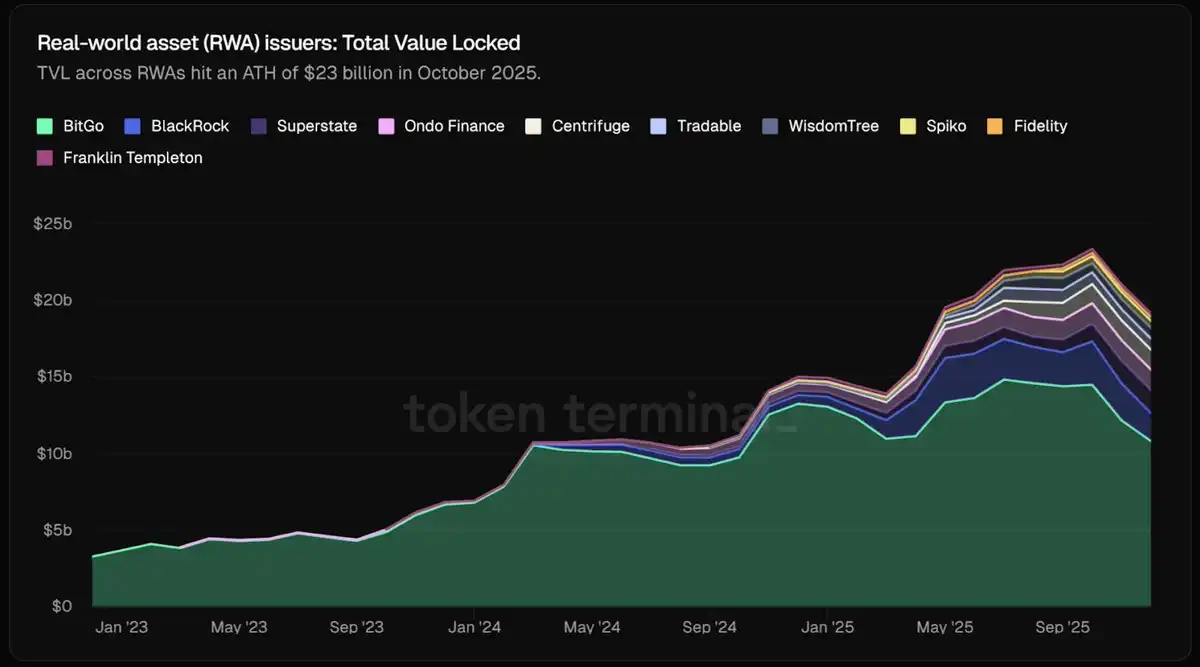
We have now witnessed substantial supply: as of October 2025, the total market value of RWA tokens exceeded $230 billion, nearly quadrupling year-over-year. About half of this consists of tokenized U.S. Treasuries and money market strategies. With institutions like BlackRock issuing $500 million in government bonds through BUIDL, this is no longer a marketing gimmick but a treasury collateralized with on-chain debt, rather than unsecured code.
At the same time, stablecoin issuers have begun supporting reserves with short-term notes, and protocols like Sky (formerly MakerDAO) have integrated on-chain commercial paper into their collateral asset pools.
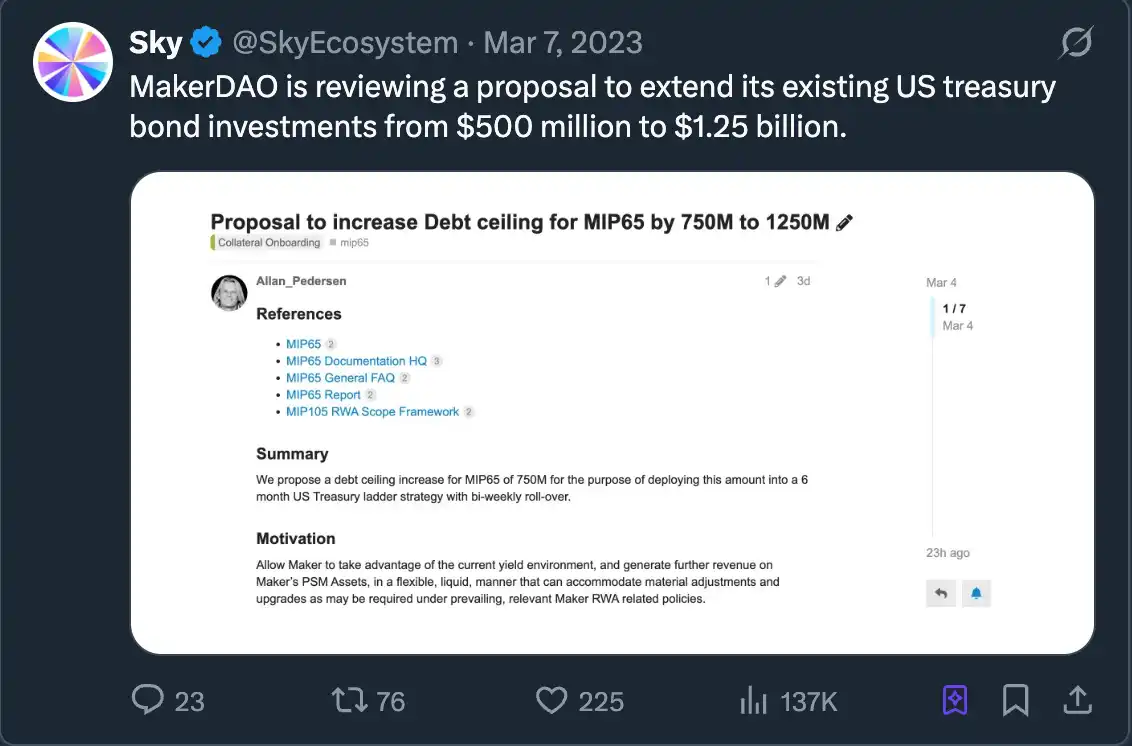
The treasury-backed stablecoin is no longer a marginal presence but a cornerstone of the crypto ecosystem. The assets under management (AUM) of tokenized funds have nearly quadrupled in the past 12 months, growing from around $2 billion in August 2024 to over $7 billion in August 2025. At the same time, institutional asset tokenization (RWA) infrastructure from organizations like JPMorgan and Goldman Sachs has transitioned from a testnet to a production environment.
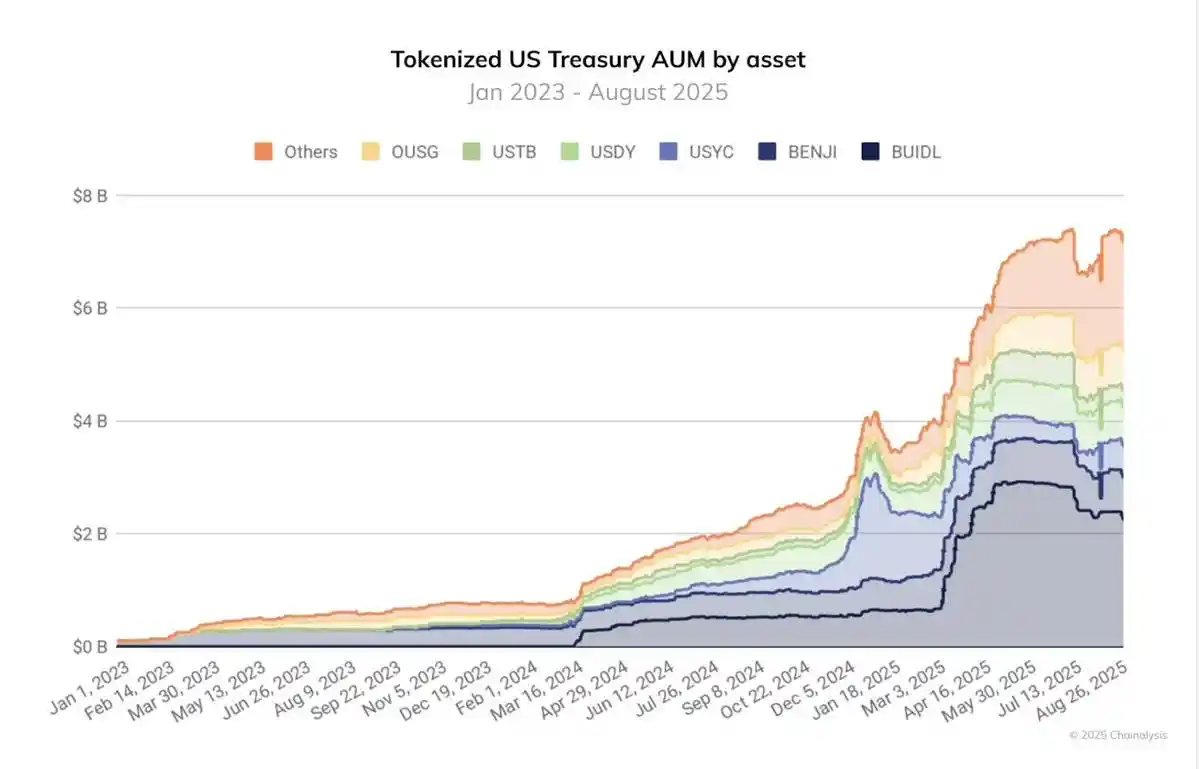
In other words, the boundary between on-chain liquidity and off-chain asset classes is gradually dissolving. Traditional financial asset allocators no longer need to purchase tokens linked to physical assets; they now directly hold assets issued in their native on-chain form. This shift from synthetic asset representation to real asset tokenization is one of the most influential structural advancements of 2025.
3. Stablecoins: Both a "Killer App" and a Systemic Weakness
Stablecoins have fulfilled their core promise: a programmable, large-scale dollar. In the past 12 months, on-chain stablecoin trading volume has reached $46 trillion, a 106% year-on-year increase, averaging nearly $4 trillion per month.
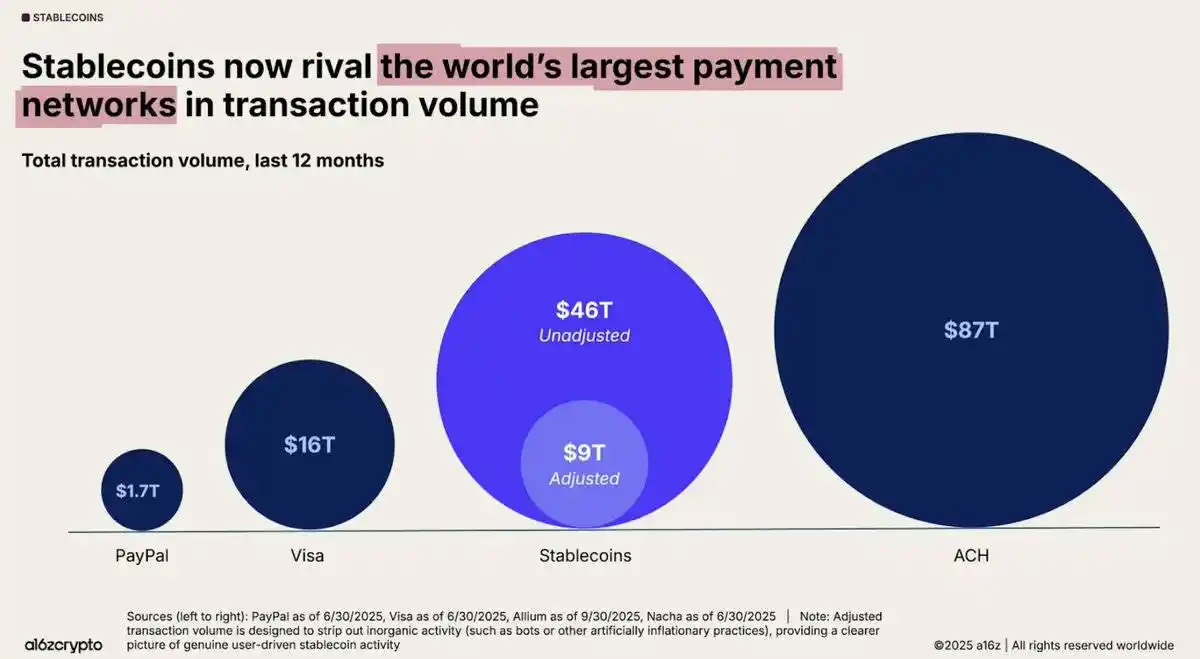
From cross-border settlements to ETF infrastructure to DeFi liquidity, these tokens have become the financial core of the crypto space, transforming blockchain into a functional dollar network. However, the success of stablecoins has also brought to light systemic vulnerabilities.
2025 revealed the pitfalls of yield-bearing and algorithmic stablecoins, especially those relying on internal leverage support. Stream Finance's XUSD collapsed to $0.18, wiping out $93 million of users' funds and leaving $285 million in protocol-level debt.
Elixir's deUSD collapsed due to a large loan default. USDx on AVAX collapsed due to alleged manipulation. These cases all reveal how opaque collateral, recursive rehypothecation, and concentration risk lead to stablecoin de-pegging.
The profit frenzy of 2025 further exacerbated this fragility. Capital flooded into yield-bearing stablecoins, some offering annual returns as high as 20% to 60% through complex treasury strategies. Platforms like @ethena_labs, @sparkdotfi, and @pendle_fi absorbed billions of dollars, with traders chasing structural yields based on synthetic dollars. However, with the collapses of deUSD, XUSD, and others, it has become evident that DeFi has not truly matured but has skewed toward centralization. Nearly half of the total value locked (TVL) on Ethereum is concentrated in @aave and @LidoFinance, while other funds gravitate towards a few strategies related to yield-bearing stablecoins (YBS). This has led to a fragile ecosystem built on excessive leverage, recursive capital flow, and shallow diversification.
Therefore, while stablecoins have provided momentum to the system, they have also intensified pressure on the system. We are not saying that stablecoins have already "failed"; they are crucial to the industry. However, 2025 proved that the design of stablecoins is equally important as their functionality. As we venture into 2026, the integrity of dollar-denominated assets has become a top priority, affecting not only DeFi protocols but also all participants allocating capital or building on-chain financial infrastructure.
4. L2 Integration and Chain Erosion
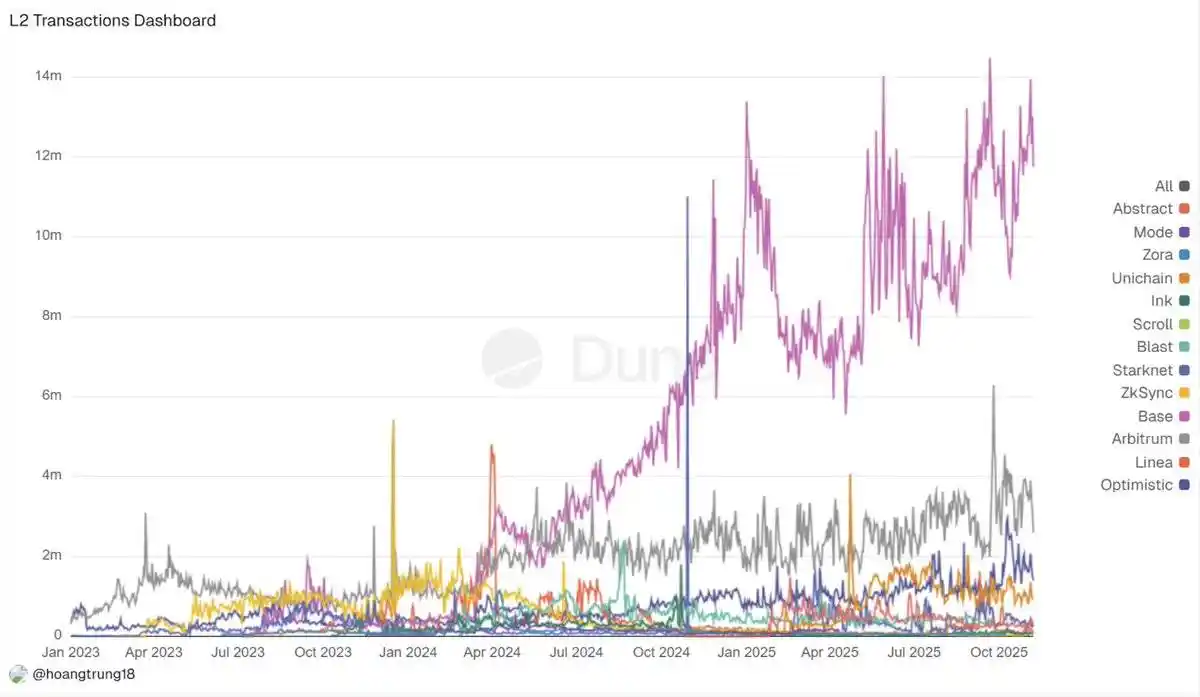
In 2025, Ethereum's "Rollup-centric" roadmap collided with market realities. What used to be dozens of L2 projects on L2Beat has now evolved into a situation where the "winners take all": @arbitrum, @base, and @Optimism have attracted the majority of new total value locked (TVL) and capital flows, while smaller-scale Rollup projects saw a 70% to 90% decline in revenue and activity after incentive measures concluded. Liquidity, MEV bots, and arbitrageurs chasing deep order books and tight spreads reinforced this flywheel effect, leading to a drying up of order flow on fringe chains.
At the same time, cross-chain bridge volume surged, reaching $56.1 billion just in July 2025, clearly indicating that "everything is Rollup" actually still means "everything is fragmented." Users still have to deal with isolated balances, L2-native assets, and duplicated liquidity.
It is important to note that this is not a failure but a process of integration. Fusaka achieved 5-8 times the Blob throughput, zk application chains like @Lighter_xyz reached 24,000 TPS, and some emerging specialized solutions (such as Aztec/Ten offering privacy features, MegaETH providing ultra-high performance) all demonstrate that a few execution environments are standing out.
Other projects have entered a "dormant mode" until they can prove their moats are deep enough to prevent the leaders from simply forking and replicating their advantages.
5. Rise of Prediction Markets: From Edge Tools to Financial Infrastructure
Another major surprise in 2025 was the formal legalization of prediction markets.
Once seen as a fringe oddity, prediction markets are now gradually integrating into financial infrastructure. Long-time industry leader @Polymarket made a comeback to the U.S. market in a regulated form: its U.S. arm obtained approval from the U.S. Commodity Futures Trading Commission (CFTC) to become a Designated Contract Market. Additionally, it has been reported that the Intercontinental Exchange (ICE) has poured billions of dollars in capital, valuing close to a hundred billion dollars. This influx of funds followed suit.
The prediction market has surged from a "quirky niche market" to weekly transaction volumes in the tens of billions of dollars, with only @Kalshi platform handling hundreds of billions in event contracts in 2025.
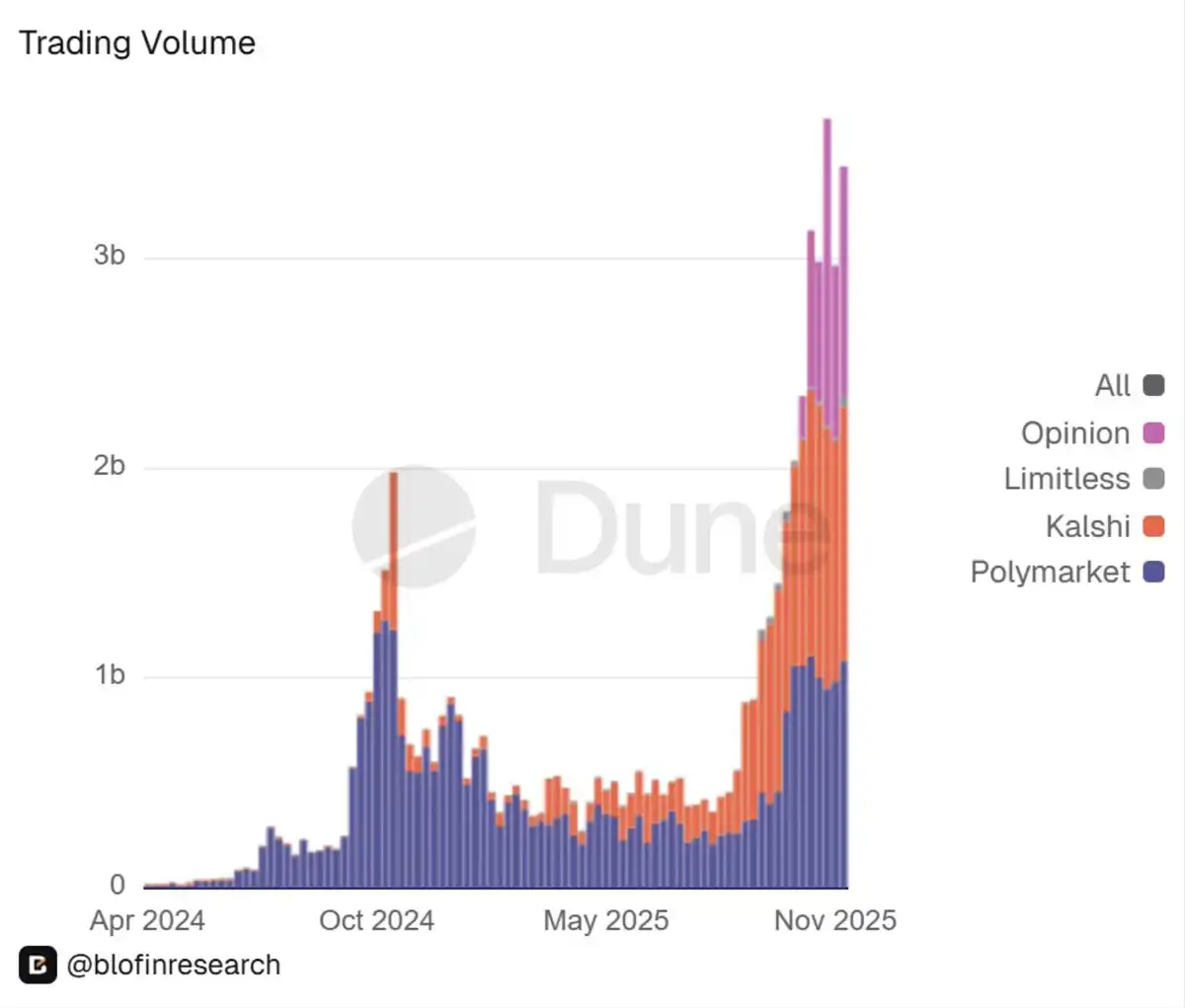
I believe this marks the market on the blockchain shifting from a "toy" to a true financial infrastructure.
Mainstream sports betting platforms, hedge funds, and DeFi-native managers now view Polymarket and Kalshi as forecasting tools rather than entertainment products. Cryptocurrency projects and DAOs have also begun to see these order books as a source of real-time governance and risk signals.
However, this "weaponization" of DeFi also has its duality. Regulatory scrutiny will increase, liquidity remains highly concentrated around specific events, and the correlation between "prediction market as a signal" and real-world outcomes has yet to be validated under pressure situations.
Looking towards 2026, it is clear that event markets have now entered the institutional radar alongside options and perpetual contracts. Portfolios will need to form clear views on whether—and how—to allocate to such exposures.
6. The Integration of AI and Crypto: Evolving from a Hyped Concept to Actual Infrastructure
In 2025, the integration of AI and crypto moved from a noisy narrative to structured practical applications.
I believe three themes defined the developments of this year:
Firstly, the Agentic Economy transitioned from a speculative concept to an actionable reality. Protocols like x402 enabled AI agents to autonomously trade with stablecoins. Circle's ref="/wiki/article/usd-coin-usdc-269">USDC integration, as well as the rise of orchestration frameworks, reputation layers, and verifiable systems (such as EigenAI and Virtuals), highlighted that useful AI agents require collaboration, not just reasoning capabilities.
Secondly, decentralized AI infrastructure became a cornerstone of the field. Bittensor's Dynamic TAO upgrade and the halving event in December redefined it as the "Bitcoin of AI"; NEAR's Chain Abstraction brought practical intent transactions; while @rendernetwork, ICP, and @SentientAGI validated the feasibility of decentralized computation, model provenance, and hybrid AI networks. It is evident that infrastructure has gained a premium, while the value of "AI wrapping" is gradually diminishing.
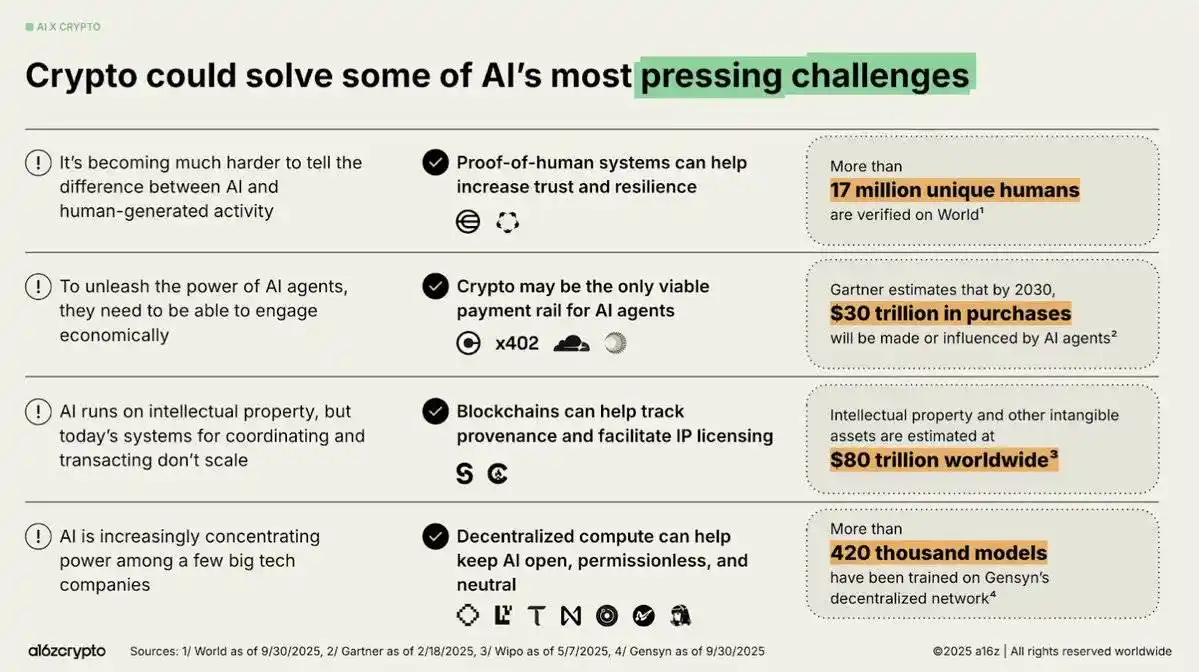
Third, practical vertical integration is accelerating.
The AI collective of @almanak has deployed DeFi strategies at a quant level, @virtuals_io has generated $2.6 million in fee revenue on Base, and robots, prediction markets, and geospatial networks have become trusted proxy environments.
The shift from "AI packaging" to verifiable proxy and robot integration indicates that product-market fit is continuously maturing. However, trust infrastructure remains a critical missing link, and the risk of hallucination still looms over autonomous trading.
Overall, as of the end of 2025, market sentiment is optimistic about infrastructure and remains cautious about the practicality of proxies, with a general belief that 2026 could be the year of a breakthrough in verifiable and economically valuable on-chain AI.
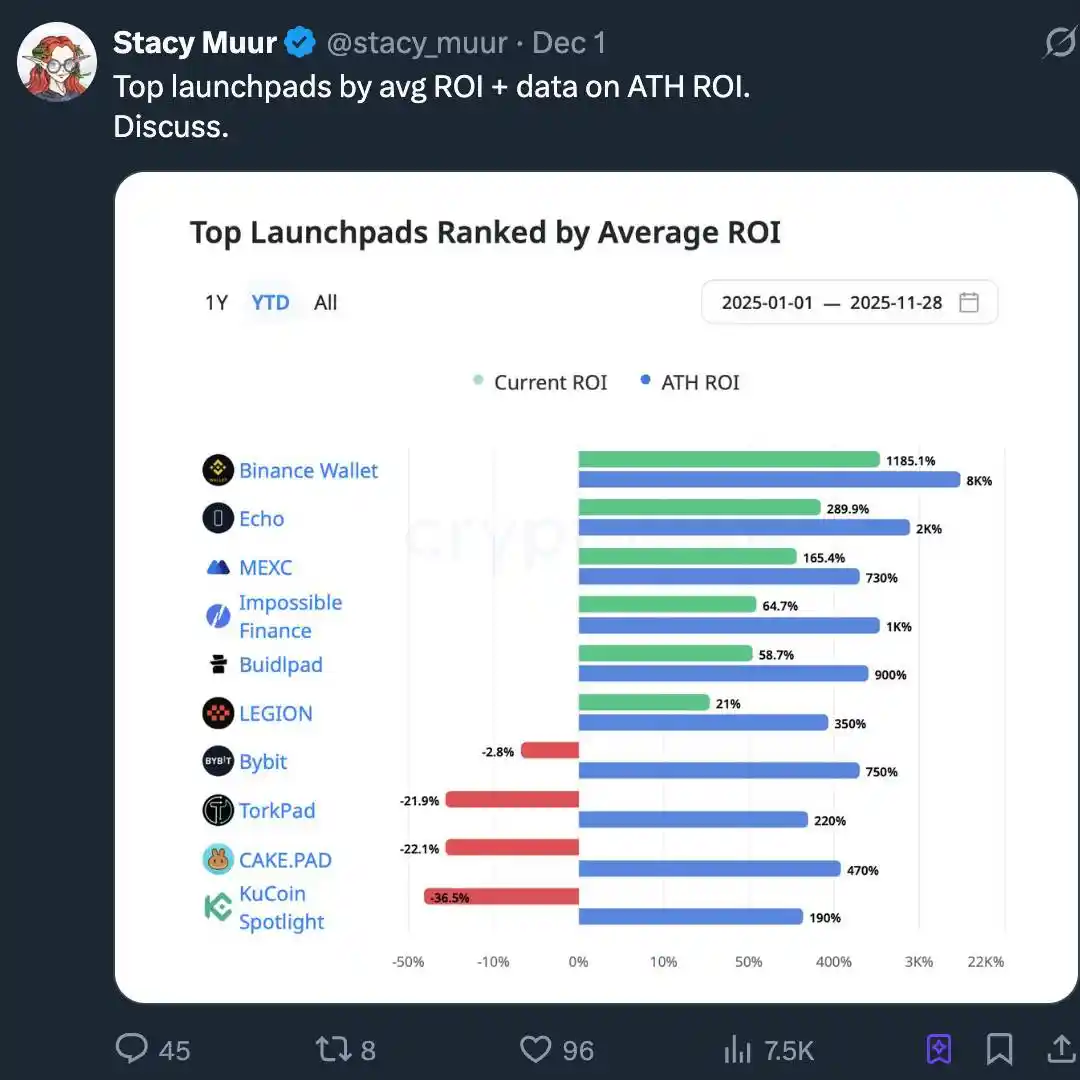
7. The Return of Launchpad: A New Era of Retail Capital
We believe that the launchpad frenzy of 2025 is not a "return of the ICO" but an industrialization of ICOs. The so-called "ICO 2.0" in the market is actually the maturation of the crypto capital formation stack, gradually evolving into Internet Capital Markets (ICM): a programmable, regulated, and 24/7 underwriting track, rather than just a "lottery-style" token sale.
With the repeal of SAB 121 accelerating regulatory clarity, tokens have transformed into financial instruments with vesting periods, disclosure requirements, and recourse, rather than mere issuances. Platforms like Alignerz embed fairness at the protocol layer: hashed auctions, refund windows, token vesting schedules based on lockup periods rather than internal channel allocations. "No VC dump, no insider profit" is no longer a slogan but a design choice.
Simultaneously, we note that launchpads are integrating into exchanges, a sign of a structural shift: platforms related to Coinbase, Binance, OKX, and Kraken offer KYC/AML compliance, liquidity guarantees, and institution-friendly curated issuance pipelines. Independent launchpads are being forced to concentrate on verticals such as gaming, memes, and early-stage infrastructure.
From a narrative perspective, AI, RWA (Real World Assets), and DePIN (Decentralized IoT) dominate the main issuance channels, with launchpads acting more as narrative routers than hype machines. The real story is that the crypto space is quietly building an ICM layer supporting institution-grade issuance and long-term alignment of interests, rather than replaying the nostalgia of 2017.
8. The Uninvestability of High FDV Projects is Structural
Throughout most of 2025, we witnessed a recurring validation of a simple rule: projects with a high FDV (Fully Diluted Valuation) and low circulating supply are structurally uninvestable.
Many projects—especially new L1s (Layer 1 blockchains), sidechains, and "real yield" tokens—entered the market with FDVs of over a billion dollars and single-digit circulating supplies.
As one research firm put it, "high FDV, low circulating supply is a liquidity time bomb"; any large-scale early investor sell-off would directly wipe out the order book.
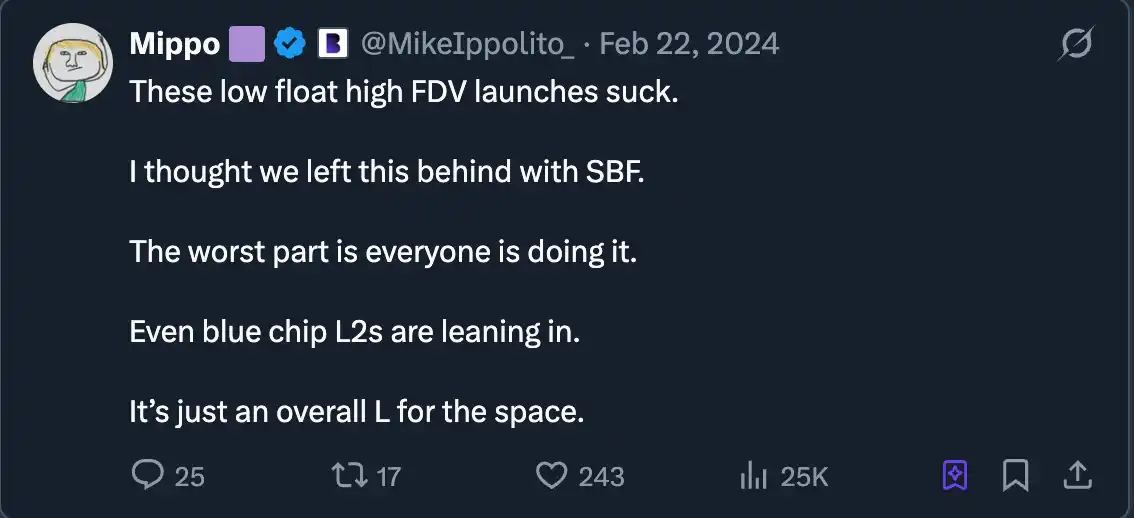
As expected, the outcome was no different. These tokens saw a price surge at launch, but as the unlock periods arrived and insiders exited, the price swiftly plummeted. Cobie's adage—"Refuse to buy overpriced FDV (Fully Diluted Valuation) tokens"—evolved from a meme into a risk-assessment framework. Market makers widened spreads, retail participants simply stepped back, and the market for many such tokens saw little to no improvement over the following year.
In contrast, tokens with real utility, deflationary mechanisms, or tied to cash flow significantly outperformed their peers with the sole selling point of "high FDV."
I believe that 2025 has permanently reshaped buyer tolerance for "tokenomics theatrics." FDV and circulating supply are now seen as hard constraints rather than inconsequential footnotes. Looking ahead to 2026, if a project's token supply cannot be digested by an exchange order book without disrupting price action, then that project is effectively uninvestable.
9. InfoFi: Rise, Frenzy, and Fall
I believe that the boom and bust of InfoFi in 2025 became the most vivid cyclical stress test of "tokenized attention."
InfoFi platforms such as @KaitoAI, @cookiedotfun, @stayloudio, etc., pledged to reward analysts, creators, and community managers for their "knowledge work" through points and token payments. Within a brief window, this concept became a red-hot venture capital theme, with institutions like Sequoia, Pantera, Spartan, etc., pouring in vast sums.
The information overload in the crypto industry and the popular trend of combining AI and DeFi have made content curation on-chain seem like an obvious missing foundational module.
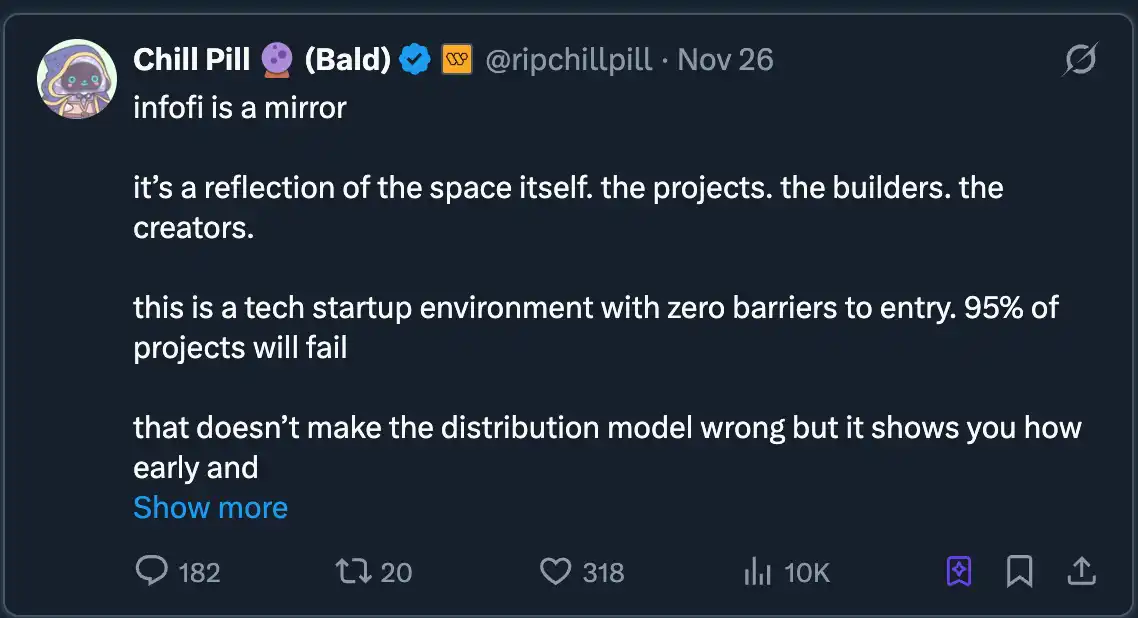
However, the design choice of using attention as a unit of measure is a double-edged sword: when attention becomes the core metric, content quality collapses. Platforms like Loud and their counterparts are flooded with AI-generated low-quality content, bot farms, and engagement pods; a few accounts capture most of the rewards, while long-tail users realize the rules are stacked against them.
Multiple token prices have experienced 80–90% retracements, with even complete collapses occurring (for example, WAGMI Hub raised a nine-figure sum only to suffer a major exploit), further damaging the field's reputation.
The ultimate conclusion is that the first-generation attempts at InfoFi (Informational Finance) are structurally unsound. While the core idea of monetizing valuable crypto signals remains attractive, the incentive mechanisms need to be redesigned to be based on validated contributions rather than merely relying on click counts.
I believe that by 2026, the next generation of projects will learn from these lessons and make improvements.
10. The Return of Consumer Crypto: A New Paradigm Led by Neobanks
By 2025, the return of consumer crypto is increasingly seen as a structurally transformative shift driven by Neobanks, rather than a result propelled by local Web2 applications.
I believe this shift reflects a deeper understanding: when users onboard through familiar financial metaphors (such as deposits and yields), adoption accelerates, and the underlying settlement, yield, and liquidity rails quietly migrate to the chain.
What emerges is a Hybrid Banking Stack, where Neobanks shield users from the complexities of gas fees, custody, and cross-chain bridges while providing pathways for users to directly access stablecoin yields, tokenized national debt, and global payment rails. The result is a consumer funnel capable of ushering millions of users "deeper into the chain" without requiring them to navigate the complex technicalities like seasoned users.
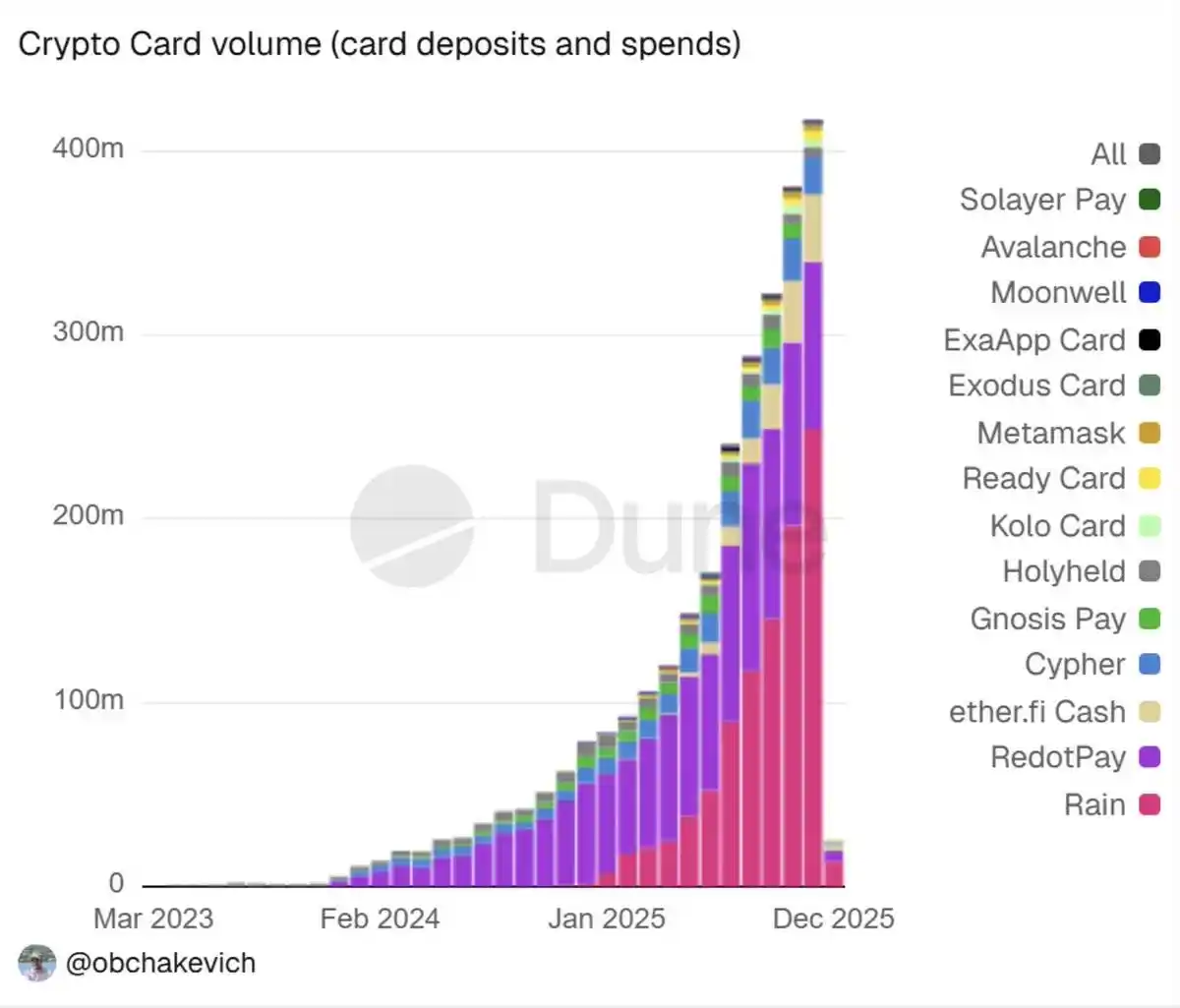
The prevailing view across the industry is that Neobanks are gradually becoming the de facto standard interface for mainstream crypto needs.
Platforms like @ether_fi, @Plasma, @UR_global, @SolidYield, @raincards, and Metamask Card are prime examples of this transition: they offer instant fiat onramps, 3–4% cashback cards, 5–16% APY through tokenized national debt, and self-custody smart accounts, all packaged in a compliant and KYC-supported environment.
These applications benefited from the 2025 regulatory reset, including the repeal of SAB 121, the establishment of a stablecoin framework, and more clear guidance for tokenized funds. These changes reduced operational friction and expanded their potential market size in emerging economies, especially in regions where real pain points such as yield, forex savings, and remittances are prominent.
11. Normalization of Global Crypto Regulation
I believe that 2025 was the year when crypto regulation finally became normalized.
The conflicting regulatory directives gradually formed three distinct identifiable regulatory patterns:
1. European-style Framework: including the Market in Crypto-Assets Regulation (MiCA) and the Digital Operational Resilience Act (DORA), with over 50 MiCA licenses issued, stablecoin issuers being viewed as electronic money institutions.
2. U.S.-style Framework: including stablecoin legislation similar to the GENIUS Act, SEC/CFTC guidance, and the launch of a physically-backed Bitcoin ETF.
3. Patchwork Model in the Asia-Pacific Region: such as Hong Kong's full-reserve stablecoin regulations, Singapore's optimized licenses, and the broader adoption of FATF (Financial Action Task Force) travel rule.
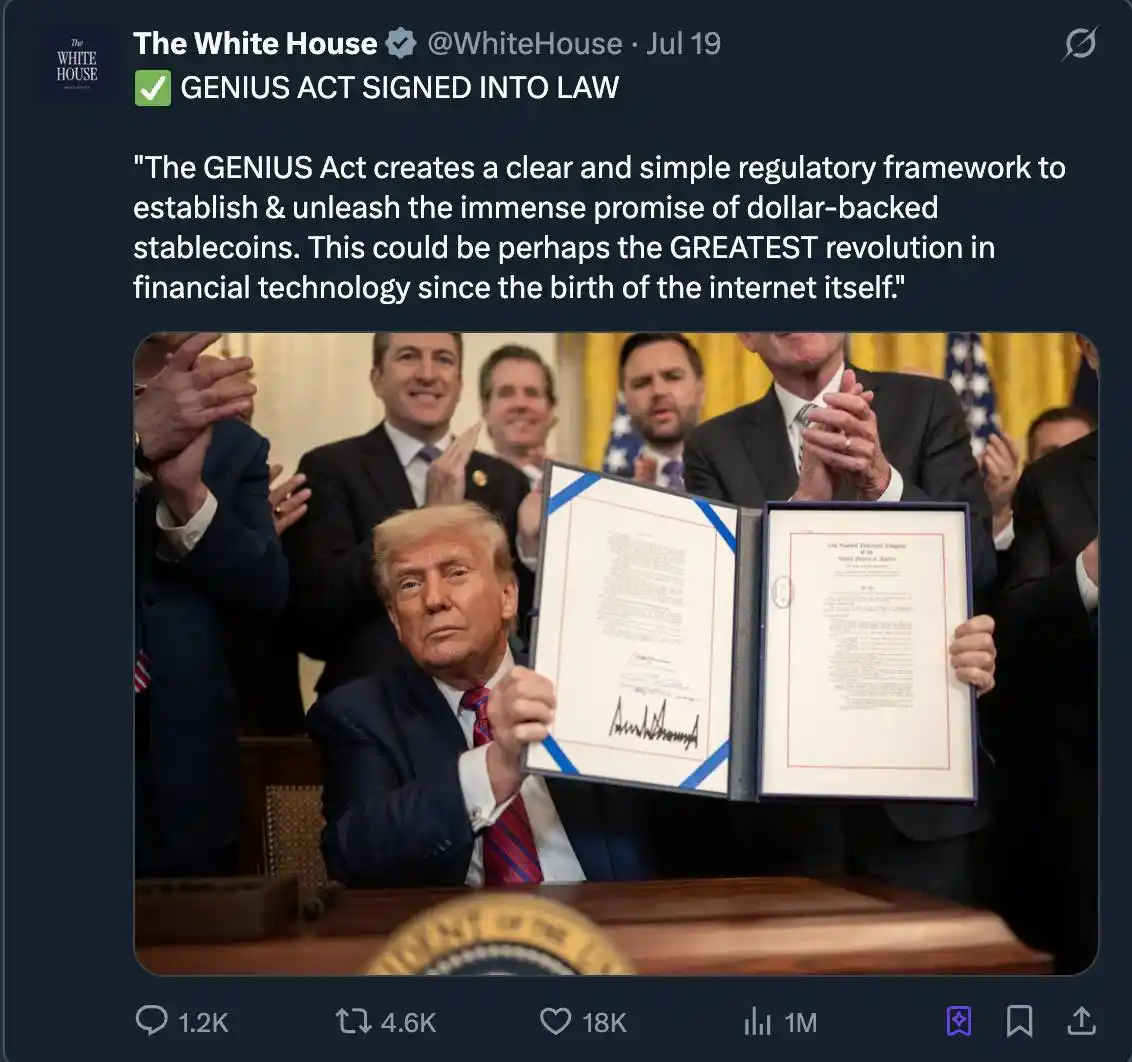
This is not just surface work but a thorough reshaping of the risk model.
Stablecoins have transformed from being part of the "shadow banking" sector to regulated cash equivalents; banks like Citibank and Bank of America can now operate tokenized cash pilots under clear rules; platforms like Polymarket can relaunch under the regulation of the Commodity Futures Trading Commission (CFTC); the U.S. physically-backed Bitcoin ETF was able to attract over $35 billion in stable fund inflows without existential risk.
Compliance has shifted from being a drag to becoming a moat: entities with robust regulatory technology (Regtech) architecture, a clear Cap Table, and auditable reserves suddenly enjoy lower capital costs and faster institutional onboarding speed.
In 2025, crypto assets evolved from a gray area curiosity into a regulated entity. Looking ahead to 2026, the focus of debate has shifted from "whether this industry is allowed to exist" to "how to implement specific structures, disclosures, and risk controls."
You may also like

Champion's Final Bow: FC Barcelona vs Real Betis – Celebrate the Title with a Home Finale

Best Oil Trading Platform for Crypto Users in 2026

5 Futures Trading Strategies Smart Traders Use to Cut Crypto Fees and Boost Futures Returns

What Is TradFi? How Crypto Traders Can Now Access Crude Oil, Gold, and Global Markets

How WEEX Bridges Crypto and Football: A Deep Look at the LALIGA Partnership Inside the WEEX App
WEEX is not just a LALIGA sponsor. It’s a true partner. From iPhone Dynamic Island to LALIGA-themed app icons and smart posters, see how WEEX brings football passion into every trade — and builds a real bridge between crypto and sports.

FC Barcelona vs Real Madrid Preview: El Clásico – Can Barça Clinch the Title at Spotify Camp Nou?
FC Barcelona vs Real Madrid El Clásico match preview for May 11, 2026. Barça need just 1 point to win LALIGA. Can Madrid delay the trophy? Full preview inside.

At the Stripe conference, I saw the future of the AI economy

Miners welcome a new life

Seven Important Judgments by Claude Code's Founder at the Sequoia Conference

The payment moment of AI agents: Who will become the Stripe of the machine economy?

Morning Report | MoonPay acquires Solana's execution layer DFlow; Strategy releases Q1 financial report; Manta Network announces the termination of Manta staking program

Rented Tracks: What is this wave of stablecoin FX hot money really paying for?

Dialogue Velocity Eric: What is the stablecoin track that the CFO really wants?

Strategy should have said that selling coins is not ruled out

How MegaETH Achieved a TVL of 700m Within a Week of TGE? Analyzing the Packaging Strategy

Futures Trading Hours: Trade Cryptocurrency 24/7 and Earn Back Up to 45% in Trading Fees
Learn futures trading hours and the best time to trade crypto futures. Discover 24/7 market insights, peak trading sessions, and how to earn back up to 45% in fees.
Why is a16z Crypto raising another $2.2 billion to heavily invest in Web3?
Polymarket Underlying Algorithm Explained
Champion's Final Bow: FC Barcelona vs Real Betis – Celebrate the Title with a Home Finale
Best Oil Trading Platform for Crypto Users in 2026
5 Futures Trading Strategies Smart Traders Use to Cut Crypto Fees and Boost Futures Returns
What Is TradFi? How Crypto Traders Can Now Access Crude Oil, Gold, and Global Markets
How WEEX Bridges Crypto and Football: A Deep Look at the LALIGA Partnership Inside the WEEX App
WEEX is not just a LALIGA sponsor. It’s a true partner. From iPhone Dynamic Island to LALIGA-themed app icons and smart posters, see how WEEX brings football passion into every trade — and builds a real bridge between crypto and sports.
FC Barcelona vs Real Madrid Preview: El Clásico – Can Barça Clinch the Title at Spotify Camp Nou?
FC Barcelona vs Real Madrid El Clásico match preview for May 11, 2026. Barça need just 1 point to win LALIGA. Can Madrid delay the trophy? Full preview inside.

Contents
Popular coins
Latest Crypto News