
 Buy Crypto
- Markets
 Futures
- Spot
- Copy Trade
- Earn
- More
Accountability in DeFi: Navigating Risks and Responsibilities

Key Takeaways
- Lack of regulation and identity disclosure in DeFi exposes users to significant risks.
- Risk Curators in DeFi manage large sums without oversight, leading to systemic failures.
- The collapse of Stream Finance showcases the repercussions of inadequate accountability.
- Technical reforms, such as identity disclosure and capital requirements, are essential for sustainable growth in DeFi.
- Enhanced protocol accountability and proof of reserves can mitigate future risks and restore user trust.
Introduction: DeFi’s Risky Business
In recent years, Decentralized Finance (DeFi) has exploded onto the financial scene, driven by promises of open access and high returns. However, this burgeoning sector has been accompanied by significant risks, primarily due to a lack of regulatory oversight and accountability mechanisms. Since 2020, DeFi has witnessed an exponential increase, with Total Value Locked (TVL) previously surpassing $100 billion. Yet, the Curator model at its core often lacks the necessary governance and responsibility frameworks, leading to systemic failures like the infamous collapse of Stream Finance in November 2025.
The Emergence of “Curators” in DeFi
Over the past two years, a new player has emerged in the DeFi space—Risk Curators. These intermediaries oversee vast sums of user funds, managing protocols like Morpho and Euler with combined assets reaching billions of dollars. They collect substantial performance fees, yet they operate with no licensing, regulatory oversight, or mandatory identity disclosure. This lack of accountability has resulted in significant losses across the ecosystem—highlighted by Stream Finance’s $285 million collapse.
The Accountability Gap: A System Under Stress
Much like traditional finance’s intermediary models, the Risk Curator system in DeFi strips away essential accountability mechanisms. Traditional entities managing client funds comply with rigorous capital requirements and fiduciary duties, all policed through stringent regulatory scrutiny. DeFi, however, operates primarily on market incentives, rewarding asset accumulation and profit maximization rather than prudent risk management. Without key levers of responsibility, the system is prone to failures.
The Collapse of Stream Finance: A Case Study
The Nature of Stream Finance’s Fall
Stream Finance’s downfall exemplifies the dangers intrinsic to permissionless architectures. Without oversight, anyone can claim the title of Risk Manager and handle substantial assets, as witnessed with Stream Finance’s $285 million crash. Devoid of registration, capital requirements, or identity disclosures, these managers operate freely, often accumulating risks while users remain unaware.
Warnings were widespread. For instance, Schlagonia, a Yearn Finance developer, exposed Stream’s overleveraged positions 172 days before the collapse. Yet, economic incentives blinded Risk Managers to these dangers—resulting in disastrous losses when these warnings were ignored.
The RE7 Labs Dilemma
The RE7 Labs incident highlights a fundamental conflict of interests embedded within risk management roles. Risk strategists maximize profit potential, often disregarding user safety for higher fees. Despite recognizing issues such as “centralized counterparty risk,” RE7 Labs proceeded with risky integrations to satisfy demand and income pressures, demonstrating how fee-driven incentives can overshadow prudent decision-making.
Addressing the Accountability Void
Learning from Traditional Finance
Unlike DeFi, traditional finance has long-established accountability measures, including regulatory consequences for fund mismanagement. Instances such as a Morpho treasury loss in March 2024 due to oracle discrepancies illustrate the lack of response mechanisms in DeFi, where losses often result solely in reputational damage with no tangible accountability.
The Professional Illusion and Need for Transparency
Often cloaked in professional jargon and vague assurances of sophisticated risk strategies, many DeFi managers fail to disclose critical details about their operations. This obscurity allowed Stream Finance to conceal leverage and risk levels, misleading users into devastating outcomes.
Towards a Robust DeFi Ecosystem: Proposed Reforms
Essential Reforms for Growth and Stability
To secure a sustainable and reliable DeFi ecosystem, implementing several key reforms is crucial:
- Mandatory Identity Disclosure: Requiring true identity disclosures for managers overseeing substantial assets would create a direct line to accountability, essential in cases of mismanagement or fraud.
- Capital Requirements: Introducing collateral or junior tranche requirements would align manager and user incentives, ensuring that managers bear financial consequences alongside users.
- Comprehensive Disclosure: Strategy, leverage, and risk exposure disclosures must be standardized and transparent, providing users with critical insights for informed investment decisions.
- Proof of Reserves: Utilizing verifiable cryptographic techniques to prove asset reserves can mitigate risks of misrepresentation as with Stream Finance’s previous opacity.
- Concentration Limits: Establishing strict counterparty exposure limitations at protocol levels, like the advisable 10%-20% threshold, would prevent over-concentration risks.
- Protocol Accountability: Protocols profiting from fees must accept partial responsibility, potentially through user compensation insurance funds or stringent Planner vetting.
Conclusion: Embracing Accountability in DeFi
At its current juncture, the DeFi landscape is characterized by an accountability vacuum where curators operate with minimal constraint. While capital efficiency and innovation drive the space, introducing robust accountability mechanisms is pivotal. By learning from traditional finance’s hard-won lessons, DeFi can create a sustainable environment that balances innovation with investor protection.
Frequently Asked Questions
What caused the collapse of Stream Finance?
The downfall stemmed from excessive risk-taking by Risk Managers who disregarded leverage warnings and a lack of accountability mechanisms that allowed such behaviors to persist.
How can DeFi enhance user protection?
Implementing regulations like identity disclosure, reserve proof, and capital requirements can align Risk Manager incentives with user safety, reducing exposure to failures.
Why is transparency crucial in DeFi?
Transparency prevents misinformation and risky strategies from being hidden, encouraging informed investment decisions and trust in DeFi platforms.
What role do protocols play in mitigating risks?
Protocols should assume some responsibility by implementing structures like insurance funds and auditing mechanisms, enhancing ecosystem integrity.
How does traditional finance compare to DeFi in terms of accountability?
Traditional finance enforces stringent accountability through regulatory frameworks, a practice DeFi should emulate by tailoring these to fit its distinct decentralized model.
You may also like

Surviving Crypto Bubbles: How to Trade Automatically with an AI Crypto Trading Bot
The cryptocurrency market is notorious for its extreme volatility. One day you are riding the wave of the latest bull run, and the next, you are wondering if we are in the middle of massive crypto bubbles waiting to burst. For human traders, managing emotion and timing the market perfectly during these swings is nearly impossible. But what if you could remove the guesswork?
In this guide, we will explore how to trade automatically and why using an AI crypto trading bot is your best defense against unpredictable market crashes and sudden altcoin rallies.
What Are Crypto Bubbles and Why Do They Burst?A crypto bubble occurs when the price of digital assets—especially during peak altcoin trading seasons—escalates rapidly, driven by hype rather than intrinsic value. When the hype fades, the bubble bursts, leading to sharp market corrections.
The biggest challenge during a bubble isn't just the price drop; it's the panic. Emotional decisions often lead to selling at the bottom or buying at the top. This is where artificial intelligence changes the game.
How to Trade Automatically: The Power of AIIf you want to survive a volatile market, you need to execute trades based on data, not fear. Learning how to trade automatically allows you to set predefined rules that execute 24/7.
By leveraging an AI crypto trading bot, you can:
Execute Instantly: AI reacts to market drops in milliseconds, executing stop-loss orders before humanly possible.Filter the Noise: AI algorithms analyze thousands of charts simultaneously, identifying true market trends rather than temporary FOMO (Fear of Missing Out).Trade Emotion-Free: A bot doesn't panic during crypto bubbles; it simply follows the math.Why WEEX is the Best AI Trading App for Your PortfolioWhen looking for the best ai trading app, you need a platform that combines institutional-grade security with user-friendly automation. At WEEX, we’ve integrated Next-Gen AI Skills directly into your trading dashboard.
Whether you are focusing on Bitcoin futures or high-frequency altcoin trading, WEEX's AI tools act as your 24/7 trading mentor. You simply describe your strategy, and the Agent handles the execution across spot and futures markets.
FAQ Q: Are AI crypto trading bots profitable during a bear market? A: Yes. AI bots can be programmed to short the market or scalp small profits during high volatility, making them effective even when crypto bubbles burst.Q: Is it hard to learn how to trade automatically? A: Not with WEEX. Our platform is designed for both beginners and pros. You don't need coding skills to deploy our advanced AI trading strategies.Don't let the next market correction wipe out your portfolio. Trade faster, think smarter, and feel less.
Sign up on WEEX today and unlock your AI trading edge.
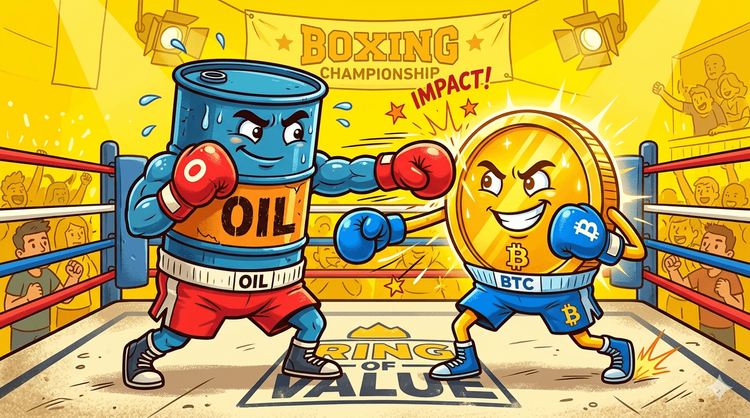
How the US-Iran War Could Affect Oil and Bitcoin Prices (Latest Analysis)
The outbreak of the US-Iran war on February 28, 2026, has provided an unprecedented real-time laboratory for understanding how geopolitical oil shocks interact with an increasingly institutionalized cryptocurrency market. This article examines the relationship between crude oil prices and Bitcoin throughout the conflict, analyzing price movements, correlation patterns, and the underlying transmission mechanisms.

OpenAI Wants to Write Its Own Rules|Rewire News Brief

Chaos Labs Exits, Who Will Pick Up Aave's Risk?
Stealthy Financial War? Iran Collects Strait Transit Fees in Stablecoin

OpenAlice: One Person, That's a Jane Street | Project Overview

The Small-Town Youth Labeling Big AI Models

Morning Report | Strategy increased its holdings by 4,871 BTC last week; Toss plans to develop its own blockchain and issue a native cryptocurrency; OpenAI's CFO privately questioned the timing of the IPO in 2026

Research: Stablecoins have a trading volume of 35 trillion a year, how much of it is real payment?

Galaxy Research: AI agents are giving rise to new species on the blockchain, how zero-human companies activate the financial flywheel

Data Research: How big is the liquidity gap between Hyperliquid and CME crude oil?

WEEX P2P now supports GHS, ETB & ZAR—Merchant Recruitment Now Open
To make crypto deposits easier, WEEX has officially launched its P2P trading platform and continues to expand fiat support. We're excited to announce that the Ghana Cedi (GHS), Ethiopian Birr (ETB) and South African Rand (ZAR) are now available on WEEX P2P!
Why Are GPU Prices Skyrocketing Out of Control?

How to Master Claude Cowork Completely?

70-Page Confidential Letter Alleges First Charge of 'Lying,' Altman Tells Board 'I Can't Change My Personality'

Is Altcoin Season Starting in 2026? What Traders Should Watch Now
Altcoin season signals are becoming clearer in 2026 as capital rotation across crypto markets accelerates. Here’s what traders should watch and how strategy-based participation is evolving in the current market cycle.
Bitcoin ETF Inflows in 2026: Impact on BTC Price and Crypto Market Trends
Bitcoin ETF inflows are reshaping BTC price trends and crypto market liquidity in 2026. See how institutional capital is influencing volatility, trading behavior, and portfolio allocation strategies across crypto markets.
Visa's Stablecoin Strategy: Cards, Settlement, and the Future
Surviving Crypto Bubbles: How to Trade Automatically with an AI Crypto Trading Bot
The cryptocurrency market is notorious for its extreme volatility. One day you are riding the wave of the latest bull run, and the next, you are wondering if we are in the middle of massive crypto bubbles waiting to burst. For human traders, managing emotion and timing the market perfectly during these swings is nearly impossible. But what if you could remove the guesswork?
In this guide, we will explore how to trade automatically and why using an AI crypto trading bot is your best defense against unpredictable market crashes and sudden altcoin rallies.
What Are Crypto Bubbles and Why Do They Burst?A crypto bubble occurs when the price of digital assets—especially during peak altcoin trading seasons—escalates rapidly, driven by hype rather than intrinsic value. When the hype fades, the bubble bursts, leading to sharp market corrections.
The biggest challenge during a bubble isn't just the price drop; it's the panic. Emotional decisions often lead to selling at the bottom or buying at the top. This is where artificial intelligence changes the game.
How to Trade Automatically: The Power of AIIf you want to survive a volatile market, you need to execute trades based on data, not fear. Learning how to trade automatically allows you to set predefined rules that execute 24/7.
By leveraging an AI crypto trading bot, you can:
Execute Instantly: AI reacts to market drops in milliseconds, executing stop-loss orders before humanly possible.Filter the Noise: AI algorithms analyze thousands of charts simultaneously, identifying true market trends rather than temporary FOMO (Fear of Missing Out).Trade Emotion-Free: A bot doesn't panic during crypto bubbles; it simply follows the math.Why WEEX is the Best AI Trading App for Your PortfolioWhen looking for the best ai trading app, you need a platform that combines institutional-grade security with user-friendly automation. At WEEX, we’ve integrated Next-Gen AI Skills directly into your trading dashboard.
Whether you are focusing on Bitcoin futures or high-frequency altcoin trading, WEEX's AI tools act as your 24/7 trading mentor. You simply describe your strategy, and the Agent handles the execution across spot and futures markets.
FAQ Q: Are AI crypto trading bots profitable during a bear market? A: Yes. AI bots can be programmed to short the market or scalp small profits during high volatility, making them effective even when crypto bubbles burst.Q: Is it hard to learn how to trade automatically? A: Not with WEEX. Our platform is designed for both beginners and pros. You don't need coding skills to deploy our advanced AI trading strategies.Don't let the next market correction wipe out your portfolio. Trade faster, think smarter, and feel less.
Sign up on WEEX today and unlock your AI trading edge.
How the US-Iran War Could Affect Oil and Bitcoin Prices (Latest Analysis)
The outbreak of the US-Iran war on February 28, 2026, has provided an unprecedented real-time laboratory for understanding how geopolitical oil shocks interact with an increasingly institutionalized cryptocurrency market. This article examines the relationship between crude oil prices and Bitcoin throughout the conflict, analyzing price movements, correlation patterns, and the underlying transmission mechanisms.


 App
App