
 Buy Crypto
- Markets
 Futures
- Spot
- Copy Trade
- Earn
- More
BeatSwap's IP RWA, from Chart Topping Economy Monetization to BNB Chain DappBay RWA First

With the development of blockchain technology and the influx of users, RWA tokenization is becoming one of the hottest narratives in today's Web3. However, the mainstream market is more focused on traditional financial assets such as bonds, real estate, and gold. While these assets have brought some incremental value to the crypto industry, their models still rely on traditional systems, making it difficult for ordinary users to participate deeply.
At the same time, the music and intellectual property (IP) fields are experiencing explosive growth. According to Goldman Sachs' prediction, by 2035, the global music industry's scale will double to reach $200 billion. The global IP licensing market is expected to reach around $48.2 billion by 2033 with a compound annual growth rate of 8.5%. However, in this vast market, copyright management remains opaque, settlements are slow, and value is mainly captured by intermediaries. IP Rights RWA holds tremendous potential.
Against this backdrop, BeatSwap has emerged. BeatSwap has chosen a path different from tokenizing traditional financial assets, focusing on building a truly global IP economy-native infrastructure in Web3. This infrastructure transforms content rights into tradable, financeable, and settleable IP Rights RWA and achieves on-chain risk management through patent-grade algorithms.
A Full-Stack RWA Infrastructure for the Global IP Economy
BeatSwap prides itself as the "world's first Web3 full-stack IP rights platform," and its ecosystem consists of four core modules covering the entire lifecycle of IP from creation, rights registration, fan engagement to transactions.
First is the Oracle, which is the core of the BeatSwap ecosystem. The module permanently records metadata of IP works on-chain, including basic work information, songwriters, rights holders' information, daily streaming counts, and royalty settlement history. This trustworthy data not only helps rights holders monitor work usage in real-time but also can be integrated with external streaming platform data to enable automatic royalty settlements.
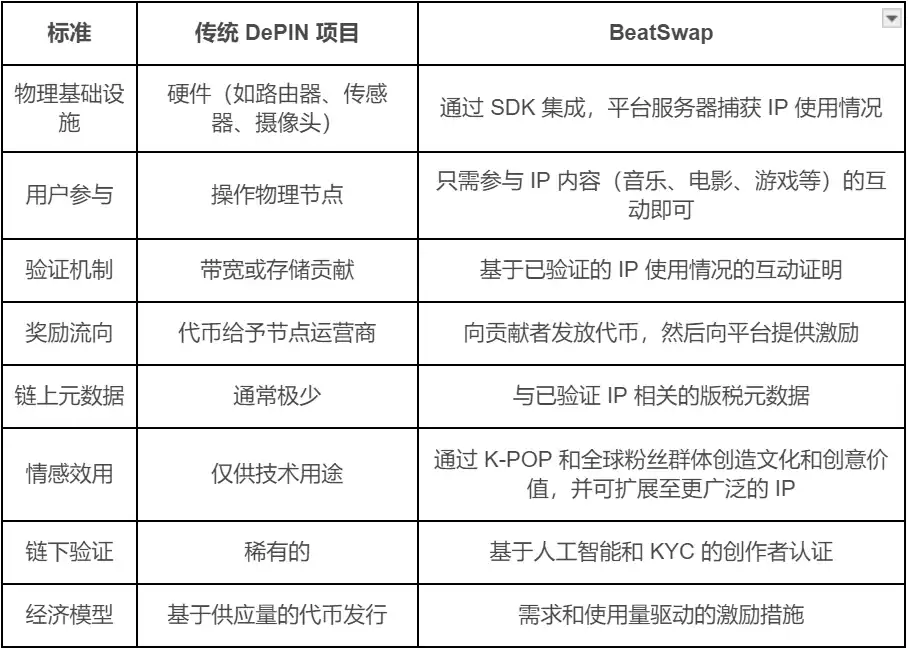
According to official disclosures, BeatSwap is pioneering a Web3 native DePIN model tailored for the global IP economy. Participants can contribute to existing digital platforms through the integration of their Oracle SDK by creating content without the need for any hardware. This means that BeatSwap will also become a full-stack DePIN network that can verify IP data.
The second core module is the social platform Space, which is a Web3 social space designed by BeatSwap for creators and fans, covering all types of creators such as music, film, gaming, and more. Creators must go through KYC and claim their content rights before they can publish their work, ensuring that all content can be linked to rights data on the Oracle. Fans' interactions with the work in Space, such as likes, comments, follows, are all recorded on-chain and collectively contribute to the creator's Exposure Score. The Exposure Score is calculated based on a 50% Fan Interaction Index and a 50% Creator BTX Staking, reflecting both fan engagement and creator community involvement.
In fact, the "Chart-Topping Economy" has long existed in Web2, where fans engage in various online and offline activities to boost the ranking of celebrities or products on major charts to increase their commercial value. However, these fans are usually driven by passion and do not benefit from the increased commercial value of the celebrity. BeatSwap ties fan behavior to rewards, where participation equals contribution and contribution leads to economic returns.
Additionally, both RWA Launcher and BeatSwap are core modules of BeatSwap, with the former used to convert IP into RWA assets and the latter enabling the trading of IP RWA similar to any on-chain asset.
BNB Chain DappBay RWA Category First Place
The innovation of technology and concepts must ultimately be implemented in specific products. In the process of driving the industrialization of music copyright RWA, BeatSwap's authorized mining product "Licensing to Earn (L2E)" has performed notably well. With its unique economic mechanism and real-world use case, BeatSwap L2E has successfully topped the RWA category list on the BNB Chain DappBay, becoming the most outstanding project in its category.
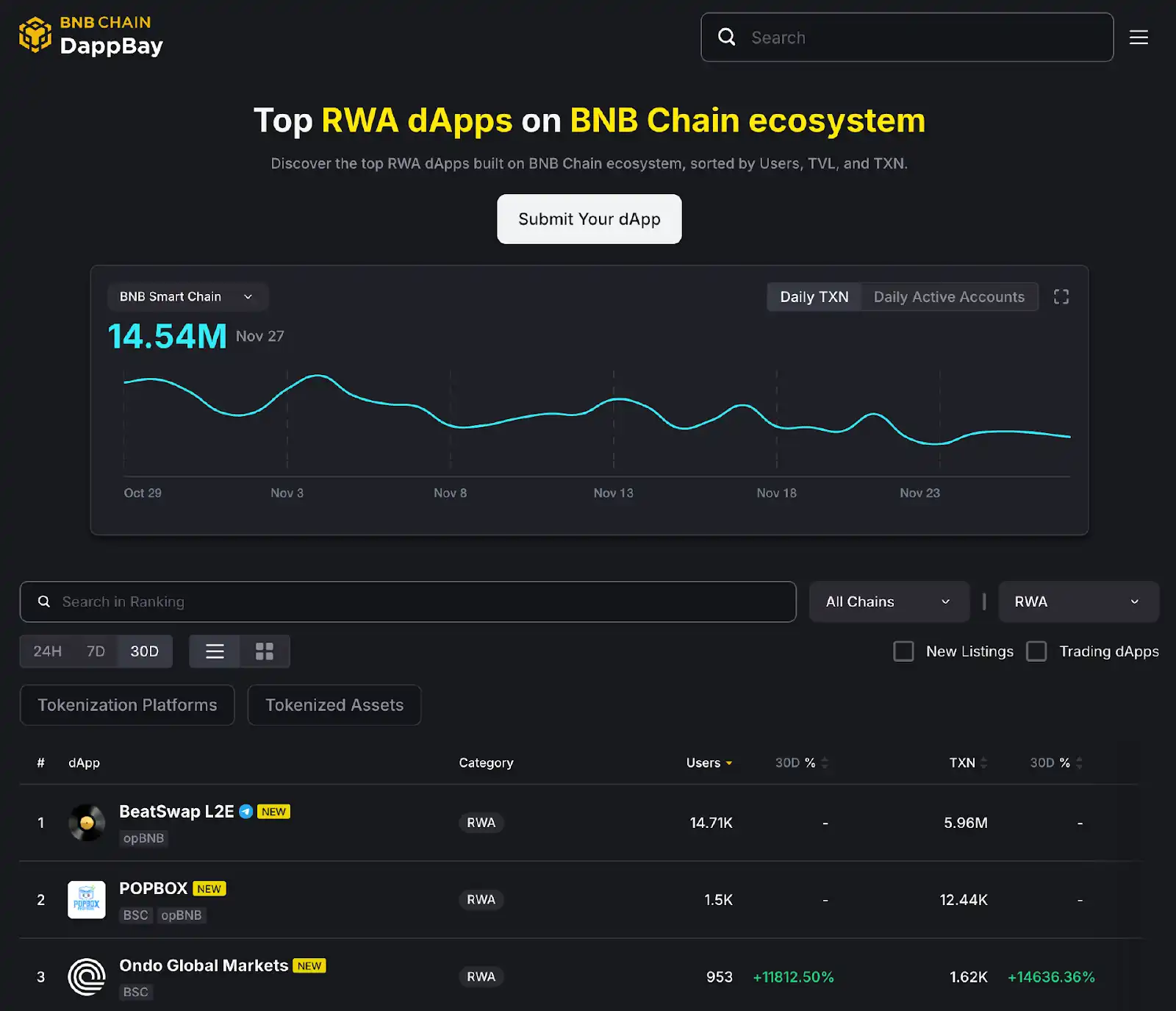
Image Source: BNB Chain
L2E is the authorization mining module of BeatSwap, with its core introducing the IP Authorization Index (IPL), which is a non-transferable, non-redeemable index token minted on the opBNB mainnet. It is used to measure users' genuine contribution to the IP ecosystem, with its issuance entirely linked to user behavior.
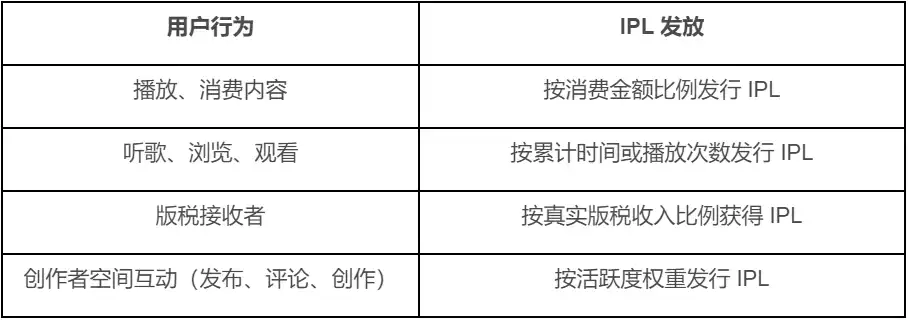
These behaviors are instantly recorded on-chain, with a monthly snapshot taken of all IPL holders. The BTX reward pool is then distributed based on the IPL proportion, achieving a "participate to earn" model. In other words, IPL represents contribution, and contribution determines the BTX reward ratio. Additionally, leveraging the opBNB network's high scalability and low-cost nature, BeatSwap can facilitate smooth execution of massive copyright transactions. Furthermore, its verifiable proof-of-participation system ensures that every reward is transparent, fair, and auditable, enabling "earning rewards while listening to music" to be implemented both technically and economically.
From a macro perspective, BeatSwap's economic model is primarily composed of three parts: RWA tokens, the platform's native token BTX, and IPL, forming a mutually reinforcing value loop.
BeatSwap will standardize each IP work into 2,000 RWA IP tokens, representing the neighboring rights of the work. Among these, half will be publicly sold through the RWA Launcher for work financing and market exposure; 18% will be injected into the protocol by BeatSwap to provide liquidity for initial trades. Within the creator community, composers, lyricists, and singers will respectively hold 6%, 6%, and 8% of RWA tokens, which can be held long-term to share in the work's growth or freely traded on the market. The remaining 12% will be retained by BeatSwap for exclusive rights management and will not enter the public market.
Image Source: BeatSwap
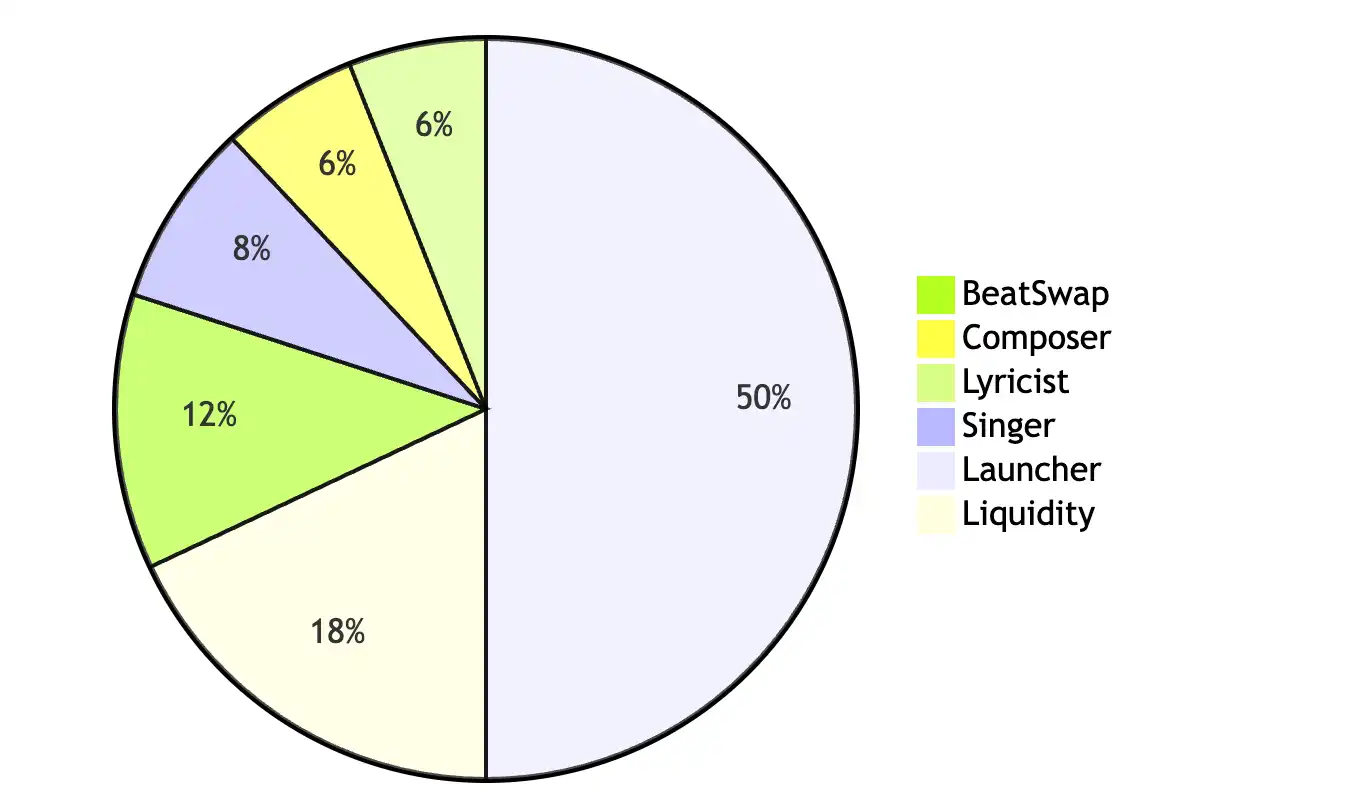
This allocation structure ensures a high degree of alignment among creators, investors, and the platform. Investors are not purchasing mere collectibles but rather "IP equity shares" with actual cash flow. By staking RWA tokens, users can daily receive the real streaming revenue of the corresponding work on global media platforms.
In order to provide continuous liquidity to copyright assets, BTX plays a key driving role in the ecosystem. All RWA token transactions, exchanges, and LP pairings are settled in BTX. As more songs are released and more RWA assets come online, more "RWA-BTX" liquidity pools will be formed on the DEX. The more songs are listed, the larger the liquidity pool, the stronger the demand for BTX transactions, and its value support will also increase. At the same time, a large amount of BTX will be released to key participants such as users listening to songs, music creators, liquidity providers, market participants, and RWA token holders bearing equity risks through platform activities.
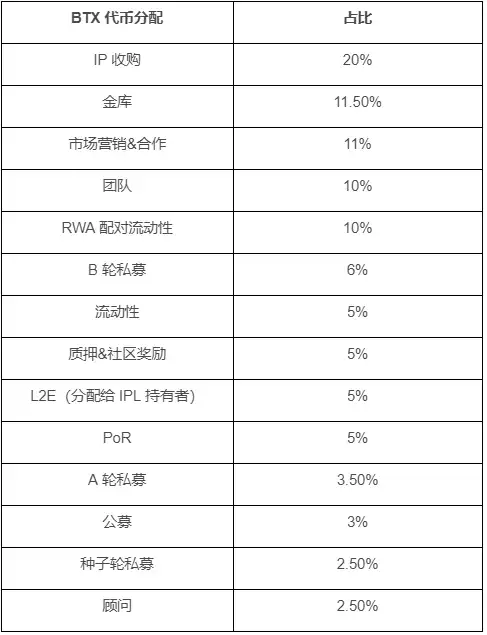
In the overall distribution system of BTX, IPL holders will receive a total of 5% of BTX token distribution. User behaviors on the platform such as playing songs, unlocking paid content, sharing works, participating in endorsements, interacting with creators, etc., can accumulate IPL. This not only records contributions but also determines the BTX reward ratio for each user.
It is because IPL considers each ecological participation behavior as a "contributed asset" that BeatSwap was able to claim the top spot in the BNB Chain DappBay RWA leaderboard. On-chain data shows that BeatSwap's cumulative transaction volume has exceeded 6.4 million transactions, with over 420,000 users, surpassing Ondo in similar projects. In addition, BeatSwap has successfully released 660 songs including K-POP, electronic music, indie music, and experimental music, becoming the most comprehensive and fastest-growing platform in the music copyright RWA track.
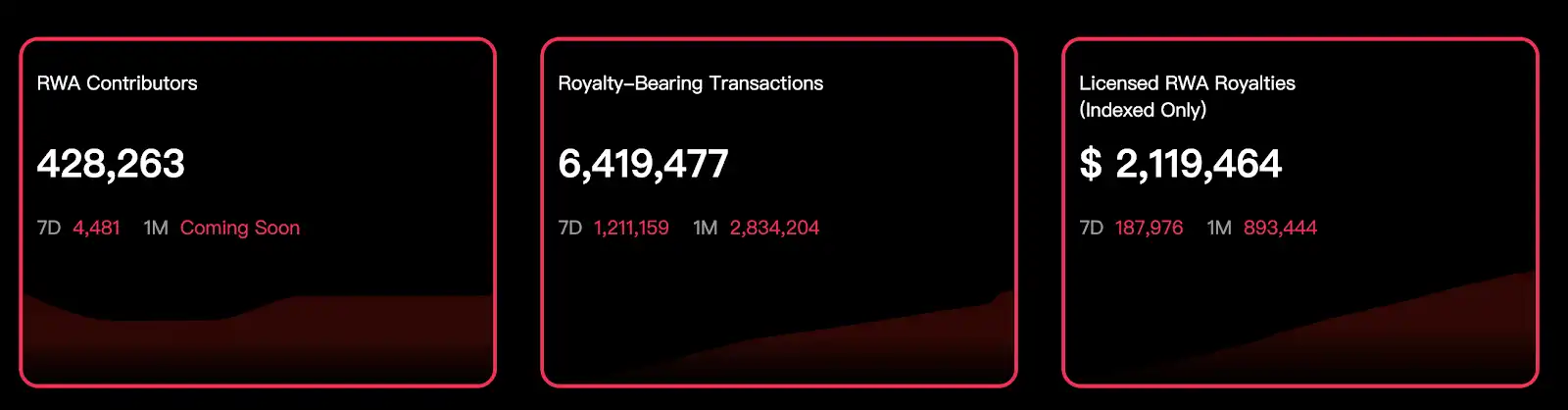
Data Source: beatswap.io/dashboard
International Patents, How to Properly Manage and Trade RWA
In the current narrative, RWA is seen as one of the most promising growth engines. However, when traditional assets, especially assets with real cash flow, are directly introduced to the chain, the limitations of the existing technical system are also exposed. AMM mechanisms designed based on cryptocurrency do not have the ability to handle complex RWA.
In order to enable Real-World Assets (RWA) to be correctly traded on-chain, accurately priced, and ensure secure settlement, BeatSwap has chosen to take an unprecedented path. BeatSwap has submitted an international patent application to the United Nations World Intellectual Property Organization (UN WIPO) titled "Collateralized Liquidity Management System and Method for Real-World Asset Decentralized Exchanges" (International Application No: PCT/KR2025/015673).
BeatSwap's patent application is not for mere positioning but rather for the purpose of building the underlying infrastructure tailored for the RWA era. The traditional Automated Market Maker (AMM) model is designed for high-volatility assets, suitable for typical crypto assets like ETH, DeFi tokens, etc., and can support the market with a simple curve model. However, when applied to RWAs, structural flaws are immediately exposed. RWAs have slow value fluctuation, lack the hourly price volatility characteristic, and the AMM liquidity pool rapidly responds to every transaction, causing the price to deviate from its true value. The real value of an asset like a piece of music may vary minimally, but the AMM mechanism could distort the price instantly due to a few transactions.
More importantly, RWAs have collateral, cash flow, and payment cycles. Once collateral assets depreciate, cash flows delay, and the market experiences redemption pressure, traditional AMMs cannot take any risk management actions. There is no clearing, no penalty mechanism, no price stabilizer, and no dynamic adjustment based on the user's risk exposure. This "risk-free AMM" evidently cannot handle the task of dealing with real-world assets.
BeatSwap has found that in order to truly bring assets such as IP rights into the on-chain financial system, a completely new AMM structure must be created—one that can understand risk, manage collateral, and track cash flows. Therefore, they chose to apply for a patent to solidify this structured mechanism, not only to protect their innovative achievements but also to establish a foundation for the institutionalization of the future industry.
According to the patent description, the BeatSwap AMM is a risk-adjustable hybrid AMM that combines collateral ratio, price volatility, and liquidity slippage, making liquidity no longer passive but dynamically changing based on risk. When the playback data for a particular IP work fluctuates, copyright revenues decline, or collateral assets depreciate, the system will automatically adjust the pool's price curve to bring the price back closer to its real value. The patent also designs a complete risk handling mechanism. When the collateral value falls into a dangerous range, the system triggers automatic penalties, price correction, or even liquidation mechanisms to protect the market from the impact of disorderly trading. Traditional AMMs are helpless in such situations, whereas the BeatSwap system can act as a safety valve like traditional financial clearing institutions, preventing systemic risks in the market.
BeatSwap's patent not only makes IP rights the first RWA type that can truly stably trade in an AMM, but also provides a technical blueprint for future categories of real-world assets.
In the future, when the industry looks back on the history of RWA, this patent will likely be seen as a significant turning point. It marks RWA's transition from being mapped to the chain to taking a crucial step towards being properly tradable and manageable.
You may also like

29 Days In, What Are America’s Options on Iran?

Flash Crash Down 97%+ with Ongoing Unlocking, WLD Completes $65 Million Off-chain Funding: Who Is Still Buying?

Bitcoin for Real Estate? Fannie Mae Teams Up with Coinbase to Launch Crypto Mortgage

Tether Hires Big Four Auditor, USDT Enters First Attestation Phase

Google AI Paper Destroys $900B Storage Stock, Accused of Faking Experiment
Evaporate $2 Trillion, U.S. Stocks See Worst Start in 4 Years, Why is the Market Bearish?

The speed at which AI discovers vulnerabilities has surpassed the speed at which it patches vulnerabilities.

AI Crypto Trading Bot Explained: Aurora's Multi-Factor Strategy in WEEX Hackathon
Aurora demonstrates how structured, multi-agent AI Trading systems can deliver more adaptive and resilient performance in the WEEX AI Trading Hackathon.

Cyber Taoist Fortune Teller: Fake Taoist, AI Fortune Telling, and Northeastern Metaphysics History

Bloomberg: Stablecoin Payments Emerge as Crypto VC's Newest Favorite Thing
BeatSwap is evolving towards a full-stack Web3 infrastructure, covering the entire lifecycle of IP rights.
BeatSwap, a global Web3 Intellectual Property (IP) infrastructure project, is attempting to overcome the current fragmentation limitations of the Web3 ecosystem, building a full-stack system that covers the entire lifecycle of IP rights.
Currently, most Web3 projects are still in the stage of functional fragmentation, often focusing only on a single aspect, such as IP asset tokenization, transaction functionality, or a simple incentive model. This structural dispersion has become a key bottleneck hindering the industry's scale application.
BeatSwap's approach is more integrated, integrating multiple core modules into the same system, including:
· IP authentication and on-chain registration
· Authorization-based revenue sharing mechanism
· User-engagement-driven incentive system
· Transaction and liquidity infrastructure
Through the above integration, the platform builds an end-to-end closed-loop path, allowing IP rights to complete a full cycle of "creation, use, and monetization" within the same ecosystem.
BeatSwap is not limited to existing crypto users but is attempting to take the global music industry as a starting point, actively creating new market demand. Its core strategies include:
Exploring and incubating music creators (Artist discovery)
Building a fan community
Igniting IP-centric content consumption demand
The current global music industry is valued at around $260 billion, with over 2 billion digital music users. This means that the potential market corresponding to the tokenization and financialization of IP far exceeds the traditional crypto user base.
In this context, BeatSwap positions itself at the intersection of "real-world content demand" and "on-chain infrastructure," attempting to bridge the structural gap between content production and financial flow.
BeatSwap's upcoming core product "Space" is scheduled to launch in the second quarter of 2026. This product is defined as the SocialFi layer in the ecosystem, aiming to directly connect creators with users and achieve deep integration with other platform modules.
Key designs include:
A fan-centric interactive mechanism
Exposure and distribution logic based on $BTX staking
User paths connected to DeFi and liquidity structures
Thus, a complete user behavior loop is formed within the platform: Discovery → Participation → Consumption → Rewards → Trading
$BTX is designed to be a core utility asset within the ecosystem, rather than just a simple incentive token, with its value directly tied to platform activity and IP use cases.
Main features include:
· Yield distribution based on on-chain authorized actions
· Value reflection based on IP usage and user engagement dynamics
· Support for staking and DeFi participation mechanisms
· Value growth driven by ecosystem expansion
With the increased frequency of IP use, the utility and value support of $BTX will enhance simultaneously, helping alleviate the "disconnect between value and utility" issue present in traditional Web3 token models to some extent.
Currently, $BTX has been listed on several mainstream exchanges, including:
Binance Alpha
Gate
MEXC
OKX Boost
As the launch of "Space" approaches, BeatSwap is actively pursuing more exchange listings to further enhance liquidity and global accessibility, laying a foundation for future market expansion.
BeatSwap's goal is no longer limited to the traditional Web3 narrative but aims to target over 2 billion digital music users and a trillion KRW-scale content market.
By integrating content creators, users, capital, and liquidity into a blockchain framework centered around IP rights, BeatSwap is striving to build a next-generation infrastructure focused on "IP tokenization."
BeatSwap integrates IP authentication, authorization distribution, incentive mechanism, transaction system, and market construction to establish a unified structure that bridges the full lifecycle path of IP rights.
With the launch of the Q2 2026 "Space," the project is expected to become a key infrastructure connecting content and finance in the IP-RWA (Real World Assets) track.

Mag 7 Evaporates $2 Trillion | Rewire News Morning Edition

Losing $19K per Coin Mined, Bitcoin Mining Firms Collective AI Defection

Morning Report | Tom Lee predicts that the cryptocurrency winter will end in April; xStocks introduces a new on-chain private equity fund; Sui mainnet upgraded to V1.68.1

Polymarket rules have changed, how should airdrop participants respond?

Crypto ETF Weekly | Last week, the net outflow of Bitcoin spot ETFs in the U.S. was $296 million; the net outflow of Ethereum spot ETFs in the U.S. was $206 million
This Week's Key News Preview | The U.S. Releases March Non-Farm Payroll Data; Polymarket Expands Fee Structure



 App
App