Bloomberg: Reaping the Benefits of Crypto? Trump's Commerce Secretary's Family Rakes in $2.5 Billion in One Year

By: blockbeats|2025/11/17 17:00:06
0
Share
copy
Original Title: Howard Lutnick's Sons Score Record Year as Cantor Denies Trump Conflicts
Original Author: Todd Gillespie
Original Translation: Luffy, Foresight News


Cantor Fitzgerald LP may have a special item on this year's year-end expense report.

"I had just left the office and joked with someone that I would be happy to buy him a fold-up bed because he's coming in on Sunday and not leaving until Friday," said 53-year-old Cantor investment banking co-CEO Sage Kelly in an interview at the New York office.

The New York-based boutique private financial firm has steadily climbed the Wall Street ranks, seized on the cryptocurrency craze, and reignited its special purpose acquisition company (SPAC)-driven dealmaking to undergo its busiest and most successful year ever.

Currently controlled by brothers Brandon Lutnick and Kyle Lutnick, Cantor saw their father Howard Lutnick join the Donald Trump administration earlier this year as Secretary of Commerce. According to sources, the firm is expected to surpass $25 billion in revenue by 2025, marking a historic high and over a one-quarter growth from the previous year.

Bloomberg: Reaping the Benefits of Crypto? Trump's Commerce Secretary's Family Rakes in .5 Billion in One Year

From left to right: Pascal Bandelier, Christian Wall, Kyle Lutnick, Brandon Lutnick, Sage Kelly, photographed at the company's New York office

"Industry titans like Howard, stalwart individuals have been here for 40 years and led the company for 30 years, his departure will inevitably leave a huge void," Kelly said. He serves as co-CEO alongside Pascal Bandelier and Christian Wall, overseeing the company's operations. "But the whole company stepped up and achieved success — credit goes to Brandon and Kyle."

Executives expressed aversion to the notion that "Washington's new relationship helped the company succeed." They stated that Cantor's success was not accidental, but achieved through a streamlined team and benefited from years of active preparation in areas that traditional banks had shunned.

According to sources familiar with the matter, the company's 250 proprietary traders are expected to generate over $1 billion in revenue. Based on Coalition Greenwich's data, each banker contributes around $4 million in revenue, which is about twice as efficient as Wall Street's large institutions.

Cantor's spokesperson declined to comment on the company's financial performance.

This year, Cantor led the industry in U.S. IPO underwriting and ranked fifth in all U.S. equity issuance transactions, surpassing established institutions such as Barclays and Citigroup. The company's trading business has been flourishing, with a clientele mainly from outside the U.S.; furthermore, Cantor is poised to acquire the hedge fund O'Connor from UBS Group by year-end. However, the deal faced last-minute obstacles as the unit suffered losses related to bankrupt auto parts supplier First Brands Group.

Cantor has also recruited bankers to expand into the German market and participate in the wave of U.S. regional bank mergers (there are approximately 4,000 regional banks in the U.S.). Another target market is the Middle East: Cantor has established a banking team in Dubai and is preparing to enter Abu Dhabi, planning to introduce stock sales, trading, and investment banking services to the region.

Most of Cantor's revenue surge comes from cryptocurrency-related transactions, including providing financing services to multibillion-dollar crypto treasury companies; in addition, the company laid the groundwork in its early years for the now thriving areas such as rare earth minerals, quantum computing, robotics, and data centers, which have also yielded substantial returns.
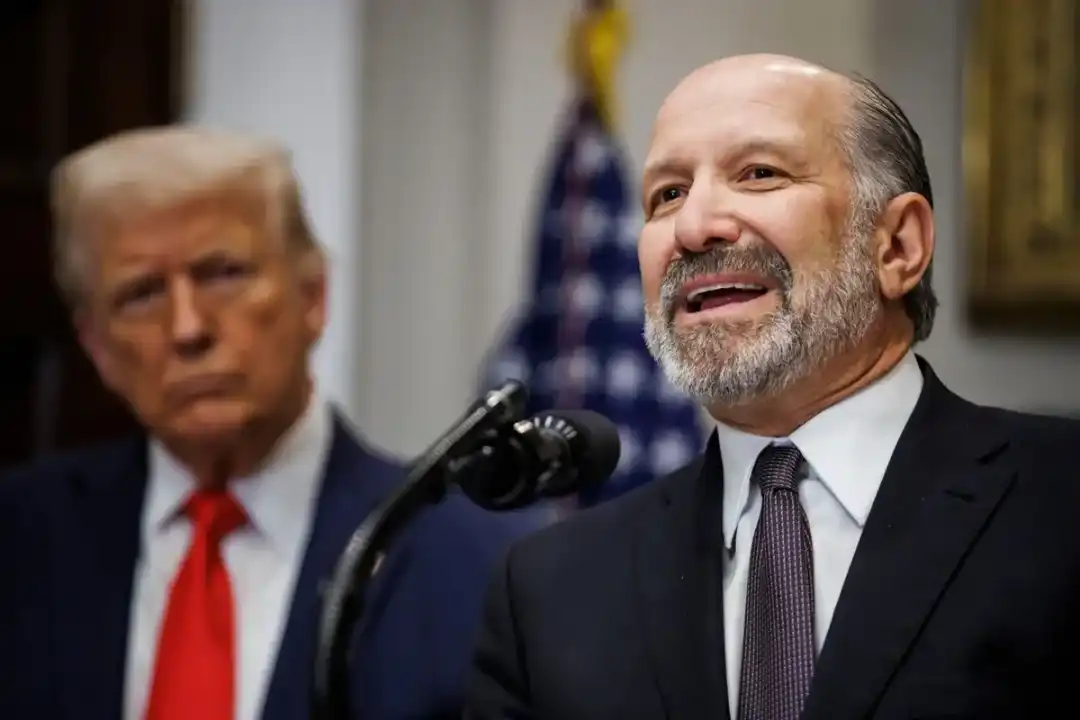
Howard Lutnick joined President Donald Trump's administration earlier this year as Commerce Secretary

"The global top five core themes happen to correspond to our five largest investments over the past three to four years," said the 46-year-old Bandelier, who also serves as head of equities, with the department's revenue expected to double by 2025 from 2008 (its previous best year).

After the Lutnick brothers and their younger siblings took over the majority ownership of the company, this series of successes has attracted wide attention from Wall Street and Washington. Executives have refuted allegations of conflicts of interest, stating that they now operate the company independently of Howard and had already positioned themselves in these inevitably heating-up business areas, with today's profits being a natural result.

「I assure you, we did not get something for nothing,」 Kelly said. 「It's easy for competitors to say that because they are not personally involved in our work every day and do not understand the hardships involved.」

On Tuesday, at the luxurious Ritz-Carlton hotel in Miami Beach, Brandon Lutnick described the busy period the family had just been through at a meeting.

「My brother Kyle and I have always looked forward to taking on these roles, but everything has indeed happened much sooner than we expected,」 said 27-year-old Brandon. He serves as the Chairman and CEO of the holding company, while his 29-year-old brother Kyle serves as Vice Chairman. 「For our company, this year has been a magnificent one.」

The previous evening, Brandon hosted a dinner where he sat next to former presidential cryptocurrency advisor Bo Hines, cryptocurrency exchange founders the Winklevoss brothers, and cryptocurrency advocate and television personality Kevin O'Leary, famous for the show "Shark Tank."

Cantor also partnered with long-time client Tether to launch a stablecoin in the United States; serving as the company's financial advisor (Cantor is also an investor in Tether), assisting in its fundraising. This fundraising could value Tether at up to $500 billion, bringing Cantor billions in profits. Additionally, the Genius Act passed by the Trump administration in July provides a regulatory framework for stablecoins in the United States, benefiting Cantor.

「Long before Howard entered government, we were already involved in the cryptocurrency field,」 Kelly said. 「Long before Howard took office, we had ventured into the tech and industrial sectors, as well as entered the electricity and renewable energy industry.」
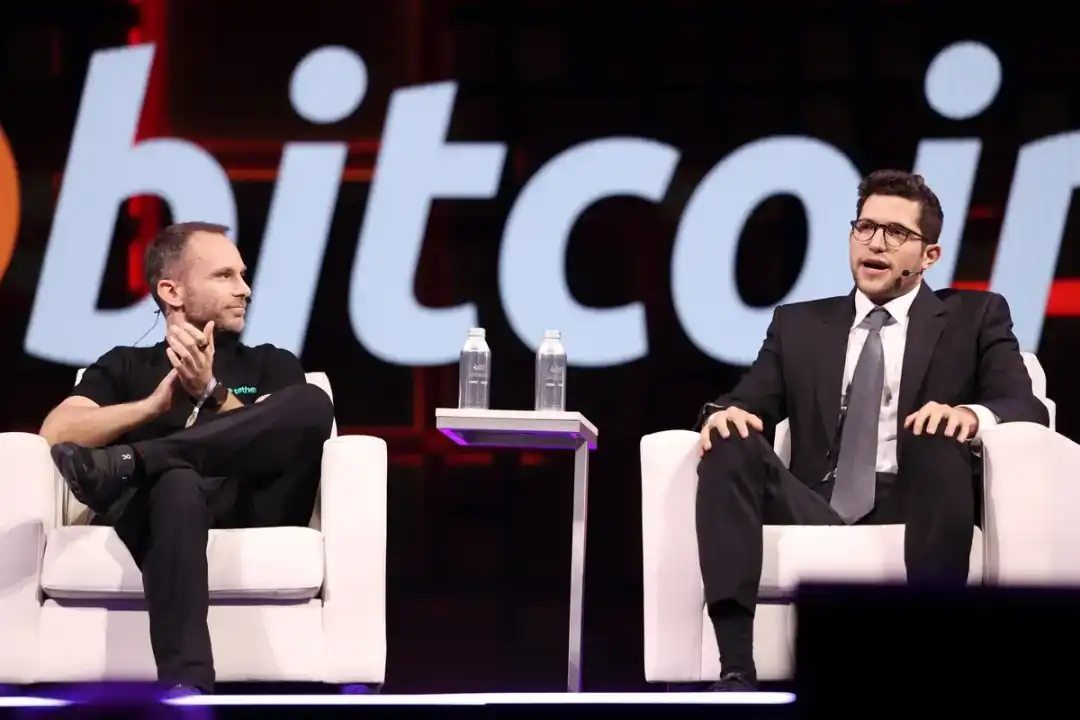
Tether CEO Paolo Ardoino and Cantor Chairman Brandon Lutnick at the 2025 Las Vegas Bitcoin Conference

Not everyone believes in Cantor's independence. In August of this year, Democratic Senators Ron Wyden and Elizabeth Warren requested more information, citing reports that Cantor was considering brokering a deal where a hedge fund would profit if U.S. tariffs were lifted. Sources familiar with the matter revealed that while other banks had been involved in such transactions, Cantor, to avoid potential conflicts of interest accusations, not only abandoned the deal but also refused to provide advisory services for the Trump Media Technology Group's Bitcoin asset vault.

「When the son of the Secretary of Commerce takes charge of the Wall Street firm once led by his father, one cannot help but question the propriety of everything,」 Wyden wrote in an email to Bloomberg in August.

However, in today's unprecedented intertwining of politics and business, Cantor did not shy away from interactions with government officials. At a conference in Miami, the company hosted President's son Eric Trump, as well as Texas Senator Ted Cruz—Cruz chairs the committee responsible for reviewing the Department of Commerce led by Howard Lutnick. That evening, Brandon Lutnick hurried to Washington and attended a dinner at the White House with Wall Street titans and his father.

For years, cryptocurrency has been met with skepticism, but early investors believe that the arrival of wealth is only a matter of time.

「One must endure the winter to welcome the spring,」 said 50-year-old Wall. He oversees the company's fixed income business, which launched a service offering billions of dollars in loans collateralized by Bitcoin and completed its first transaction in May. Wall stated that the Trump administration's support for innovation, regulatory clarity, and subsequent institutional adoption are «ushering in a whole new world».

Bandelier noted that the company's success also benefited from the sluggishness of mid-sized U.S. banks. «It's the easiest time to recruit in my career,» he said.

In a sense, Cantor and the cryptocurrency industry have already undergone a transformation, as this year's Miami conference (the third in four years) was the first to be open to the media.

Another milestone was the keynote speech by Tether CEO Paolo Ardoino, delivered before two of the most influential U.S. financial regulatory figures—SEC Chairman Paul Atkins and CFTC Acting Chair Caroline Pham.

During the conference break, these three individuals posed for a photo with Brandon Lutnick and Cantor's General Counsel Stephen Merkel, all smiles.


Original Article Link

You may also like

Token Cannot Compound, Where Is the Real Investment Opportunity?

The next chapter in the crypto industry will undoubtedly be written by Crypto-empowered Stocks.

February 6th Market Key Intelligence, How Much Did You Miss?

1. On-chain Flows: $508.2M USD inflow to Ethereum today; $390.8M USD outflow from Arbitrum 2. Biggest Gainers/Losers: $HBTC, $AIO 3. Top News: Current Bitcoin weekly RSI oversold signal comparable to June 2022

China's Central Bank and Eight Other Departments' Latest Regulatory Focus: Key Attention to RWA Tokenized Asset Risk


Foreword: Today, the People's Bank of China's website published the "Notice of the People's Bank of China, National Development and Reform Commission, Ministry of Industry and Information Technology, Ministry of Public Security, State Administration for Market Regulation, China Banking and Insurance Regulatory Commission, China Securities Regulatory Commission, State Administration of Foreign Exchange on Further Preventing and Dealing with Risks Related to Virtual Currency and Others (Yinfa [2026] No. 42)", the latest regulatory requirements from the eight departments including the central bank, which are basically consistent with the regulatory requirements of recent years. The main focus of the regulation is on speculative activities such as virtual currency trading, exchanges, ICOs, overseas platform services, and this time, regulatory oversight of RWA has been added, explicitly prohibiting RWA tokenization, stablecoins (especially those pegged to the RMB). The following is the full text:


To the people's governments of all provinces, autonomous regions, and municipalities directly under the Central Government, the Xinjiang Production and Construction Corps:


  Recently, there have been speculative activities related to virtual currency and Real-World Assets (RWA) tokenization, disrupting the economic and financial order and jeopardizing the property security of the people. In order to further prevent and address the risks related to virtual currency and Real-World Assets tokenization, effectively safeguard national security and social stability, in accordance with the "Law of the People's Republic of China on the People's Bank of China," "Law of the People's Republic of China on Commercial Banks," "Securities Law of the People's Republic of China," "Law of the People's Republic of China on Securities Investment Funds," "Law of the People's Republic of China on Futures and Derivatives," "Cybersecurity Law of the People's Republic of China," "Regulations of the People's Republic of China on the Administration of Renminbi," "Regulations on Prevention and Disposal of Illegal Fundraising," "Regulations of the People's Republic of China on Foreign Exchange Administration," "Telecommunications Regulations of the People's Republic of China," and other provisions, after reaching consensus with the Cyberspace Administration of China, the Supreme People's Court, and the Supreme People's Procuratorate, and with the approval of the State Council, the relevant matters are notified as follows:


  I. Clarify the essential attributes of virtual currency, Real-World Assets tokenization, and related business activities


  (I) Virtual currency does not possess the legal status equivalent to fiat currency. Virtual currencies such as Bitcoin, Ether, Tether, etc., have the main characteristics of being issued by non-monetary authorities, using encryption technology and distributed ledger or similar technology, existing in digital form, etc. They do not have legal tender status, should not and cannot be circulated and used as currency in the market.


  The business activities related to virtual currency are classified as illegal financial activities. The exchange of fiat currency and virtual currency within the territory, exchange of virtual currencies, acting as a central counterparty in buying and selling virtual currencies, providing information intermediary and pricing services for virtual currency transactions, token issuance financing, and trading of virtual currency-related financial products, etc., fall under illegal financial activities, such as suspected illegal issuance of token vouchers, unauthorized public issuance of securities, illegal operation of securities and futures business, illegal fundraising, etc., are strictly prohibited across the board and resolutely banned in accordance with the law. Overseas entities and individuals are not allowed to provide virtual currency-related services to domestic entities in any form.


  A stablecoin pegged to a fiat currency indirectly fulfills some functions of the fiat currency in circulation. Without the consent of relevant authorities in accordance with the law and regulations, any domestic or foreign entity or individual is not allowed to issue a RMB-pegged stablecoin overseas.


(II)Tokenization of Real-World Assets refers to the use of encryption technology and distributed ledger or similar technologies to transform ownership rights, income rights, etc., of assets into tokens (tokens) or other interests or bond certificates with token (token) characteristics, and carry out issuance and trading activities.


  Engaging in the tokenization of real-world assets domestically, as well as providing related intermediary, information technology services, etc., which are suspected of illegal issuance of token vouchers, unauthorized public offering of securities, illegal operation of securities and futures business, illegal fundraising, and other illegal financial activities, shall be prohibited; except for relevant business activities carried out with the approval of the competent authorities in accordance with the law and regulations and relying on specific financial infrastructures. Overseas entities and individuals are not allowed to illegally provide services related to the tokenization of real-world assets to domestic entities in any form.


  II. Sound Work Mechanism


  (III) Inter-agency Coordination. The People's Bank of China, together with the National Development and Reform Commission, the Ministry of Industry and Information Technology, the Ministry of Public Security, the State Administration for Market Regulation, the China Banking and Insurance Regulatory Commission, the China Securities Regulatory Commission, the State Administration of Foreign Exchange, and other departments, will improve the work mechanism, strengthen coordination with the Cyberspace Administration of China, the Supreme People's Court, and the Supreme People's Procuratorate, coordinate efforts, and overall guide regions to carry out risk prevention and disposal of virtual currency-related illegal financial activities.


  The China Securities Regulatory Commission, together with the National Development and Reform Commission, the Ministry of Industry and Information Technology, the Ministry of Public Security, the People's Bank of China, the State Administration for Market Regulation, the China Banking and Insurance Regulatory Commission, the State Administration of Foreign Exchange, and other departments, will improve the work mechanism, strengthen coordination with the Cyberspace Administration of China, the Supreme People's Court, and the Supreme People's Procuratorate, coordinate efforts, and overall guide regions to carry out risk prevention and disposal of illegal financial activities related to the tokenization of real-world assets.


  (IV) Strengthening Local Implementation. The people's governments at the provincial level are overall responsible for the prevention and disposal of risks related to virtual currencies and the tokenization of real-world assets in their respective administrative regions. The specific leading department is the local financial regulatory department, with participation from branches and dispatched institutions of the State Council's financial regulatory department, telecommunications regulators, public security, market supervision, and other departments, in coordination with cyberspace departments, courts, and procuratorates, to improve the normalization of the work mechanism, effectively connect with the relevant work mechanisms of central departments, form a cooperative and coordinated working pattern between central and local governments, effectively prevent and properly handle risks related to virtual currencies and the tokenization of real-world assets, and maintain economic and financial order and social stability.


  III. Strengthened Risk Monitoring, Prevention, and Disposal


  (5) Enhanced Risk Monitoring. The People's Bank of China, China Securities Regulatory Commission, National Development and Reform Commission, Ministry of Industry and Information Technology, Ministry of Public Security, State Administration of Foreign Exchange, Cyberspace Administration of China, and other departments continue to improve monitoring techniques and system support, enhance cross-departmental data analysis and sharing, establish sound information sharing and cross-validation mechanisms, promptly grasp the risk situation of activities related to virtual currency and real-world asset tokenization. Local governments at all levels give full play to the role of local monitoring and early warning mechanisms. Local financial regulatory authorities, together with branches and agencies of the State Council's financial regulatory authorities, as well as departments of cyberspace and public security, ensure effective connection between online monitoring, offline investigation, and fund tracking, efficiently and accurately identify activities related to virtual currency and real-world asset tokenization, promptly share risk information, improve early warning information dissemination, verification, and rapid response mechanisms.


  (6) Strengthened Oversight of Financial Institutions, Intermediaries, and Technology Service Providers. Financial institutions (including non-bank payment institutions) are prohibited from providing account opening, fund transfer, and clearing services for virtual currency-related business activities, issuing and selling financial products related to virtual currency, including virtual currency and related financial products in the scope of collateral, conducting insurance business related to virtual currency, or including virtual currency in the scope of insurance liability. Financial institutions (including non-bank payment institutions) are prohibited from providing custody, clearing, and settlement services for unauthorized real-world asset tokenization-related business and related financial products. Relevant intermediary institutions and information technology service providers are prohibited from providing intermediary, technical, or other services for unauthorized real-world asset tokenization-related businesses and related financial products.


  (7) Enhanced Management of Internet Information Content and Access. Internet enterprises are prohibited from providing online business venues, commercial displays, marketing, advertising, or paid traffic diversion services for virtual currency and real-world asset tokenization-related business activities. Upon discovering clues of illegal activities, they should promptly report to relevant departments and provide technical support and assistance for related investigations and inquiries. Based on the clues transferred by the financial regulatory authorities, the cyberspace administration, telecommunications authorities, and public security departments should promptly close and deal with websites, mobile applications (including mini-programs), and public accounts engaged in virtual currency and real-world asset tokenization-related business activities in accordance with the law.


  (8) Strengthened Entity Registration and Advertisement Management. Market supervision departments strengthen entity registration and management, and enterprise and individual business registrations must not contain terms such as "virtual currency," "virtual asset," "cryptocurrency," "crypto asset," "stablecoin," "real-world asset tokenization," or "RWA" in their names or business scopes. Market supervision departments, together with financial regulatory authorities, legally enhance the supervision of advertisements related to virtual currency and real-world asset tokenization, promptly investigating and handling relevant illegal advertisements.


  (IX) Continued Rectification of Virtual Currency Mining Activities. The National Development and Reform Commission, together with relevant departments, strictly controls virtual currency mining activities, continuously promotes the rectification of virtual currency mining activities. The people's governments of various provinces take overall responsibility for the rectification of "mining" within their respective administrative regions. In accordance with the requirements of the National Development and Reform Commission and other departments in the "Notice on the Rectification of Virtual Currency Mining Activities" (NDRC Energy-saving Building [2021] No. 1283) and the provisions of the "Guidance Catalog for Industrial Structure Adjustment (2024 Edition)," a comprehensive review, investigation, and closure of existing virtual currency mining projects are conducted, new mining projects are strictly prohibited, and mining machine production enterprises are strictly prohibited from providing mining machine sales and other services within the country.


  (X) Severe Crackdown on Related Illegal Financial Activities. Upon discovering clues to illegal financial activities related to virtual currency and the tokenization of real-world assets, local financial regulatory authorities, branches of the State Council's financial regulatory authorities, and other relevant departments promptly investigate, determine, and properly handle the issues in accordance with the law, and seriously hold the relevant entities and individuals legally responsible. Those suspected of crimes are transferred to the judicial authorities for processing according to the law.


 (XI) Severe Crackdown on Related Illegal and Criminal Activities. The Ministry of Public Security, the People's Bank of China, the State Administration for Market Regulation, the China Banking and Insurance Regulatory Commission, the China Securities Regulatory Commission, as well as judicial and procuratorial organs, in accordance with their respective responsibilities, rigorously crack down on illegal and criminal activities related to virtual currency, the tokenization of real-world assets, such as fraud, money laundering, illegal business operations, pyramid schemes, illegal fundraising, and other illegal and criminal activities carried out under the guise of virtual currency, the tokenization of real-world assets, etc.


  (XII) Strengthen Industry Self-discipline. Relevant industry associations should enhance membership management and policy advocacy, based on their own responsibilities, advocate and urge member units to resist illegal financial activities related to virtual currency and the tokenization of real-world assets. Member units that violate regulatory policies and industry self-discipline rules are to be disciplined in accordance with relevant self-regulatory management regulations. By leveraging various industry infrastructure, conduct risk monitoring related to virtual currency, the tokenization of real-world assets, and promptly transfer issue clues to relevant departments.


  IV. Strict Supervision of Domestic Entities Engaging in Overseas Business Activities


(XIII) Without the approval of relevant departments in accordance with the law and regulations, domestic entities and foreign entities controlled by them may not issue virtual currency overseas.


  (XIV) Domestic entities engaging directly or indirectly in overseas external debt-based tokenization of real-world assets, or conducting asset securitization activities abroad based on domestic ownership rights, income rights, etc. (hereinafter referred to as domestic equity), should be strictly regulated in accordance with the principles of "same business, same risk, same rules." The National Development and Reform Commission, the China Securities Regulatory Commission, the State Administration of Foreign Exchange, and other relevant departments regulate it according to their respective responsibilities. For other forms of overseas real-world asset tokenization activities based on domestic equity by domestic entities, the China Securities Regulatory Commission, together with relevant departments, supervise according to their division of responsibilities. Without the consent and filing of relevant departments, no unit or individual may engage in the above-mentioned business.


  (15) Overseas subsidiaries and branches of domestic financial institutions providing Real World Asset Tokenization-related services overseas shall do so legally and prudently. They shall have professional personnel and systems in place to effectively mitigate business risks, strictly implement customer onboarding, suitability management, anti-money laundering requirements, and incorporate them into the domestic financial institutions' compliance and risk management system. Intermediaries and information technology service providers offering Real World Asset Tokenization services abroad based on domestic equity or conducting Real World Asset Tokenization business in the form of overseas debt for domestic entities directly or indirectly venturing abroad must strictly comply with relevant laws and regulations. They should establish and improve relevant compliance and internal control systems in accordance with relevant normative requirements, strengthen business and risk control, and report the business developments to the relevant regulatory authorities for approval or filing.


  V. Strengthen Organizational Implementation


  (16) Strengthen organizational leadership and overall coordination. All departments and regions should attach great importance to the prevention of risks related to virtual currencies and Real World Asset Tokenization, strengthen organizational leadership, clarify work responsibilities, form a long-term effective working mechanism with centralized coordination, local implementation, and shared responsibilities, maintain high pressure, dynamically monitor risks, effectively prevent and mitigate risks in an orderly and efficient manner, legally protect the property security of the people, and make every effort to maintain economic and financial order and social stability.


  (17) Widely carry out publicity and education. All departments, regions, and industry associations should make full use of various media and other communication channels to disseminate information through legal and policy interpretation, analysis of typical cases, and education on investment risks, etc. They should promote the illegality and harm of virtual currencies and Real World Asset Tokenization-related businesses and their manifestations, fully alert to potential risks and hidden dangers, and enhance public awareness and identification capabilities for risk prevention.


  VI. Legal Responsibility


  (18) Engaging in illegal financial activities related to virtual currencies and Real World Asset Tokenization in violation of this notice, as well as providing services for virtual currencies and Real World Asset Tokenization-related businesses, shall be punished in accordance with relevant regulations. If it constitutes a crime, criminal liability shall be pursued according to the law. For domestic entities and individuals who knowingly or should have known that overseas entities illegally provided virtual currency or Real World Asset Tokenization-related services to domestic entities and still assisted them, relevant responsibilities shall be pursued according to the law. If it constitutes a crime, criminal liability shall be pursued according to the law.


  (19) If any unit or individual invests in virtual currencies, Real World Asset Tokens, and related financial products against public order and good customs, the relevant civil legal actions shall be invalid, and any resulting losses shall be borne by them. If there are suspicions of disrupting financial order and jeopardizing financial security, the relevant departments shall deal with them according to the law.


  This notice shall enter into force upon the date of its issuance. The People's Bank of China and ten other departments' "Notice on Further Preventing and Dealing with the Risks of Virtual Currency Trading Speculation" (Yinfa [2021] No. 237) is hereby repealed.


Former Partner's Perspective on Multicoin: Kyle's Exit, But the Game He Left Behind Just Getting Started

Kyle knew his game, so he decided to focus on playing the game he was good at and interested in.

Why Bitcoin Is Falling Now: The Real Reasons Behind BTC's Crash & WEEX's Smart Profit Playbook

Bitcoin's ongoing crash explained: Discover the 5 hidden triggers behind BTC's plunge & how WEEX's Auto Earn and Trade to Earn strategies help traders profit from crypto market volatility.

Wall Street's Hottest Trades See Exodus

This time there is no single triggering factor, but rather market anxiety about asset valuation, with many already skeptical of these valuations being too high, leading to investors choosing to retreat almost simultaneously.