
Current Bull Market Paradigm Shift: Old Coins Making a Comeback, Inflation Trap, and Retail Investors' Inter-generational Transformation


Original Article Title: The New Altcoin Drama: Inflation, Awareness, and TikTok
Original Article Author: Stacy Muur, Crypto Researcher
Original Article Translation: Deep Tide TechFlow
We have finally entered the bull market, but it has also exposed some weaknesses in the Web3 economy reality.
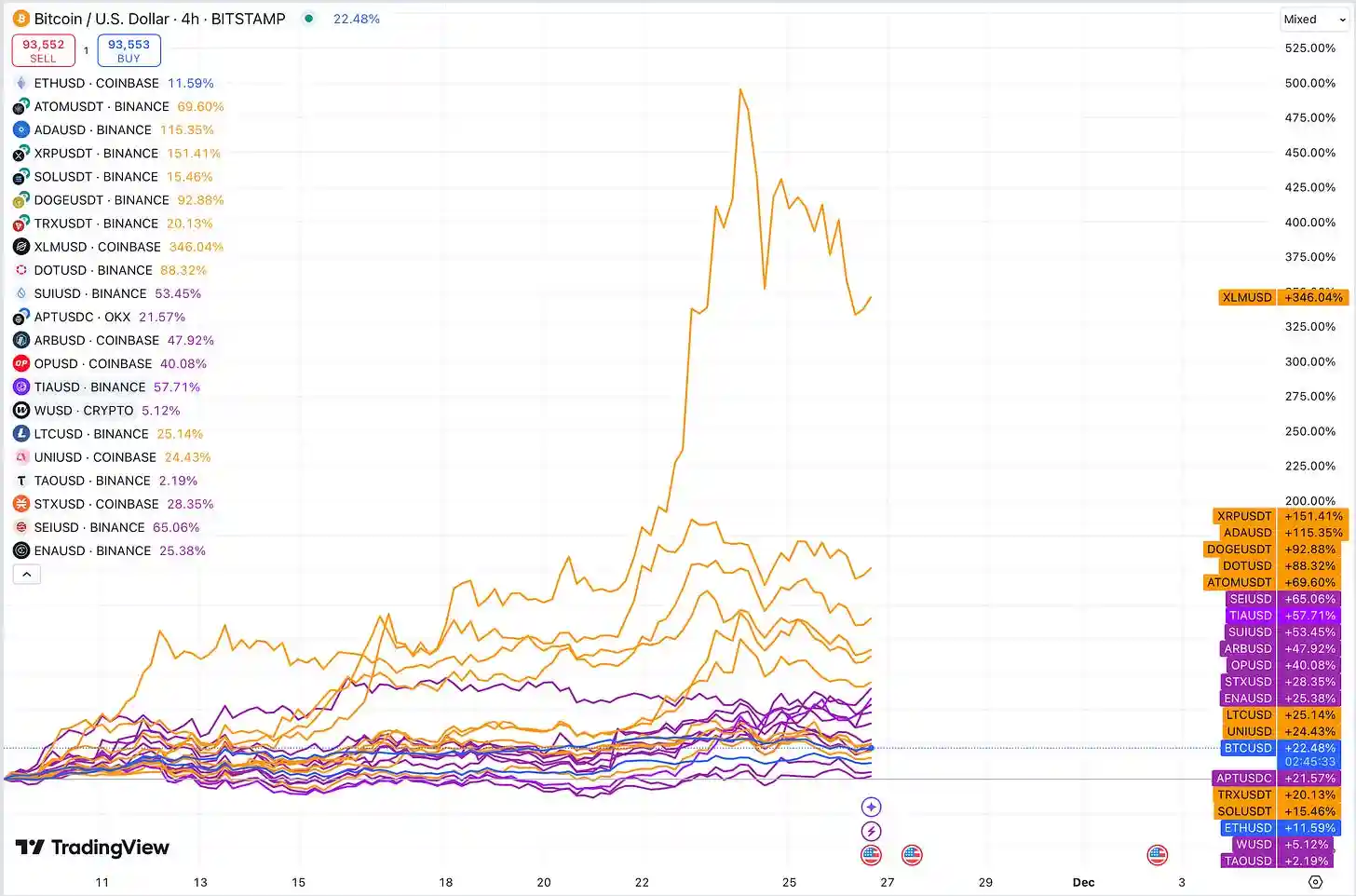
For market participants who have been continuously optimizing their portfolios over the past few years, this bull market seems somewhat "stingy." Many newer tokens have underperformed, while established coins like XRP, $ADA, $DOT, and $ATOM have delivered noteworthy returns.
Background: A Comparison of Old Coins and New Coins Performance
Historically, newer altcoins (tokens generated within less than two years from TGE, Token Generation Event) have often consistently outperformed established coins over different time periods. However, this bull market has shown a completely different trend: older projects (such as $XLM, $XRP, $ADA, $DOT, and $ATOM) have become the dominant force in the market, while new coins have shown lackluster performance.
Next, we will explore the reasons behind this phenomenon, its potential implications, and insights for the future.
Analyzing the Trend Shift: Key Insights
1. Influx of New Capital, Not Fund Rotation
The widespread rise of older altcoins indicates that this trend is not driven by fund rotation within the crypto market. It is more likely that the market is attracting new capital, especially from retail investors re-entering the market.
2. Retail Investors' Return, but with Different Focus
With the rise in Coinbase app rankings and increased views of crypto-related content on YouTube, signs of retail investors' return are evident. However, unlike the expected scenario where retail investors would allocate funds to high-risk Memecoins, this capital seems to be flowing more towards projects that matured in the last bull run. This may indicate that the current retail investor demographic is older, more risk-averse, or more familiar with prominent altcoins from the last bull market.
3. Familiarity and Trust as Determining Factors
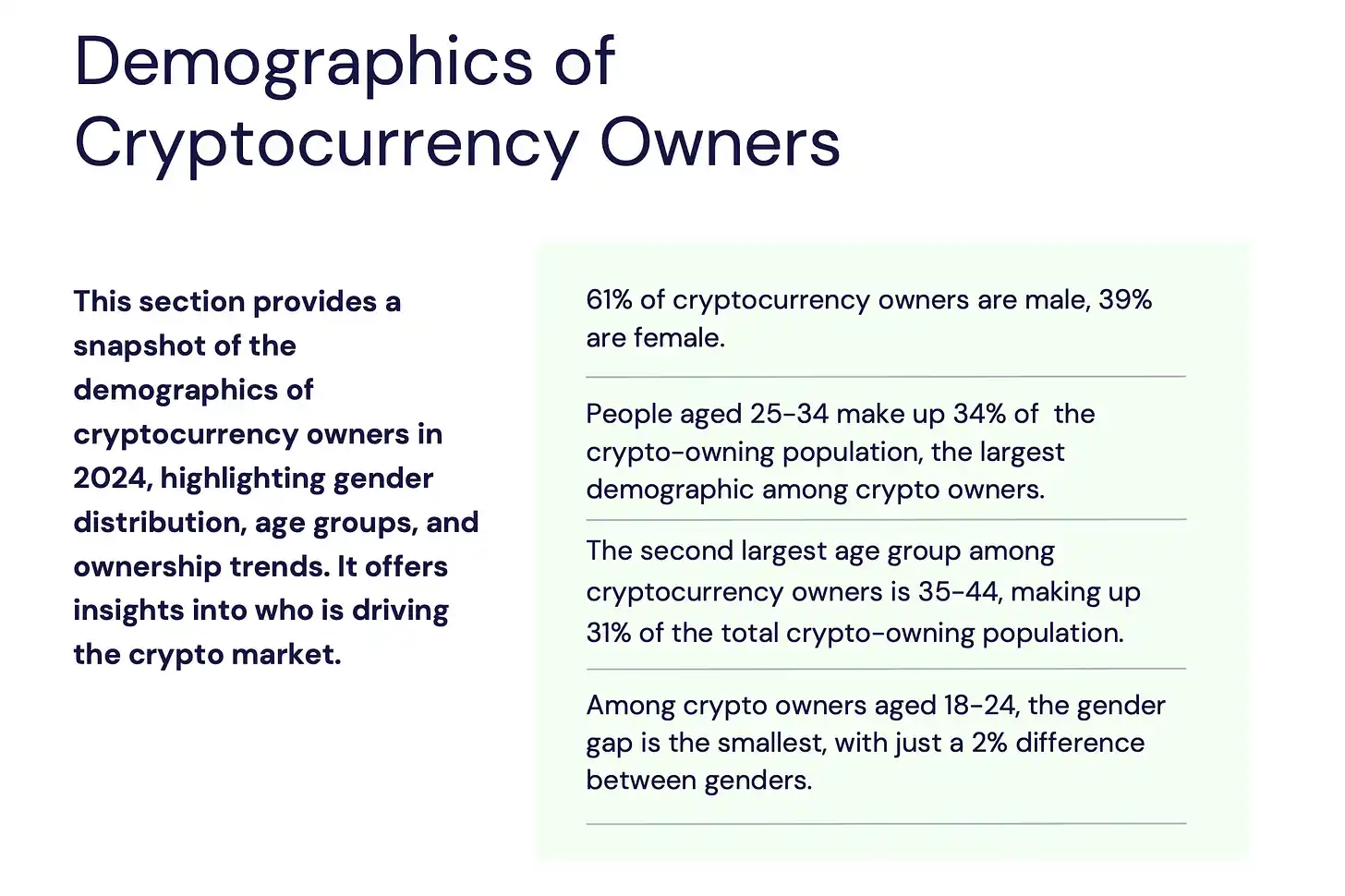
During this bull market, the prominent old-school meme coins that have stood out were mostly star projects from the previous bull run. This indicates that returning retail investors may fall in the 25 to 45 age range and have some experience in the cryptocurrency market. They may lack understanding of newer narratives such as DePIN (Decentralized Physical Infrastructure Network), RWA (Real World Assets), and AI, and therefore tend to prefer projects they are familiar with.
4. Influence of Generational Differences
Simultaneously, Gen Z investors (typically exposed to cryptocurrency through TikTok or meme-driven content) have less disposable income. This may explain why, despite retail investor resurgence, the Memecoin market has not attracted significant inflows of capital.
5. Impact of Inflation
Another critical factor leading to poor performance of new meme coins is inflation. Relatively speaking, established coins have a higher circulating supply percentage, so new capital is not diluted by the continuous issuance of tokens.
If you are interested in these trends, the future market dynamics will be worth monitoring. Will the rise of established coins change the economic landscape of Web3? How will new coins respond to these challenges? Let's wait and see.
In the following content, we will focus on two key factors that have a significant impact on market performance during a bull market: Inflation and Retail Population Structure.
Inflation: The Silent Killer of Crypto Gains
The current bull market has filled the crypto market with optimism but has also exposed an undeniable reality: inflation is quietly eroding investors' gains. For any investor looking to profit in this bull market, understanding the impact of inflation on asset value is crucial.
Let's illustrate this with some real examples:
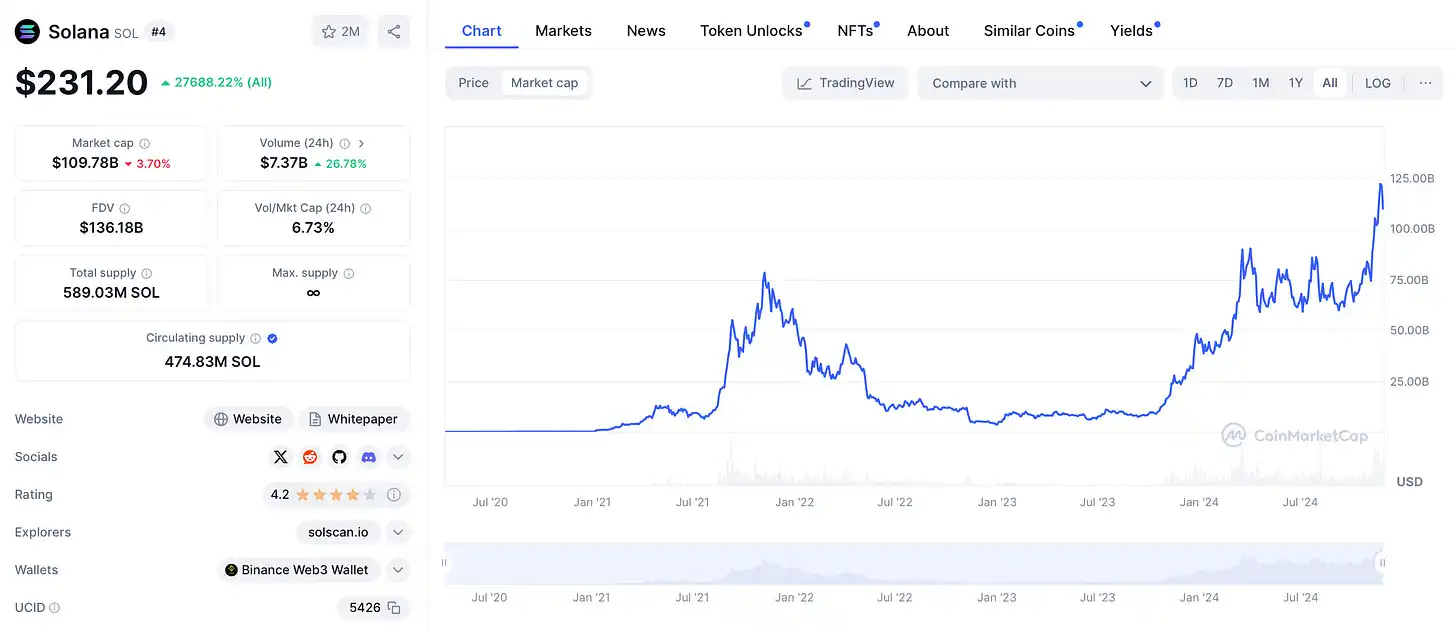
In 2021, $SOL reached a price of $258 with a market cap of 750 billion dollars. Today, its price is still $258, but the market cap has increased to 1220 billion dollars. What is the reason behind this change? The answer is: the increase in circulating supply. As the supply expands, the value of an individual token is diluted by inflation, requiring a higher market cap to maintain the same price level.
Here are some more similar cases:
· $TAO: Although its market cap has surpassed an all-time high (ATH) of 46 billion dollars, the price has failed to hit a new high.
· $ENA: The current market cap is close to the ATH (21.2 billion dollars vs. the current 18.4 billion dollars), but the price has dropped from $1.49 to $0.64.
· $ARB: The ATH market cap in March was 46 billion dollars, now down to 38 billion dollars. The price in March was $2.1, and now it's only $0.8.
· $SEI: The ATH market cap was 28 billion dollars, and recently it's 22.5 billion dollars; the ATH price was $1.03, and now it's $0.53.
These are just the tip of the iceberg. In fact, many tokens are facing similar challenges.
Even as the "altcoin season" seems to have arrived, inflation is quietly eroding the potential gains of many assets. With an increasing circulating supply, maintaining or growing token prices requires more capital inflow. For assets with high inflation rates, investors even in a bull market have to face a tough struggle.
How to Address the Inflation Challenge
To better protect their gains in a bull market, investors can take the following strategies:
1. Research Tokenomics: Before investing, carefully analyze the project's inflation rate and token distribution plan. Focus on projects with slower supply growth or lower inflation rates.
2. Diversify Investments Wisely: Prioritize projects with limited total supply or a clearly defined inflation cap, such as Bitcoin (BTC).
3. Evaluate Real Returns: When calculating investment returns, consider the inflation factor and adjust expectations for gains.
Inflation is not just a macroeconomic term; it is indeed the "silent killer of returns" in the crypto market. Understanding and effectively addressing the impact of inflation will be a key factor for investors to succeed in a bull market.
TikTok vs. CoinMarketCap
If you are reading this article, you are likely a seasoned investor who has experienced both bull and bear markets. You may have researched various new protocols, participated in airdrops and mining, and explored many emerging investment narratives. In contrast, those ordinary retail investors who have just entered the market due to bullish news events or Bitcoin approaching $100,000 have a completely different background and mindset from us.
To truly understand the behavior of these retail investors, it might be helpful to reflect on the time when you first encountered cryptocurrency. Back then, you may have had only a centralized exchange (CEX) account filled with token codes that were completely unfamiliar to you.
I believe that the retail investors entering the market can be broadly divided into the following three categories:
· Gen Z: This generation may have purchased Memecoins (usually entertaining and highly volatile tokens) due to the popularity of TikTok.
· Gen X: This generation may have had some cryptocurrency investment experience in previous bull markets.
· Gen Y: Attracted to retail trading in recent years, they may have developed an interest in the cryptocurrency market.
Recently, I conducted an in-depth study on the investment mindset of Gen Z. Compared to other generations, they have significant differences in risk attitude and behavior patterns. The following description may be more applicable to the typical Gen Z investor. If you are a Gen Z reader and feel that these contents do not align with you, you may be one of the exceptions.
For Gen Z, taking risks and incurring losses is generally not advisable. They tend to engage in low-risk activities, such as earning rewards through completing Galxe tasks, playing Hamster Kombat games, or participating in airdrop mining. These activities require more time investment rather than money, making them more attractive to them.
However, trading is a completely different domain. When Gen Z first encounters a bull market through TikTok, they may initially find it an exciting adventure. However, with losses brought about by market fluctuations, they are likely to quickly feel the harsh reality.
In contrast, the situation is different for Gen Y. If they become interested in cryptocurrency, it is likely because they have already accumulated some trading experience in the stock market and have a clearer understanding of investment risks. Therefore, they are less likely to be attracted to high-risk Memecoins.
Gen Y tends to open CoinMarketCap, review token lists, analyze market charts, and make decisions based on data. Additionally, they usually have more disposable income than Gen Z, making them more rational and prudent in choosing investment targets.
Conclusion
Above are some of my thoughts on retail investor behavior in the current market, and these views are generally consistent with recent market performance. Of course, this does not mean that my analysis is 100% accurate, nor does it represent the only interpretation.
You may also like

Champion's Final Bow: FC Barcelona vs Real Betis – Celebrate the Title with a Home Finale

Best Oil Trading Platform for Crypto Users in 2026

5 Futures Trading Strategies Smart Traders Use to Cut Crypto Fees and Boost Futures Returns
What Is TradFi? How Crypto Traders Can Now Access Crude Oil, Gold, and Global Markets

How WEEX Bridges Crypto and Football: A Deep Look at the LALIGA Partnership Inside the WEEX App
WEEX is not just a LALIGA sponsor. It’s a true partner. From iPhone Dynamic Island to LALIGA-themed app icons and smart posters, see how WEEX brings football passion into every trade — and builds a real bridge between crypto and sports.

FC Barcelona vs Real Madrid Preview: El Clásico – Can Barça Clinch the Title at Spotify Camp Nou?
FC Barcelona vs Real Madrid El Clásico match preview for May 11, 2026. Barça need just 1 point to win LALIGA. Can Madrid delay the trophy? Full preview inside.

At the Stripe conference, I saw the future of the AI economy

Miners welcome a new life

Seven Important Judgments by Claude Code's Founder at the Sequoia Conference

The payment moment of AI agents: Who will become the Stripe of the machine economy?

Morning Report | MoonPay acquires Solana's execution layer DFlow; Strategy releases Q1 financial report; Manta Network announces the termination of Manta staking program

Rented Tracks: What is this wave of stablecoin FX hot money really paying for?

Dialogue Velocity Eric: What is the stablecoin track that the CFO really wants?

Strategy should have said that selling coins is not ruled out

How MegaETH Achieved a TVL of 700m Within a Week of TGE? Analyzing the Packaging Strategy

Futures Trading Hours: Trade Cryptocurrency 24/7 and Earn Back Up to 45% in Trading Fees
Learn futures trading hours and the best time to trade crypto futures. Discover 24/7 market insights, peak trading sessions, and how to earn back up to 45% in fees.
Why is a16z Crypto raising another $2.2 billion to heavily invest in Web3?
Polymarket Underlying Algorithm Explained
Champion's Final Bow: FC Barcelona vs Real Betis – Celebrate the Title with a Home Finale
Best Oil Trading Platform for Crypto Users in 2026
5 Futures Trading Strategies Smart Traders Use to Cut Crypto Fees and Boost Futures Returns
What Is TradFi? How Crypto Traders Can Now Access Crude Oil, Gold, and Global Markets
How WEEX Bridges Crypto and Football: A Deep Look at the LALIGA Partnership Inside the WEEX App
WEEX is not just a LALIGA sponsor. It’s a true partner. From iPhone Dynamic Island to LALIGA-themed app icons and smart posters, see how WEEX brings football passion into every trade — and builds a real bridge between crypto and sports.
FC Barcelona vs Real Madrid Preview: El Clásico – Can Barça Clinch the Title at Spotify Camp Nou?
FC Barcelona vs Real Madrid El Clásico match preview for May 11, 2026. Barça need just 1 point to win LALIGA. Can Madrid delay the trophy? Full preview inside.


