
- Buy Crypto
- Markets
 Futures
- Spot
- Copy Trade
- Earn
- More
Ethereum Price Prediction: $3,000 Rejected, But On-Chain Data Reveals a Different Outlook

Key Takeaways
- Despite the recent price dip, Ethereum’s network fundamentals remain robust and are a strong indicator of potential future growth.
- ETF-related selling pressure has influenced Ethereum’s current price range, but it does not signify a loss of confidence in core investors.
- The rise of U.S.-Iran geopolitical tensions has not deterred Ethereum’s growth, reflecting investor belief in the cryptocurrency’s resilience and future improvements.
- Predictions suggest Ethereum is positioned for a significant breakout, especially with upcoming technological upgrades enhancing scalability and efficiency.
WEEX Crypto News, 2026-01-29 07:58:22
Within the dynamic sphere of cryptocurrency, Ethereum stands out not only for its technological innovations but also for its fluctuating yet promising market behavior. As of late January 2026, Ethereum’s price is stabilizing between $2,930 and $2,950, a position it has occupied during a phase of consolidation following a more expansive retreat from its zenith of over $3,400 earlier in January. This article delves into the current market conditions affecting Ethereum, analyzing the impacts of external factors such as ETF outflows, on-chain activities, geopolitical tensions, and future technological advancements.
ETF Pressure: A Temporary Hurdle
In the realm of cryptocurrency, price fluctuations are often a reflection of broader market sentiments rather than intrinsic value shifts. The recent downtrend in Ethereum’s pricing has been largely attributed to significant outflows from spot Ethereum Exchange-Traded Funds (ETFs), which witnessed a withdrawal of over $600 million in just a few days—from January 20 to 23 alone. Notably, this mass outflow included a $250 million exit from BlackRock’s ETHA in a single day.
Rather than signaling a crisis of confidence among investors, this trend appears to be a tactical rotation and profit-taking as opposed to an outright exodus from Ethereum investments. The activity indicates a classic market behavior where profits are secured as prices temporarily reach peaks. This sentiment is reinforced by on-chain data revealing significant whale buying activity, with a collection of approximately $1 billion in ETH accumulated during the recent market correction. Meanwhile, fundamental aspects such as funding rates and the reset of open interest from previously congested long positions denote a market that is resetting leverage instead of displaying dwindling faith among investors.
Unveiling the Strength of Ethereum’s Network Activity
Despite the recent price compression, Ethereum’s underlying network activity offers a contrasting narrative, one of resilience and potential growth. On-chain metrics have consistently shown encouraging signs. For instance, the number of daily active addresses has surged to nearly 1.3 million, while transaction volumes are robust, fluctuating between 1.9 million to 2.2 million transactions daily.
The activity of validators further underpins this stability; with near-zero exit queues and strengthening entry queues, staking participation has witnessed a noticeable upswing which in turn decreases circulating supply. These dynamics are made all the more potent by upgrades that have optimized network efficiency and reduced transaction costs. Subsequently, there is a notable escalation in decentralized finance (DeFi) and app usage, reinforcing a pattern where firm fundamentals precede major price movements, even amid a superficially weak market price performance.
Ethereum’s Ascent Amid Geopolitical Tensions
The geopolitical sphere, fraught with tension, usually casts shadows over financial markets. Recently, mounting tensions between the U.S. and Iran—exacerbated by Iran’s Revolutionary Guard’s aggressive stance following American military mobilizations—added a volatile dimension. Moreover, harsh crackdowns by Iran and ensuing international reactions point to a heightened state of geopolitical instability. Despite this backdrop, Ethereum’s resilience is noteworthy, illustrating investor confidence in the digital asset, likely buoyed by sustained developments like prioritization of post-quantum security measures by the Ethereum Foundation.
The formation of a new Post Quantum (PQ) team at the Ethereum Foundation underlines an evolutionary stride towards fortifying the blockchain against future cryptographic threats, tackling challenges raised by quantum computing. This strategic initiative, spearheaded by acclaimed industry leaders, symbolizes Ethereum’s proactive approach to long-term threats, further cementing investor confidence regardless of external geopolitical disturbances.
Charting Ethereum’s Future Price Path
From a technical standpoint, Ethereum is portraying a bearish outlook, yet not one devoid of potential reversals. Currently, Ethereum hovers above the critical support range of $2,850–$2,900, an area enhanced by past demand and Fibonacci retracement alignments. The Relative Strength Index (RSI), fluctuating between 35 to 40, highlights caution yet stops short of indicating a market capitulation.
A stable hold above this support and a subsequent resurgence past the key threshold of $3,060 could potentially unlock an upward trajectory towards $3,190–$3,400. In contrast, sliding below the $2,800 mark could ignite a deeper correction phase, with levels around $2,700 posing as substantial support points.
Looking ahead, Ethereum’s 2026 roadmap is replete with promising advancements. The anticipated Glamsterdam upgrade, followed by the Hegota phase, is poised to bolster scalability, efficiency, and sustainability on the platform. These upgrades dovetail with significant infrastructure improvements, particularly in Layer-2 enhancements, that promise to accelerate Ethereum’s adoption and performance.
The enactment of over 8.7 million new contracts this year heralds the potential for transformative growth if macroeconomic landscapes stabilize. Thus, while market predictions remain conservative in the short term, the ground appears fertile for substantial advances tethered to the foreseen technological developments and operational improvements.
Bitcoin Hyper: Bridging BTC and Solana
Shifting attention towards developments surrounding Bitcoin, a notable evolution surfaces with Bitcoin Hyper ($HYPER). This innovative project introduces a novel phase to the Bitcoin ecosystem by integrating Solana’s speed capabilities into Bitcoin’s robust security framework. This amalgamation allows Bitcoin Hyper to offer ultra-fast, cost-effective smart contracts, decentralized applications, and even meme coin generation, securely anchored by Bitcoin’s foundation.
Audited by the consulting firm Consult, the project is focused on fostering a trusted and scalable environment for users. The momentum is already conspicuous; the project’s presale has remarkably surpassed $30.9 million, with tokens initially priced at $0.013635. As demand surges for speed-efficient BTC-based applications, Bitcoin Hyper emerges as a pivotal entity capable of bridging the divide between two of the digital currency landscape’s giants—Bitcoin and Solana. Bitcoin might have laid the groundwork, but Bitcoin Hyper is charting a new, exhilarating course by enriching this foundation with speed and adaptability.
In conclusion, Ethereum’s current market position, underscored by a blend of price suppression and strengthening network metrics, depicts an asset poised for future prosperity, contingent on technical and macroeconomic variables aligning favorably. As the digital currency ecosystem evolves, Ethereum’s robust network activity, strategic technological enhancements, and resilience amid geopolitical unrest position it as a compelling option for investors anticipating long-term growth paths.
FAQ
Why is Ethereum struggling to break the $3,000 barrier?
Ethereum’s difficulty in breaching the $3,000 level is primarily due to large outflows from Ethereum ETFs, which have applied downward pressure on price momentum. This reflects investor profit-taking rather than diminished faith in Ethereum’s fundamentals, as evidenced by robust on-chain activity and whale accumulation.
How are geopolitical tensions affecting Ethereum?
Geopolitical tensions, particularly those between the U.S. and Iran, have seemingly not deterred Ethereum’s trajectory. The cryptocurrency’s resilience in these conditions is partly due to investor confidence in Ethereum’s long-term growth potential and strategic enhancements such as post-quantum security.
What are Ethereum’s upcoming upgrades?
Ethereum’s 2026 roadmap includes major upgrades, namely the Glamsterdam and Hegota phases, focusing on enhancing scalability, efficiency, and sustainability. These upgrades promise to bolster Ethereum’s network capabilities and support its overall adoption and use.
What makes Bitcoin Hyper significant for Bitcoin’s ecosystem?
Bitcoin Hyper bridges Bitcoin’s security with Solana’s speed, enabling fast, cost-effective transactions and smart contracts. It addresses Bitcoin’s traditional limitations in speed and flexibility, creating a robust platform for decentralized applications and further adoption in the digital currency realm.
What role do whales play in Ethereum’s market stability?
Whales contribute significantly to Ethereum’s market stability by accumulating sizable amounts of ETH during price corrections. Their buying activity indicates sustained confidence in Ethereum’s long-term prospects and helps mitigate volatility induced by short-term selling pressures.
You may also like
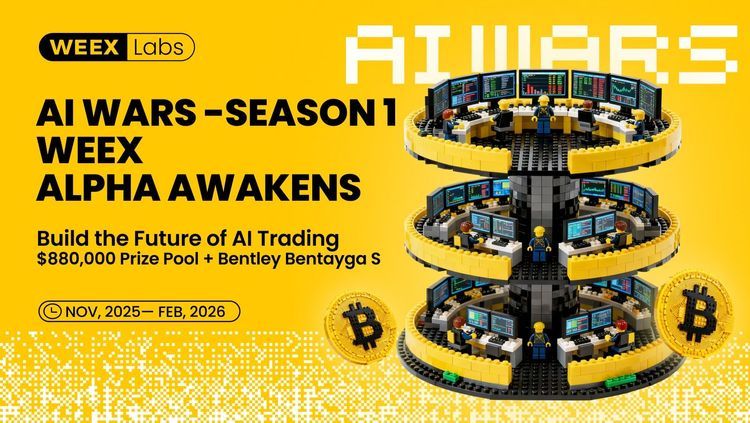
Asia's Next Great Dog Coin Debuts at the Weex AI Trading Hackathon
A BNB Chain meme token inspired by the Shih Tzu dog, blending community culture, creativity, and long‑term loyalty in Web3.
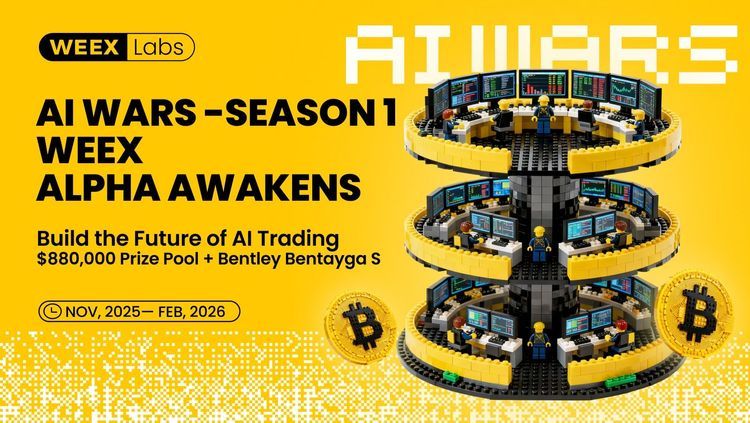
Fluxor: Connecting Global Builders With the WEEX AI Trading Hackathon
A hackathon platform connecting builders and creators to collaborative opportunities and innovation in Web3, enabling AI-oriented developers to experiment and create at scale.
The growth of AI-driven tools and community collaboration in Web3 has created new opportunities for developers worldwide. As a community partner and sponsor of the WEEX AI Trading Hackathon, Fluxor's mission to unify hackathon experiences and foster creative partnerships aligns with this spirit of collective innovation.

Houthi Deadline Countdown Begins | Rewire News Morning Brief

Middle East Conflict Escalation and Rate Hike Expectation Trigger Worst Gold Sell-Off in 43 Years

The Largest Oil Reserve Release in History: Why Is the Oil Price Still Above 100?

AI Agent Can't Kill SaaS

This viral Beijing high school teacher, Jiang Xueqin, predicted America's downfall in advance

Interview with Bill, Head of Bitget AI: In the AI Trading Era, How Far Are We from "Earning While Lying Down"?
Privacy Infrastructure and the WEEX AI Trading Hackathon
A privacy-first Web3 ecosystem using masternodes, encrypted messaging, and confidential payments to protect traders and AI strategies on-chain.
Meme Culture, Community Energy, and the WEEX AI Trading Hackathon
A community-driven meme token built around one of the internet's most recognizable characters.
RGAI: Exploring AI Agent Trading and Advancing the WEEX AI Trading Hackathon
A Solana-based AI agent project connecting automated trading strategies with on-chain token dynamics in AI-driven Web3 markets.
ForeGate: Bringing Decentralized Forecasting to the WEEX AI Trading Hackathon
A decentralized prediction market platform enabling users and builders to gauge probabilities and make informed decisions around future events in AI-enhanced Web3 environments.
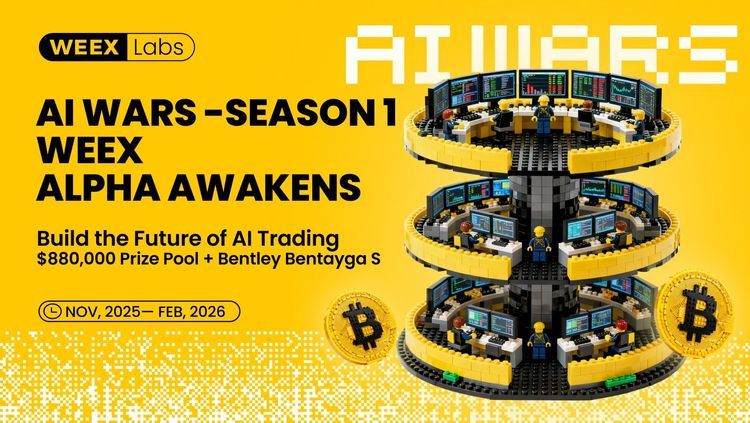
Apello: Automating Web3 Community Management and Partnering with the WEEX AI Trading Hackathon
A community toolkit enabling builders to streamline engagement and participation as Web3 ecosystems evolve with AI and decentralized innovation. As a community partner and sponsor of the WEEX AI Trading Hackathon, Apello reflects the growing fusion of community-driven participation and technical creativity in the Web3 space. The platform's commitment to empowering community interaction and meaningful engagement aligns with this shared vision of innovation.
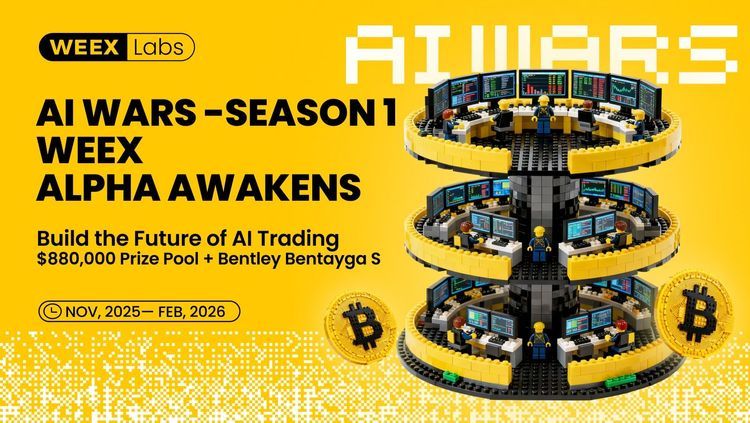
RootData: Delivering Structured Web3 Intelligence and Sparking the WEEX AI Trading Hackathon
A Web3 data platform enabling investors and builders to uncover market insights and informed decision-making in AI-powered trading.
As a community partner and sponsor of the WEEX AI Trading Hackathonm RootData has a shared focus on transparency, data integrity, and insight-driven innovation across AI trading and market research.
Firecrew: Elevating Trader Skill and Amplifying the WEEX AI Trading Hackathon
A trading education and community platform helping individuals build disciplined strategies and risk control that pair with AI-driven innovation.
CrazyLiveDAO: Building an AI Trading Education DAO in Step with the WEEX AI Trading Hackathon
A Solana-based DAO and membership community combining AI agents, live trading education, and Web3 tools for global Chinese investors.
Mome: Blending AI, Memes, and Creator-First Tokens, and Driving the WEEX AI Trading Hackathon
An AI-driven BNB Chain platform that lets creators launch meme tokens powered by viral video content and community ownership.
Matchain: Building AI-Powered Identity and Empowering the Weex AI Trading Hackathon
An AI-native Layer 2 that brings user-owned identity, data, and agents onchain for the next wave of trading innovation.
Asia's Next Great Dog Coin Debuts at the Weex AI Trading Hackathon
A BNB Chain meme token inspired by the Shih Tzu dog, blending community culture, creativity, and long‑term loyalty in Web3.
Fluxor: Connecting Global Builders With the WEEX AI Trading Hackathon
A hackathon platform connecting builders and creators to collaborative opportunities and innovation in Web3, enabling AI-oriented developers to experiment and create at scale.
The growth of AI-driven tools and community collaboration in Web3 has created new opportunities for developers worldwide. As a community partner and sponsor of the WEEX AI Trading Hackathon, Fluxor's mission to unify hackathon experiences and foster creative partnerships aligns with this spirit of collective innovation.


 App
App