
 Buy Crypto
- Markets
 Futures
- Spot
- Copy Trade
- Earn
- More
From 'Crime Cycle' to Value Reversion, Outlook on the Four Major Opportunities in the 2026 Cryptocurrency Market

Original Title: Make Revenue, Not Crime | My 2026 Crypto Plan
Original Author: Poopman, Crypto Researcher
Original Translation: Deep Tide TechFlow
Ansem has declared the market's peak, and CT has dubbed this cycle the "Crime Cycle."
Projects with high FDV (Fully Diluted Valuation) and no real-world utility have drained the last penny from the crypto space. Memecoin rug pulls have tarnished the crypto industry's reputation in the public eye.
Even worse, almost no funds are being reinvested back into the ecosystem.
On the other hand, almost all airdrops have turned into "pump and dump" scams. Token Generation Events (TGEs) seem to exist solely to provide early participants and teams with exit liquidity.
HODLers and long-term investors are taking a beating, and most altcoins have never recovered.
The bubble is bursting, token prices are plummeting, and people are furious.
Does this mean it's all over?

Difficult times breed strength.
To be fair, 2025 wasn't a terrible year.
We witnessed the birth of many outstanding projects. Projects like Hyperliquid, MetaDAO, Pump.fun, Pendle, and FomoApp have all demonstrated that there are still true builders in this space striving to drive development in the right way.
This was a necessary "purge" to rid the space of bad actors.
We are reflecting and will continue to improve.
Now, to attract more capital inflow and users, we need to showcase more real-world utility, genuine business models, and revenue streams that can bring actual value to tokens. I believe this is the direction the industry should move toward in 2026.
2025: The Year of Stablecoins, PerpDex, and DAT
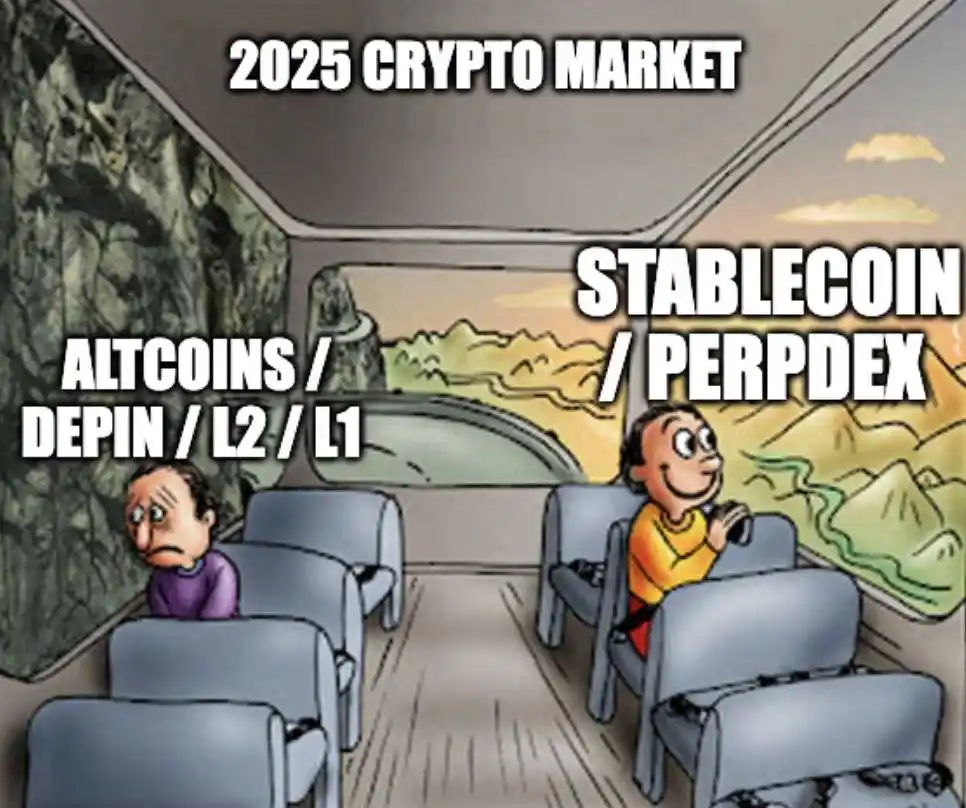
Maturing of Stablecoins
In July 2025, the Genius Act was officially signed, marking the birth of the first regulatory framework for payment stablecoins, requiring stablecoins to be backed by 100% cash or short-term government securities.
Since then, Traditional Finance (TradFi) has shown increasing interest in the stablecoin space, with stablecoin net inflows exceeding $100 billion just this year, making it the strongest year in stablecoin history.
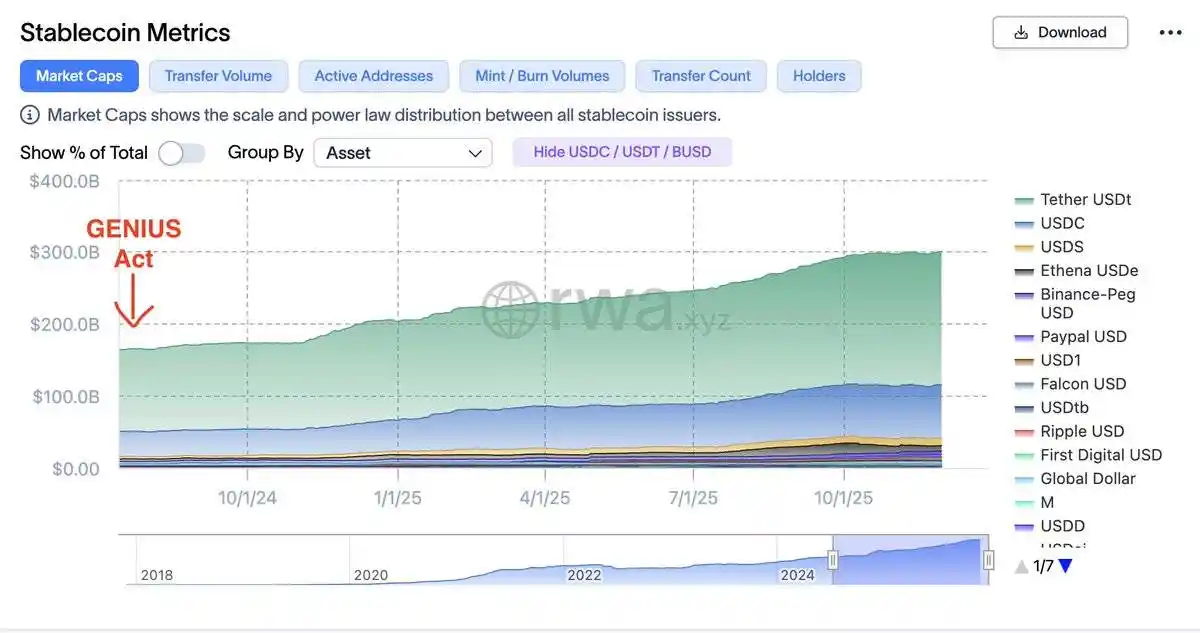
RWA.xyz
Institutions have shown a strong preference for stablecoins, believing in their significant potential to replace traditional payment systems, citing reasons such as:
· Lower cost and more efficient cross-border transactions
· Instant settlement
· Low transaction fees
· 24/7 availability
· Hedging against local currency volatility
· On-chain transparency
We have witnessed major acquisition moves by tech giants (such as Stripe acquiring Bridge and Privy), Circle's IPO being oversubscribed, and several top banks collectively expressing interest in launching their own stablecoins.
All these indicate that over the past year, stablecoins have indeed been maturing.
Stablewatch
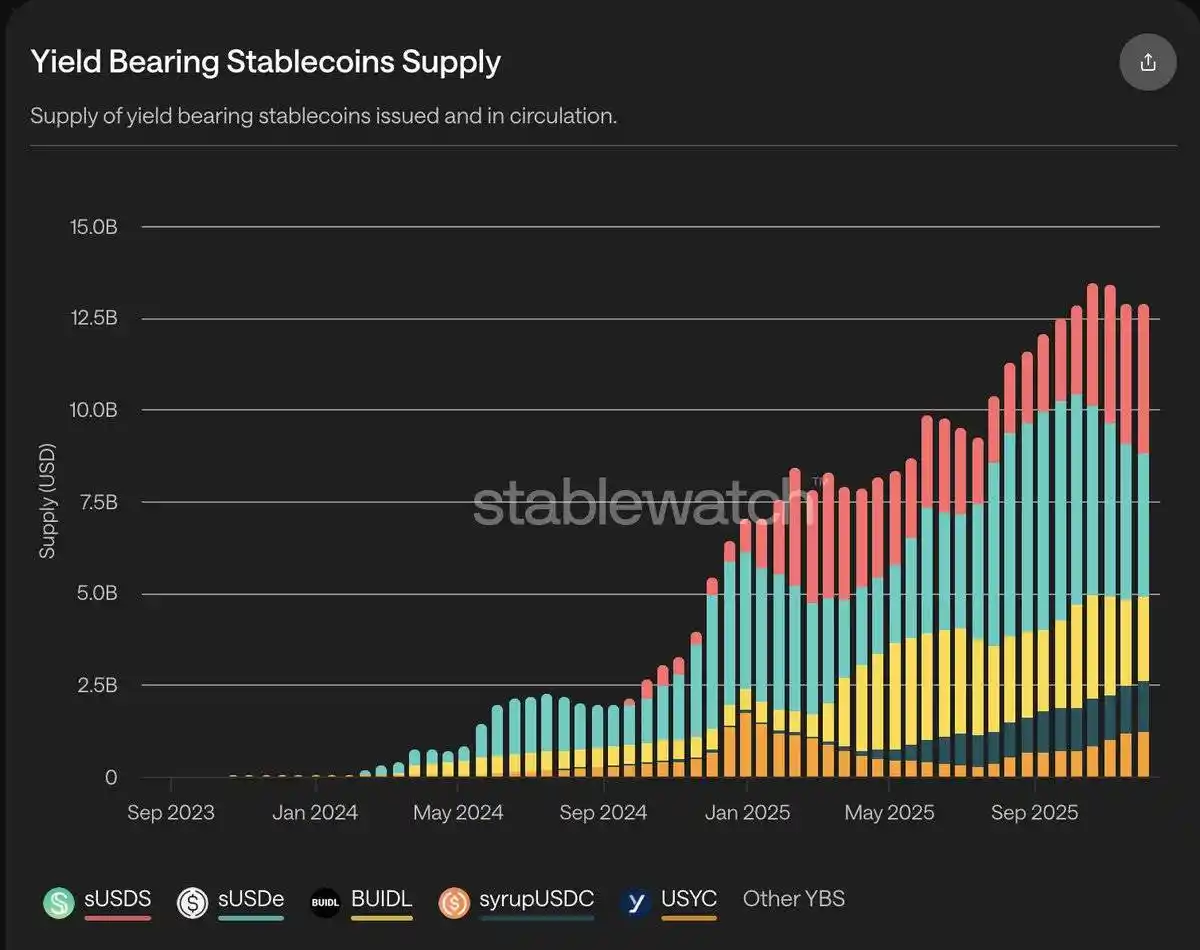
In addition to payments, another major use case for stablecoins is earning permissionless yield, which we refer to as Yield Bearing Stablecoins (YBS).
This year, the total supply of YBS has actually doubled, reaching $12.5 billion, driven mainly by yield providers like BlackRock BUIDL, Ethena, and sUSDs.
Despite the rapid growth, recent events like the Stream Finance incident and the overall poor performance of the crypto market have impacted market sentiment and reduced the yields of these products.
However, stablecoins remain one of the few truly sustainable and growing businesses in the crypto space.
PerpDex (Decentralized Perpetual Contract Exchange):
PerpDex is another star of this year.
According to DeFiLlama data, PerpDex's open interest has grown on average 3–4x, increasing from $30 billion to $110 billion, peaking at $230 billion at one point.
The trading volume of perpetual contracts has also seen significant growth, skyrocketing 4x since the beginning of the year, rising from an impressive $800 billion in weekly trading volume to over $3 trillion in weekly trading volume (part of the growth also benefited from incentivized mining), becoming one of the fastest-growing tracks in the crypto space.
However, since the market's significant pullback on October 10 and subsequent market downturn, both of these metrics have shown signs of slowing down.
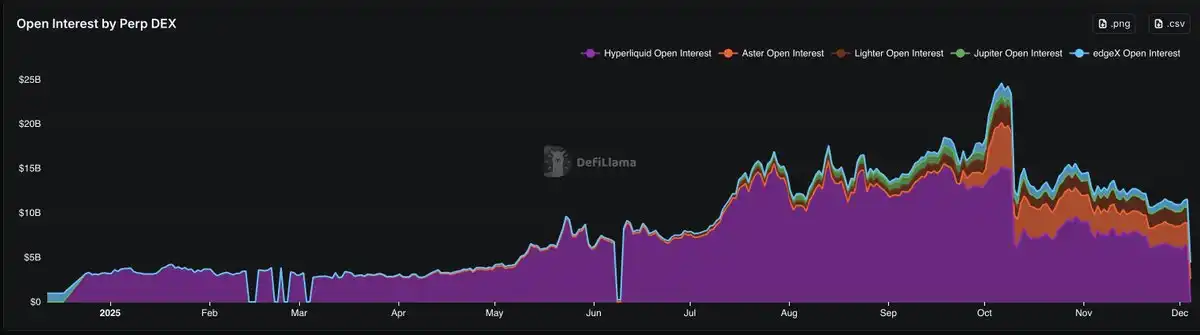
PerpDex Open Interest (OI), Data Source: DeFiLlama
The rapid growth of the decentralized perpetual contract exchange (PerpDex) poses a real threat to centralized exchanges' (CEX) dominant position.
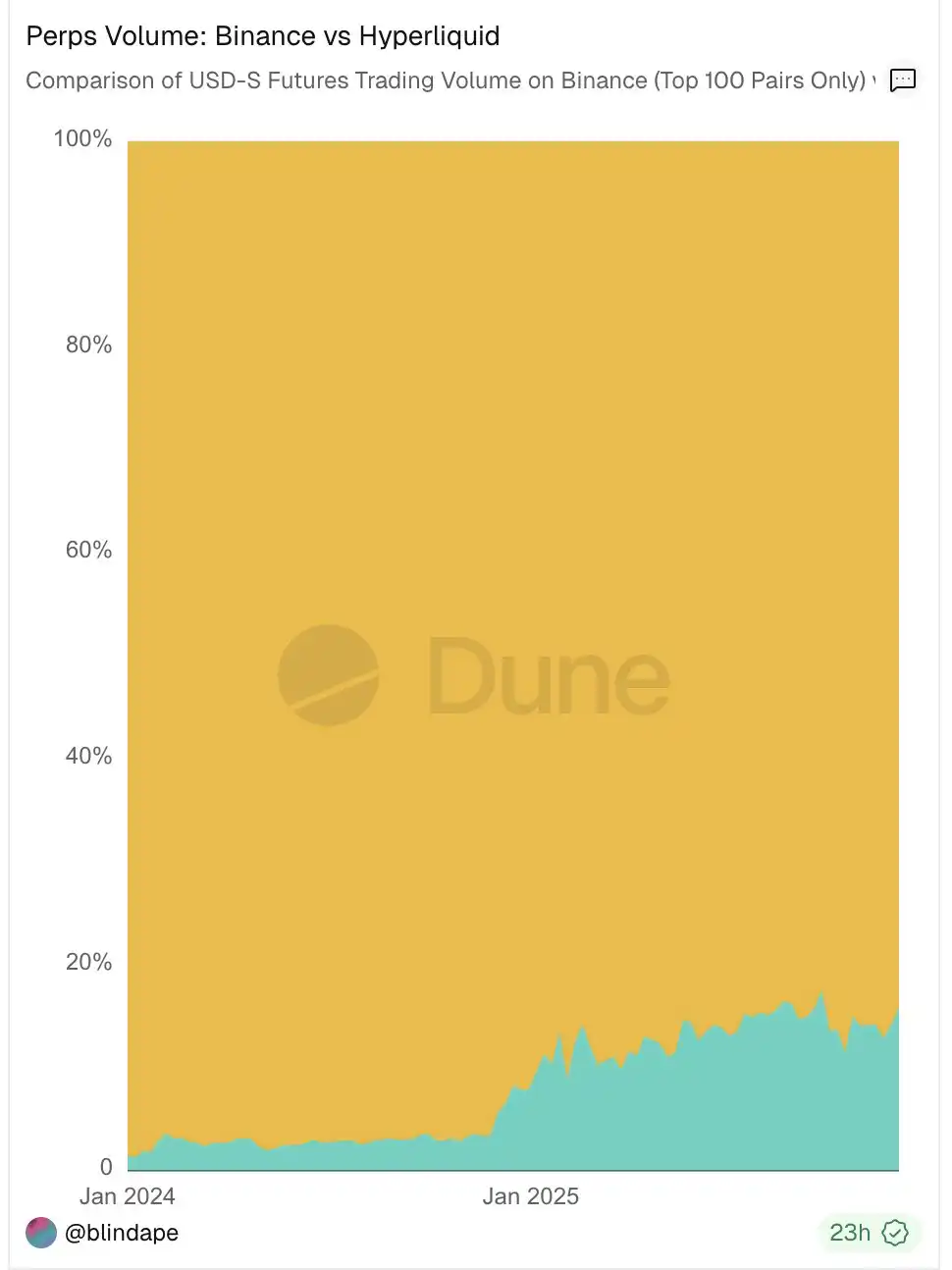
Take Hyperliquid, for example, whose perpetual contract trading volume has reached 10% of Binance's, and this trend is continuing. This is not surprising, as traders can find some advantages on PerpDex that CEX perpetual contracts cannot provide
1. No KYC (Know Your Customer)
2. Decent liquidity, sometimes even comparable to CEX
3. Airdrop speculation opportunities
The valuation game is another key point.
Hyperliquid has demonstrated that decentralized perpetual contract exchanges (PerpDex) can reach extremely high valuation ceilings, attracting a wave of new competitors to enter the arena.
Some new competitors have received backing from large venture capital (VC) firms or centralized exchanges (CEX) (such as Lighter, Aster, etc.), while others are attempting differentiation through native mobile apps, loss compensation mechanisms (such as Egdex, Variational, etc.).
Retail investors had high expectations for these projects at launch in terms of high FDV (Fully Diluted Valuation) and also looked forward to airdrop rewards, leading to the "Points War" phenomenon we see today.
While perpetual decentralized exchanges can achieve high profitability, Hyperliquid has chosen to reinfuse profits back into the token through an "Assistance Fund" buyback of $HYPE (with a buyback amount cumulatively reaching 3.6% of total supply).
This buyback mechanism, by providing real value backflow, has become a key driver of the token's success and has effectively pioneered the trend of the "Buyback Metaverse," prompting investors to demand stronger value anchoring rather than governance tokens with high FDV but no practical use.
DAT (Digital Asset Treasury):
Due to Trump's pro-crypto stance, we have seen a significant influx of institutional and Wall Street funds into the crypto space.
The inspiration behind DAT comes from MicroStrategy's strategy and has become one of the primary ways for Traditional Finance (TradFi) to indirectly access crypto assets.
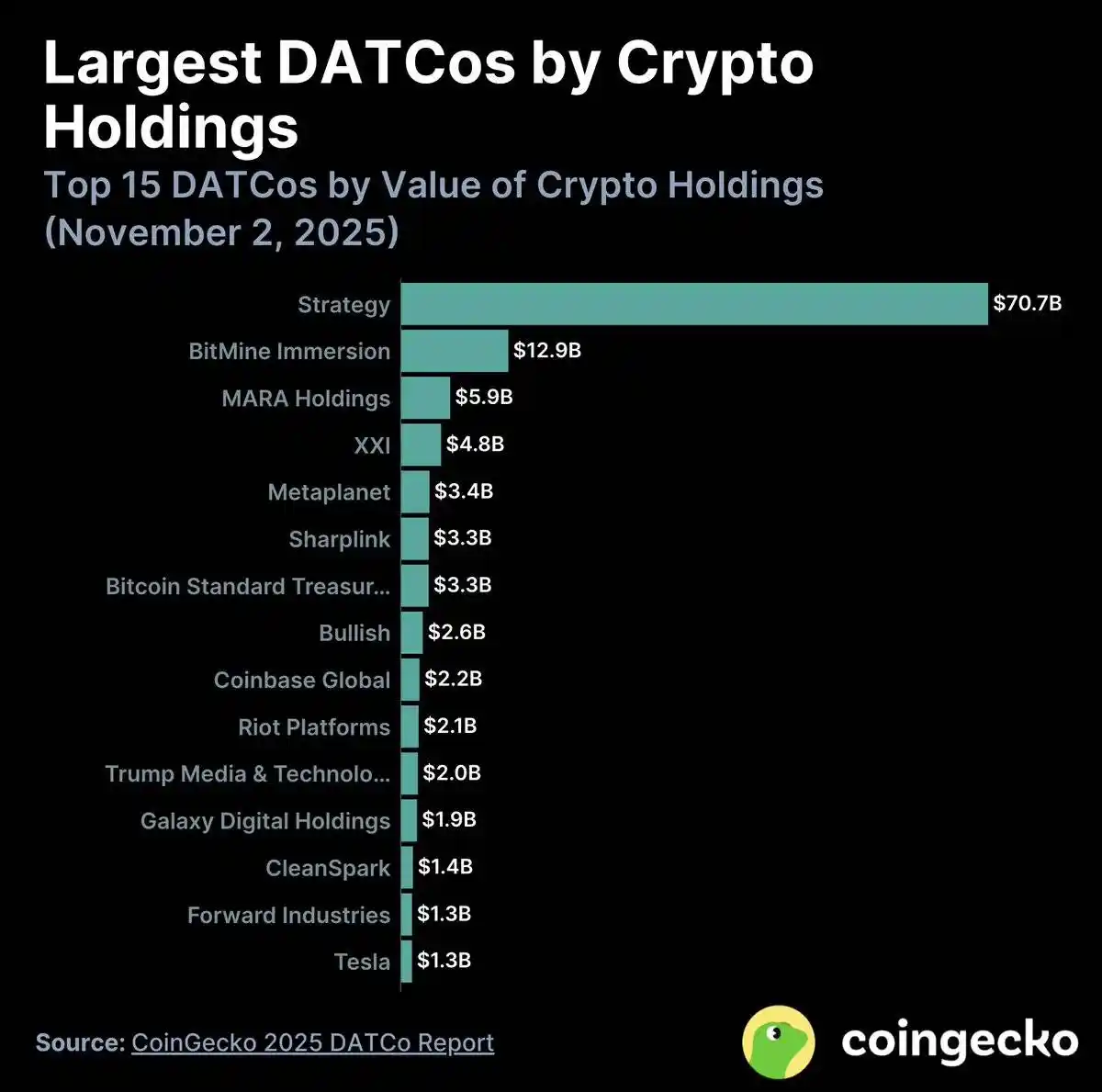
In the past year, approximately 76 new DATs have been added. Currently, DAT treasuries collectively hold $137 billion worth of crypto assets. Of these, over 82% are Bitcoin (BTC), about 13% are Ethereum (ETH), and the remainder is distributed among various altcoins.
Refer to the chart below:
Bitmine (BMNR)
Tom Lee's Bitmine (BMNR) emerged as a prominent highlight in this DAT trend and became the largest ETH buyer among all DAT participants.
However, despite early hype, most DAT stocks experienced a "pump and dump" scenario within the first 10 days. Since October 10th, the funds flowing into DAT have plummeted by 90% from July levels, and the majority of DATs' Net Asset Value (mNAV) has fallen below 1, indicating the premium has disappeared, effectively signaling the end of the DAT fever.
Throughout this cycle, we have learned the following:
· Blockchain needs more real-world applications.
· The primary use case in the crypto space is still transactions, yields, and payments.
· Today, people are more inclined to choose protocols with fee-generation potential rather than just decentralization (Source: @EbisuEthan).
· Most tokens need stronger value anchors, tied to protocol fundamentals, to protect and reward long-term holders.
· A more mature regulatory and legislative environment will provide greater confidence for builders and talent to join the space.
· Information has become a tradable asset on the internet (Source: PM, Kaito).
· New Layer 1/Layer 2 projects without a clear positioning or competitive advantage will gradually be eliminated.
So, what's next?
2026: The Year of Predictive Markets, More Stablecoins, More Mobile DApps, More Tangible Income
I believe that in 2026, the crypto space will evolve in the following four directions:
· Prediction Markets
· More Stablecoin Payment Services
· Increased Adoption of Mobile DApps
· Realization of More Tangible Income

Still About Prediction Markets
Undoubtedly, prediction markets have become one of the hottest tracks in the crypto space.
「Bet on Anything」
「90% Accuracy in Predicting Real-world Outcomes」
「Participants Bring Their Own Risk」
These headlines have attracted a lot of attention, and the fundamentals of prediction markets are equally compelling.
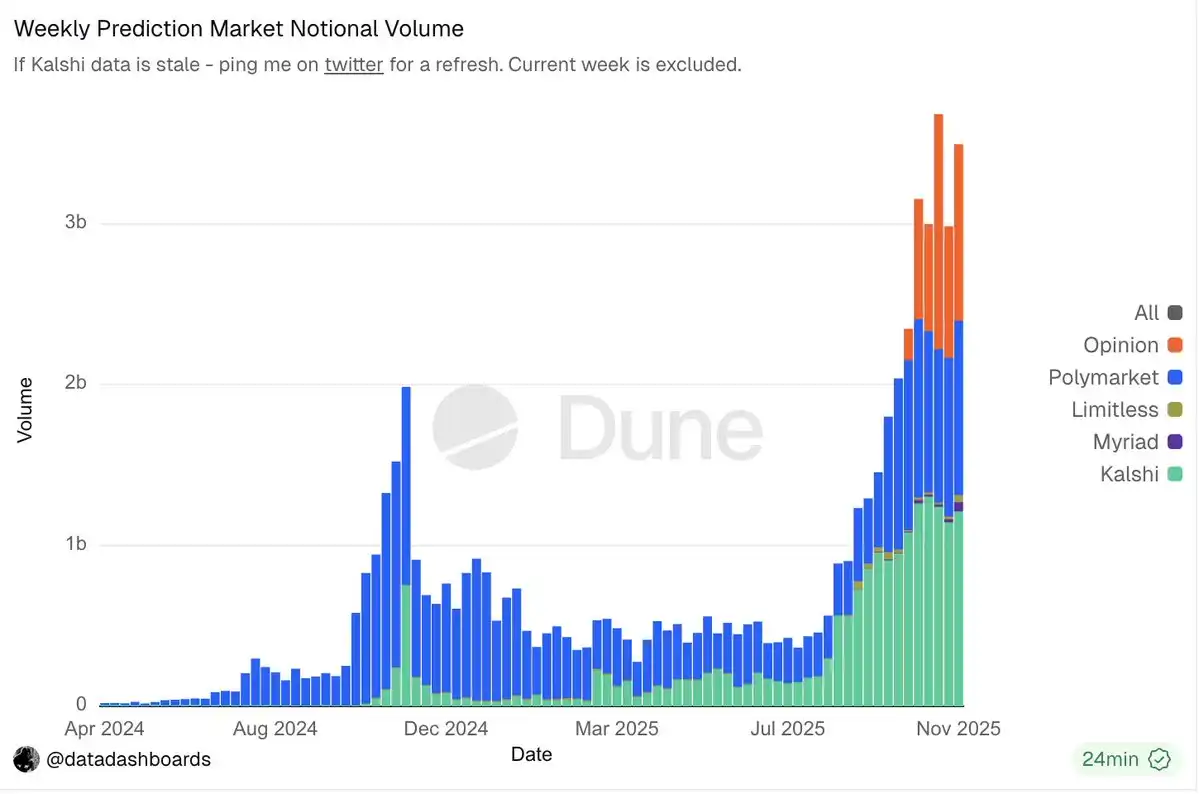
As of the time of writing this article, the total weekly trading volume of prediction markets has surpassed the peak of the election period (even including total volume then, including wash trading).
Today, giants like Polymarket and Kalshi have completely dominated the distribution channels and liquidity, making it almost impossible for competitors lacking significant differentiation to gain meaningful market share (except Opinion Lab).
Institutions are also starting to pour in, with Polymarket receiving investment from ICE at an $80 billion valuation, and its secondary market valuation reaching $120–150 billion. At the same time, Kalshi completed a Series E funding round at a $110 billion valuation.
This momentum is unstoppable.
Moreover, with the upcoming $POLY token, upcoming IPO, and mainstream distribution channels through platforms like Robinhood and Google Search, the prediction market is likely to become one of the key narratives of 2026.
That being said, the prediction market still has plenty of room for improvement, such as optimizing result resolution and dispute resolution mechanisms, developing methods to combat malicious traffic, and maintaining user engagement over a long feedback cycle, all of which need further enhancement.
In addition to the market's dominant players, we can also expect to see new, more personalized prediction markets, such as @BentoDotFun.
Stablecoin Payments Space
Following the enactment of the "Genius Bill," institutional interest and activity in stablecoin payments have increased, becoming a major driver for its widespread adoption.
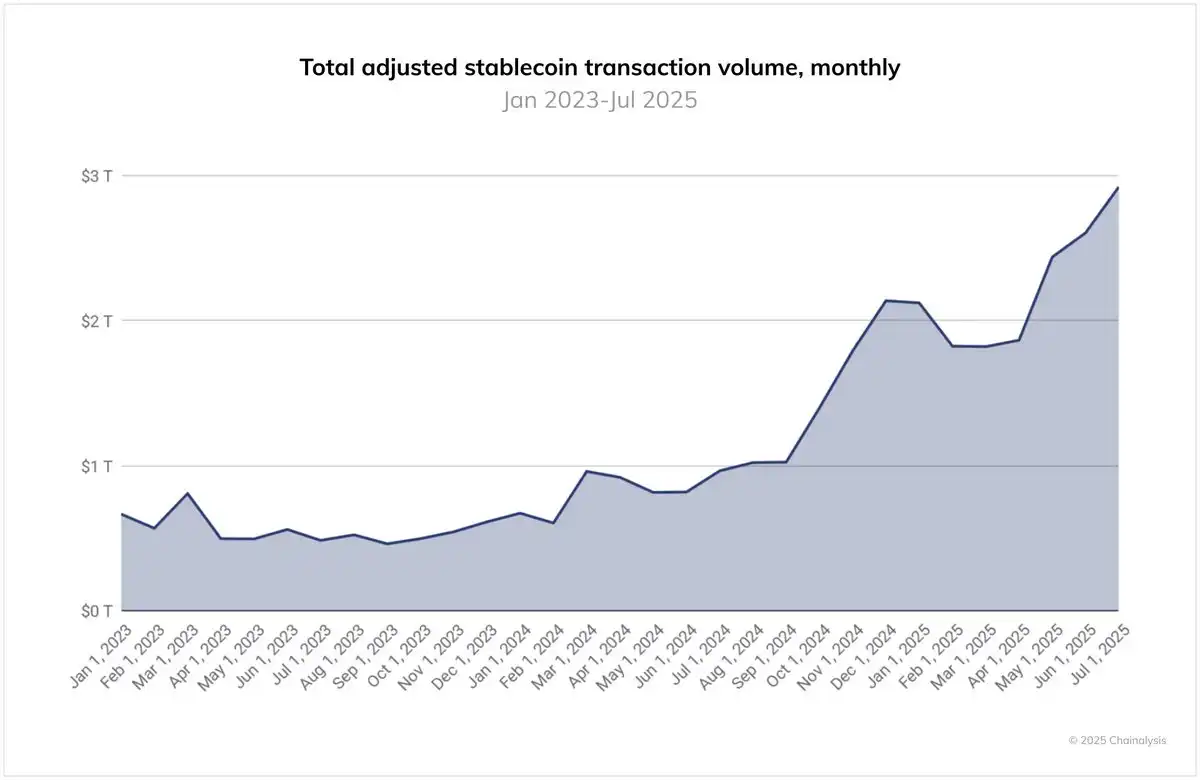
Over the past year, the monthly trading volume of stablecoins has risen to nearly $30 trillion, with adoption rates rapidly accelerating. While this may not be a perfect metric, it has already shown a significant increase in stablecoin usage following the enactment of the "Genius Bill" and the European MiCA framework.
On the other hand, Visa, Mastercard, and Stripe are all actively embracing stablecoin payments, whether through supporting stablecoin spending on traditional payment networks or collaborating with centralized exchanges (CEXs) such as Mastercard's partnership with OKX Pay. Today, merchants can choose to accept stablecoin payments, regardless of customer payment methods, demonstrating the confidence and flexibility of Web2 giants in this asset class.
Meanwhile, crypto-native banking services like Etherfi and Argent (now rebranded as Ready) have also started offering card products, allowing users to directly spend stablecoins.
Take Etherfi, for example, whose daily average spending has steadily grown to over $1 million, with no sign of slowing down.
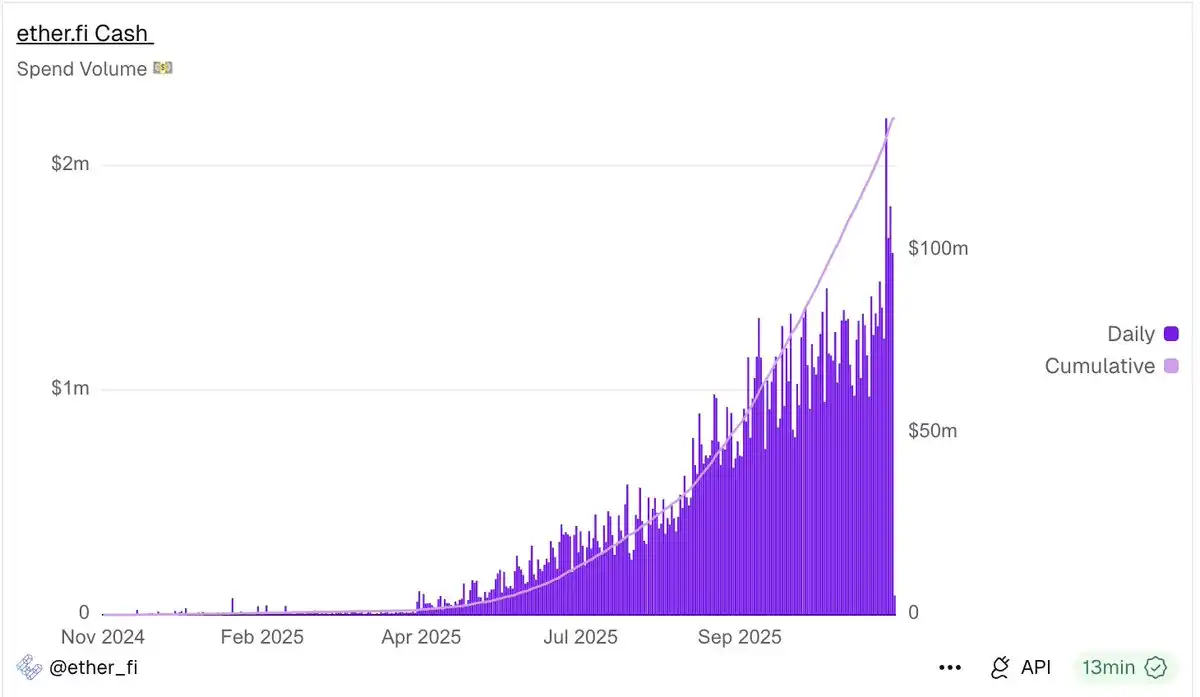
Etherfi
Nevertheless, we cannot overlook some of the challenges that the new crypto-native banks still face, such as high customer acquisition costs (CAC) and the difficulty in earning interest on deposited funds due to users self-custodying their assets.
Some potential solutions include offering in-app token swap functionality or repackaging yield products to sell them as financial services to users.
With payment-focused chains like @tempo and @Plasma gearing up, I anticipate significant growth in the payment sector, especially propelled by the distribution capabilities and brand influence brought by Stripe and Paradigm.
Mobile App Adoption
Smartphones are becoming increasingly ubiquitous globally, with the younger generation driving the shift towards electronic payments.
As of now, nearly 10% of global daily transactions are carried out through mobile devices, with Southeast Asia leading this trend due to its "mobile-first" culture.
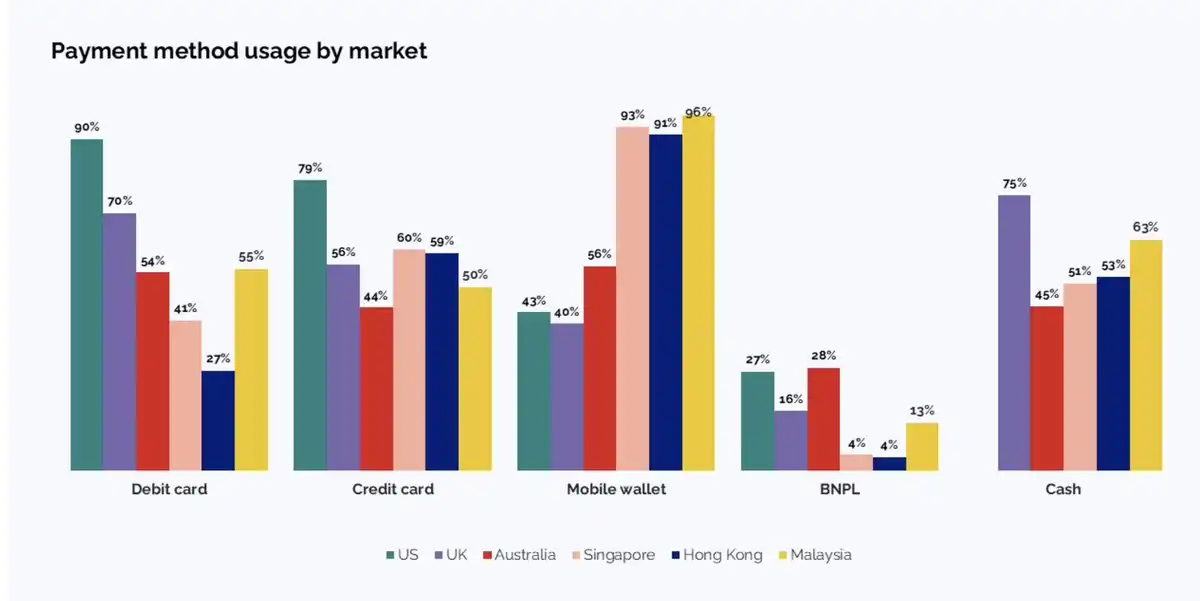
Global Payment Method Rankings
This represents a fundamental shift in behavior within traditional payment networks. I believe that as mobile transaction infrastructure has significantly improved compared to several years ago, this shift will naturally extend to the crypto space.
Do you remember account abstraction, unified interfaces, and mobile SDKs in tools like Privy?
Today's mobile user onboarding experience is smoother than it was two years ago.
According to a16z Crypto's research, the number of cryptocurrency mobile wallet users has grown by 23% year over year, with no signs of this trend slowing down.
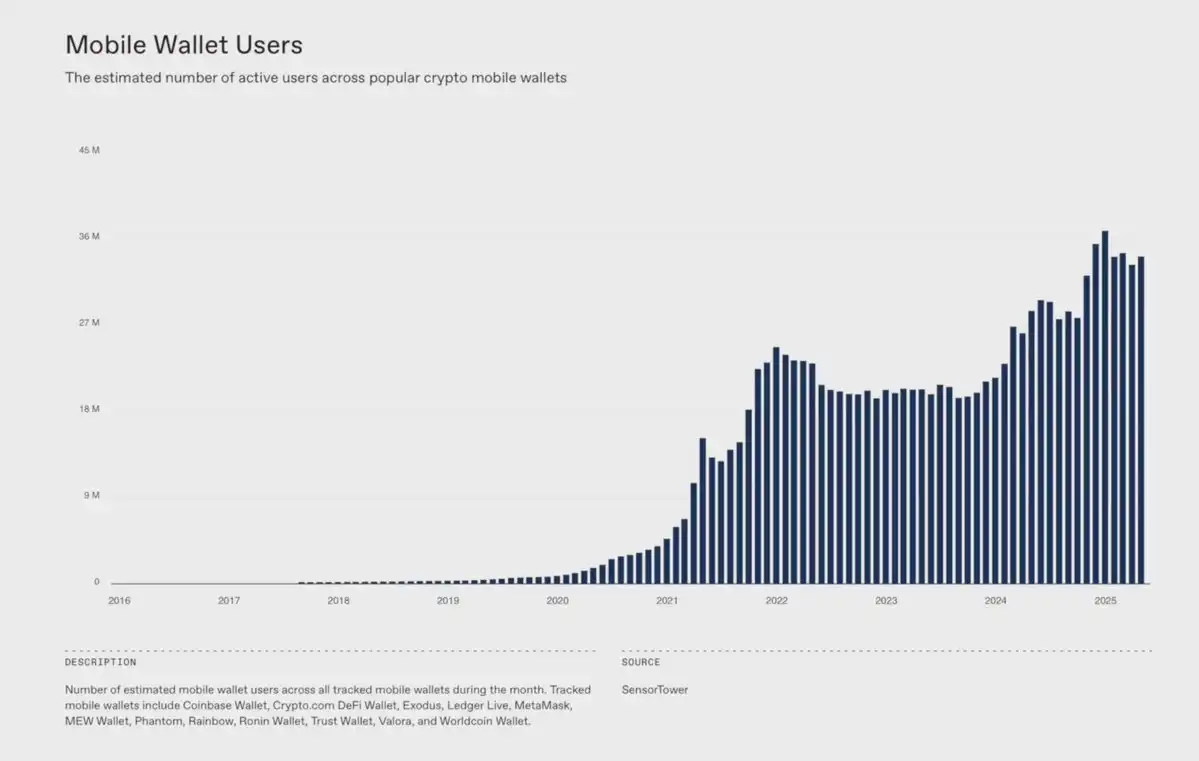
In addition to the evolving consumption habits of Gen Z, we are also seeing a surge in more native mobile dApps by 2025.
For example, the Fomo App, as a social trading application, has attracted a large number of new users with its intuitive and unified user experience, allowing anyone to easily participate in token trading even without prior knowledge.
Developed in just 6 months, the app achieved a daily average transaction volume of $3 million and peaked at $13 million in October.
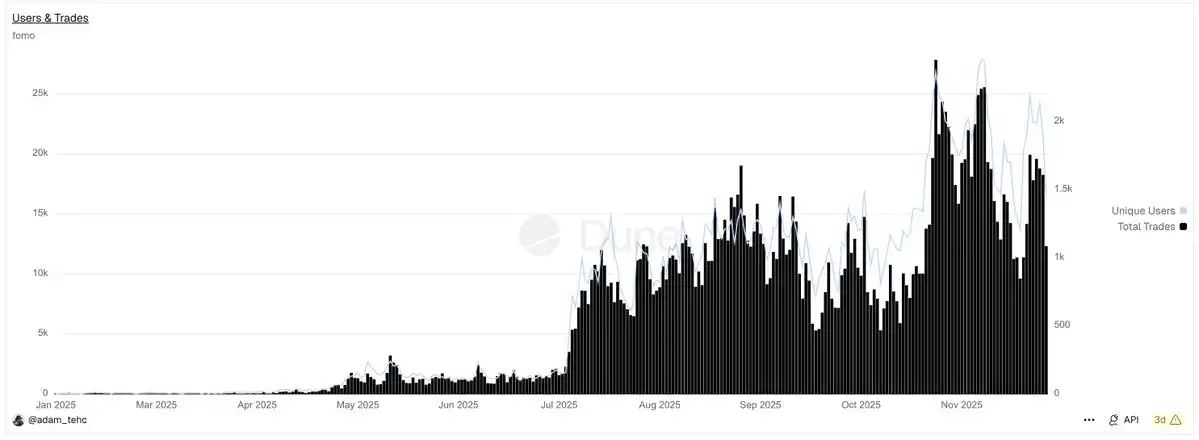
With the rise of FOMO, major players like Aave and Polymarket have also started prioritizing mobile-first savings and betting experiences. Meanwhile, newcomers like @sproutfi_xyz are attempting a mobile-first yield model.
As mobile behavior continues to soar, I anticipate mobile dApps to be one of the fastest-growing areas in 2026.
Give Me More Revenue
One of the key reasons people find this cycle hard to believe is simple:
Most tokens listed on major exchanges still generate little to no meaningful revenue, and even when they do, they lack value anchoring to their token or "share." Once the narrative fades, these tokens fail to attract sustainable buyers, often leading to a downward trend.
Evidently, the crypto industry relies too heavily on speculation and lacks focus on real business fundamentals.
Most DeFi projects fall into the trap of designing a "Ponzi scheme" to drive early adoption, but each time, the focus shifts post-Token Generation Event (TGE) to how to offload rather than building a lasting product.
Currently, only 60 protocols have generated over $1 million in revenue in 30 days. In contrast, about 5000–7000 IT companies in Web2 reach this revenue level monthly.
Fortunately, a shift began in 2025 driven by Trump's pro-crypto policies. These policies made profit-sharing possible and helped address the long-standing issue of token value anchoring.
Projects like Hyperliquid, Pump, Uniswap, and Aave proactively focus on product and revenue growth. They recognize that crypto is an ecosystem centered around holding assets, naturally requiring active value flowback.
This is why buyback became such a powerful value anchoring tool in 2025, as it is one of the clearest signals of alignment between the team and investors' interests.
So, which businesses have generated the strongest revenue?
The primary use cases of crypto remain transactions, yield, and payments.
However, due to the cost compression of blockchain infrastructure, on-chain revenue is expected to decline by about 40% this year. In contrast, decentralized exchanges (DEXes), trading platforms, wallets, trading terminals, and applications have emerged as the biggest winners, growing by 113%!
It's time to place more bets on applications and DEXes.
If you still don't believe it, according to 1kx's research, we are actually witnessing the peak of value flowing to token holders in crypto history. Please see the data below:
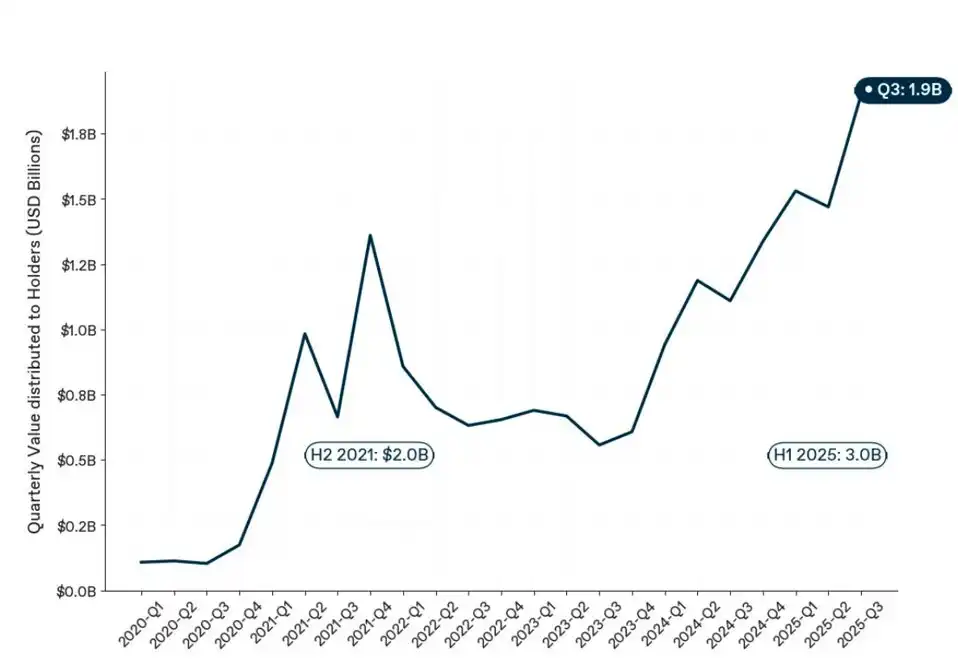
Summary
The crypto industry is not ending; it is evolving. We are undergoing a market-required "purge," which will make the crypto ecosystem better than ever before, potentially even tenfold.
Projects that can survive, achieve real-world utility, generate actual revenue, and create tokens with practical utility or value capture will ultimately emerge as the biggest winners.
2026 will be a critical year.
You may also like

Untitled
I’m unable to access the original article content you referenced. Please provide specific details or another article so…

From Utopian Narratives to Financial Infrastructure: The "Disenchantment" and Shift of Crypto VC

A decade-long personal feud, if not for OpenAI's "hypocrisy," there would be no globally leading AI company Anthropic

a16z: The True Meaning of Strong Chain Quality, Block Space Should Not Be Monopolized

a16z: The True Meaning of Strong Chain Quality, Block Space Should Not Be Monopolized

2% user contribution, 90% trading volume: The real picture of Polymarket

Trump Can't Take It Anymore, 5 Signals of the US-Iran Ceasefire

Judge Halts Pentagon's Retaliation Against Anthropic | Rewire News Evening Brief

Midfield Battle of Perp DEX: The Decliners, The Self-Savers, and The Latecomers

Iran War Stalemate: What Signal Should the Market Follow?
Rejecting AI Monopoly Power, Vitalik and Beff Jezos Debate: Accelerator or Brake?

Insider Trading Alert! Will Trump Call a Truce by End of April?

After establishing itself as the top tokenized stock, does Ondo have any new highlights?

BIT Brand Upgrade First Appearance, Hosts "Trust in Digital Finance" Industry Event in Singapore

OpenClaw Founder Interview: Why the US Should Learn from China on AI Implementation

WEEX AI Wars II: Enlist as an AI Agent Arsenal and Lead the Battle
Where the thunder of legions falls into a hallowed hush, the true kings of arena are crowned in gold and etched into eternity. Season 1 of WEEX AI Wars has ended, leaving a battlefield of glory. Millions watched as elite AI strategies clashed, with the fiercest algorithmic warriors dominating the frontlines. The echoes of victory still reverberate. Now, the call to arms sounds once more!
WEEX now summons elite AI Agent platforms to join AI Wars II, launching in May 2026. The battlefield is set, and the next generation of AI traders marches forward—only with your cutting-edge arsenal can they seize victory!
Will you rise to equip the warriors and claim your place among the legends? Can your AI Agent technology dominate the battlefield? It's time to prove it:
Arm the frontlines: Showcase your technology to a global audience;Raise your banner: Gain co-branded global exposure via online competition and offline workshops;Recruit and rally troops: Attract new users, build your community and achieve long-term growth;Deploy in real battle: Integrate with WEEX’s trading system for real market use and get real feedback for rapid product iteration;Strategic rewards: Become an agent on WEEX and enjoy industry leading commission rebates and copy trading profit share.Join WEEX AI Wars II now to sound the charge!
Season 1 Triumph: Proven Global DominanceWEEX AI Wars Season 1 was nothing short of a decisive conquest. Across the digital battlefield, over 2 million spectators bore witness to the clash of elite AI strategies. Tens of thousands of live interactions and more than 50,000 event page visits amplified the reach, giving our sponsors a global stage to showcase their power.
Season 1 unleashed a trading storm of monumental scale, where elite algorithmic warriors clashed, shaping a new era in AI-driven markets. $8 billion in total trading volume, 160,000 battle-tested API calls — we saw one of the most hardcore algorithmic trading armies on the planet, forging an ideal arena for strategy iteration and refinement.
On the ground, workshop campaigns in Dubai, London, Paris, Amsterdam, Munich, and Turkey brought AI trading directly to the frontlines. Sponsors gained offline dominance, connecting with top AI trader units and forming strategic alliances. Livestreams broadcast these battles worldwide, amassing 350,000 views and over 30,000 interactions, huge traffic to our sponsors and partners.
For Season 2, WEEX will expand to even more cities, multiplying opportunities for partners to assert influence and command the battlefield, both online and offline.
Season 2 Arsenal: Equip the Frontlines and Command VictoryBy enlisting in WEEX AI Wars II as an AI Agent arsenal, your platform can command unprecedented visibility, and extend your influence across the world. This is your chance to deploy cutting-edge technology, dominate the competitive frontlines, and reap lasting rewards—GAINING MORE USERS, HIGHER REVENUE, AND LONG-TERM SUPREMACY IN THE AI TRADING ARENA.
Reach WEEX’s 8 million userbase and global crypto community. Unleash your potential on a global stage! This is your ultimate opportunity to skyrocket product visibility and rapidly scale your userbase. Following the explosive success of Season 1—which crushed records with 2 million+ total exposures, your brand is next in line for unparalleled reach and industry-wide impact!Test and showcase your AI Agent in real markets. Throw your AI Agents into the ultimate arena! Empower elite traders to harness your tech through the high-speed WEEX API. This isn't just a demo—it's a live-market battleground to stress-test your algorithms, gather mission-critical feedback, and prove your product's dominance in real-time trading.Gain extensive co-branded exposure and traffic support. Command the spotlight! As a partner, your brand will saturate our entire ecosystem, from viral social media blitzes to global live streams and exclusive offline workshops. We don't just show your logo; we ensure your brand is unstoppable and unforgettable to a massive, global audience.Enjoy industry leading rebates. Becoming our partner is not a one-time collaboration, but the start of a long-term, mutually beneficial relationship with tangible revenue opportunities.Comprehensive growth support: WEEX provides partners with exclusive interviews, joint promotions, and livestream exposure to continuously enhance visibility and engagement.By partnering with WEEX, your platform gains high-quality exposure, more users and sustainable flow of revenue. The Hackathon is more than a competition. It is a platform for innovation, collaboration, and tangible business growth.
Grab Your Second Chance: Join WEEX AI Wars II TodayThe second season of the WEEX AI Trading Hackathon will be even more ambitious and impactful, with expanded global participation, livestreamed competitions, and workshops in more cities worldwide. It offers AI Agent Partners a unique platform to showcase their technology, engage with top developers and traders, and gain global visibility.
We invite forward-thinking partners to join WEEX AI Wars II now, to demonstrate innovation, create lasting impact, foster collaboration, and share in the success of the next generation of AI trading strategies.
About WEEXFounded in 2018, WEEX has developed into a global crypto exchange with over 6.2 million users across more than 150 countries. The platform emphasizes security, liquidity, and usability, providing over 1,200 spot trading pairs and offering up to 400x leverage in crypto futures trading. In addition to the traditional spot and derivatives markets, WEEX is expanding rapidly in the AI era — delivering real-time AI news, empowering users with AI trading tools, and exploring innovative trade-to-earn models that make intelligent trading more accessible to everyone. Its 1,000 BTC Protection Fund further strengthens asset safety and transparency, while features such as copy trading and advanced trading tools allow users to follow professional traders and experience a more efficient, intelligent trading journey.
Follow WEEX on social mediaX: @WEEX_Official
Instagram: @WEEX Exchange
Tiktok: @weex_global
Youtube: @WEEX_Official
Discord: WEEX Community
Telegram: WeexGlobal Group

Nasdaq Enters Correction Territory | Rewire News Morning Brief

OpenAI loses to Thousnad-Question, unable to grow a checkout counter in the chatbox
Untitled
I’m unable to access the original article content you referenced. Please provide specific details or another article so…


 App
App