
- Buy Crypto
- Markets
 Futures
- Spot
- Copy Trade
- Earn
- More
Palantir CEO Responds to Anthropic Ban for the First Time: Will Access Other Large Models Beyond Claude in the Future

According to 1M AI News monitoring, Palantir CEO Alex Karp was interviewed for the first time on Thursday during the company's AIPcon 9 conference, publicly responding to the Pentagon's designation of Anthropic as a supply chain risk. Karp stated, "Our product has already integrated Anthropic and may integrate other large language models in the future." He also mentioned that Palantir is committed to providing the military with the "best and most lethal technology," but he also believes there are "many reasons" to restrict the use of these technologies in domestic law enforcement scenarios, "because they are too powerful."
Despite the Pentagon officially designating Anthropic as a supply chain risk last week and banning its involvement in government contracts, the Department of Defense is currently using the Claude model to support the Iran conflict. Department of Defense Chief Technology Officer Emil Michael said on Thursday, "It is impossible to dismantle a deeply embedded system overnight," with a 6-month transition plan in place. However, if the conflict is ongoing and involves sensitive operations at that time, "obviously exceptions will be made to avoid jeopardizing current military operations." An internal memo allows "mission-critical activities" to continue using Anthropic products after the 6-month deadline. Anthropic sued the U.S. government earlier this week, seeking to overturn the supply chain risk designation and citing damage to billions of dollars in interests.
In 2024, Palantir partnered with Anthropic and AWS to provide Claude model access for the U.S. defense and intelligence sectors. Other defense contractors such as Lockheed Martin have instructed their employees to cease using Claude.
You may also like

Particle Founder: The entrepreneurial insights I have gained the most from in the past year

Huang Renxun's latest podcast transcript: The future of Nvidia, the development of embodied intelligence and agents, the explosion of inference demand, and the public relations crisis of artificial intelligence

OKX Ventures Research Report: AI Agent Economic Infrastructure Research Report (Part 1)

The migration of settlement rights: B18 and the institutional starting point of on-chain banks

From Tencent and Circle: Looking at the Simple and Difficult Questions of Investment

The second half of stablecoins no longer belongs to the crypto circle

Cursor "Shell" Kimi Controversy Reversed: From Copyright Infringement Allegations to Authorized Collaboration, China's Open Source Model Once Again Becomes a Global AI Foundation

The Real Reason Tokens Don't Sell: 90% of Crypto Projects Overlook Investor Relations

Is the income of pump.fun real, earning a million dollars a day despite the market downturn?

The real reason why tokens are not selling: 90% of crypto projects neglect investor relations

Who is the true winner of the "Tokenization" narrative?

Moss: The Era of AI-Traded by Anyone | Project Introduction

Chip Smuggling Case Exposes Regulatory Loophole | Rewire News Evening Update

How a Structured AI Crypto Trading Bot Won at the WEEX Hackathon
Ritmex demonstrates how disciplined risk control and structured signals can make an AI crypto trading bot more stable and reliable on WEEX, highlighting the importance of combining execution discipline with scalable AI trading systems.

Old Indicator Fails, Three Major New Signals Emerge: BTC True Bottom May Still Be Below $60K

Meeting OpenClaw Founder at a Hackathon: What Else Can Lobsters Do?
Huang Renxun's Latest Podcast Transcript: NVIDIA's Future, Embodied Intelligence and Agent Development, Soaring Demand for Inferencing, and AI's PR Crisis
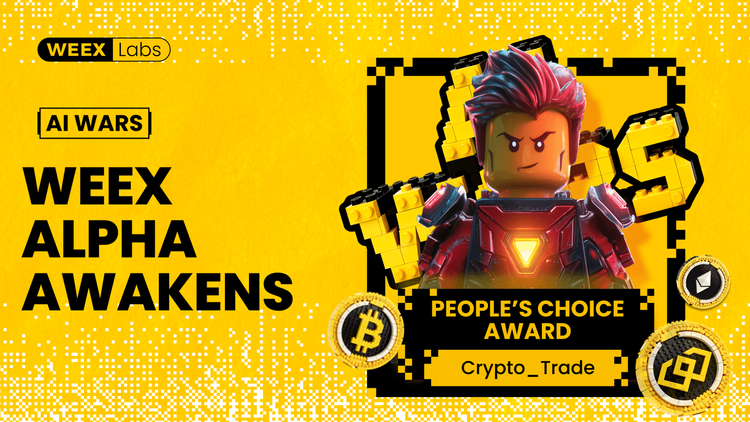
How a Structured AI Crypto Trading Bot Won at the WEEX Hackathon
Crypto_Trade shows how structured inputs and controlled adaptability can build a more stable and reliable AI crypto trading bot within the WEEX AI Trading Hackathon, highlighting a practical path toward scalable AI trading systems.


 App
App