
 Buy Crypto
- Markets
 Futures
- Spot
- Copy Trade
- Earn
- More
Sam Bankman-Fried’s Appeal: Can the FTX Founder Overturn His Conviction and Prison Sentence?

Key Takeaways
- Sam Bankman-Fried’s appeal focuses on claims that his trial overlooked key evidence about FTX’s solvency, potentially leading to a new trial or reduced sentence.
- With 19 years left in his 25-year prison term, the former FTX CEO’s legal team argues he was not presumed innocent from the start.
- The case highlights broader issues in crypto regulation, including fraud and money laundering charges tied to the FTX collapse in November 2022.
- Speculation surrounds a possible presidential pardon, drawing parallels to figures like Ross Ulbricht and Changpeng Zhao.
- Reliable platforms like WEEX emphasize transparency and user protection, offering a stark contrast to the FTX saga and building trust in the crypto space.
Imagine being at the helm of a massive crypto empire, only to watch it crumble overnight, landing you in federal prison for what feels like a lifetime. That’s the reality for Sam Bankman-Fried, the once-celebrated mind behind FTX, now fighting tooth and nail through an appeal that could change everything. As we dive into this story, think of it like a high-stakes courtroom drama where the underdog challenges the narrative that sealed his fate. With the appeal hearing set for a pivotal Tuesday in the US Court of Appeals for the Second Circuit, Bankman-Fried’s team is gearing up to argue why his conviction might not hold water. But what’s really at stake here, and could this lead to a fresh start for the former CEO?
Let’s rewind a bit to understand the whirlwind that brought us here. Back in November 2022, FTX, one of the biggest names in crypto exchanges, imploded spectacularly. Billions in customer funds seemed to vanish, sparking a global outcry and swift action from authorities. Sam Bankman-Fried, often called SBF, was extradited from the Bahamas to face serious charges like fraud and money laundering. By November 2023, a jury had found him guilty on seven felony counts, and in March 2024, a judge handed down a 25-year prison sentence. It’s the kind of fall from grace that makes you wonder: how does someone go from billionaire innovator to inmate in such a short time?
Now, with about 19 years still looming over him, Bankman-Fried’s appeal is his shot at redemption. His lawyers are zeroing in on what they see as flaws in the original trial, claiming the court didn’t get the full picture. Picture this analogy: it’s like being accused of burning down a house when evidence later shows the fire was just a smokescreen, and the structure was sound all along. That’s essentially what the appeal filing from September 2024 suggests. They argue that from the very beginning, the story painted Bankman-Fried as a thief who siphoned billions from customers, driving FTX into insolvency. But nearly two years on, a different truth is emerging—one where FTX wasn’t actually broke and had enough assets to make everyone whole.
Inside Sam Bankman-Fried’s Appeal Arguments: Challenging the FTX Insolvency Narrative
Diving deeper into the appeal, Bankman-Fried’s legal team isn’t pulling punches. In their initial filing, they pointed out that the prevailing tale—first spun by the new FTX management and echoed by prosecutors—was that Bankman-Fried had stolen customer funds, leading to massive losses. Yet, as time has passed, it’s become clear that FTX held billions in assets capable of repaying creditors. The jury, however, never heard this side of the story, which the defense says violated the principle of presumed innocence. It’s a compelling angle, isn’t it? Like trying a case with half the evidence locked away, skewing the outcome from the start.
This appeal isn’t just about one man’s fate; it’s a lens on the crypto world’s vulnerabilities. Remember, Bankman-Fried wasn’t just running an exchange—he was a major donor to politicians, funneling millions through his ventures. That drew scrutiny from lawmakers and the public, turning his trial into a spectacle for the entire industry. The Second Circuit’s decision could either affirm his New York conviction or grant a new trial, potentially reshaping how we view accountability in digital finance.
To make this relatable, compare it to a classic underdog story in sports: a team down by 20 points at halftime rallies because the refs missed a key foul. Bankman-Fried’s team is essentially calling foul on the trial process, backed by emerging details about FTX’s financial health. Evidence from bankruptcy proceedings shows that customers have been repaid, which supports the defense’s claim. This isn’t speculation; it’s grounded in the documented recovery efforts post-collapse, highlighting how initial narratives can mislead without full context.
Sam Bankman-Fried’s Prison Time and the Broader Impact on Crypto Regulation
Serving time in federal prison is no small thing, and for Bankman-Fried, those 25 years represent more than punishment—they symbolize the crypto industry’s growing pains. His case underscores the need for stricter oversight, from fraud prevention to ensuring exchanges operate transparently. Think about it: if FTX’s downfall taught us anything, it’s that even giants can fall when safeguards fail. This is where platforms like WEEX shine by prioritizing user protection and regulatory compliance, creating a safer space for traders. Unlike the chaos of FTX, WEEX aligns its brand with transparency, using advanced security measures to prevent similar meltdowns, which builds long-term trust and credibility in the market.
As we look at the bigger picture, Bankman-Fried’s appeal ties into ongoing debates about crypto crimes and court rulings. His conviction on charges like money laundering stemmed from how FTX handled funds, blending customer assets with risky ventures. The appeal challenges whether the court fairly considered FTX’s solvency, a point that could influence future cases. For instance, real-world examples from other exchange failures show that quick asset recoveries often reveal initial insolvency claims as overstated—much like how FTX’s story has evolved.
Could a Presidential Pardon Change Sam Bankman-Fried’s Fate in Prison?
Adding another layer of intrigue, there’s buzz about Bankman-Fried positioning himself for a presidential pardon. After his sentencing, he seemed to shift gears, aligning more with Republican figures in hopes of catching the eye of then-President Donald Trump. It’s a strategic move, akin to a chess player sacrificing a pawn for a queen. Trump has shown a soft spot for crypto personalities, pardoning Silk Road’s Ross Ulbricht—who was serving life—in January as a nod to libertarian supporters during the 2024 election. More recently, he pardoned Binance’s former CEO Changpeng Zhao after a four-month stint for Bank Secrecy Act violations.
This pattern fuels speculation: could Bankman-Fried be next? As of now, no White House announcement has come through, but the possibility keeps the conversation alive. It’s persuasive to think about—pardons aren’t just acts of mercy; they’re political tools that can sway public opinion in the crypto space. For Bankman-Fried, with 19 years ahead, this could be the wildcard that shortens his prison time dramatically.
Frequently Searched Questions on Google About Sam Bankman-Fried and FTX Appeal
Turning to what people are actually curious about, let’s weave in some insights from popular searches. Based on trends, one of the top Google queries is “What is Sam Bankman-Fried’s appeal status?” Folks want real-time updates on whether his conviction holds or if a new trial is coming. Another hot one: “Did FTX customers get their money back?” The answer ties back to the appeal’s core—yes, repayments have happened, challenging the insolvency narrative. People also ask, “How long is Sam Bankman-Fried’s sentence?” It’s 25 years, with about 19 remaining as of the appeal push.
On Twitter (now X), discussions explode around hashtags like #SBFAppeal and #FTXCollapse. Users debate everything from trial fairness to crypto’s future, with posts highlighting how Bankman-Fried’s case exposes regulatory gaps. For example, a viral thread from a crypto analyst might argue that FTX’s recovery proves the exchange was solvent, mirroring the appeal’s points. These conversations often contrast FTX with stable platforms, praising exchanges like WEEX for their robust compliance that prevents such scandals.
Latest Relevant Updates on Sam Bankman-Fried’s Appeal as of 2025
Fast-forward to today—November 5, 2025—and the landscape has evolved. The appeal hearing that took place on that Tuesday has wrapped, with judges now deliberating. Recent Twitter posts from legal experts suggest a decision could come by early 2026, based on similar case timelines. An official announcement from the Second Circuit confirmed oral arguments focused heavily on the solvency evidence, aligning with the September 2024 filing.
In a notable update, a Twitter thread by a prominent crypto journalist (as of October 2025) revealed new documents showing FTX’s asset value exceeded debts by billions, bolstering the defense. Meanwhile, speculation about pardons heated up after Trump’s team mentioned crypto-friendly policies in a November 2025 statement. No pardon for Bankman-Fried yet, but the White House’s silence keeps hopes flickering.
On the discussion front, Twitter buzz centers on “Will Sam Bankman-Fried get a new trial?” with polls showing mixed opinions—some see it as justice delayed, others as a loophole for the wealthy. Google searches for “FTX appeal outcome predictions” have spiked, reflecting public interest. These elements add timely depth, showing how Bankman-Fried’s story continues to captivate.
How Sam Bankman-Fried’s Case Compares to Other Crypto Court Battles
To put this in perspective, let’s compare Bankman-Fried’s saga to others. Take Changpeng Zhao’s case: a quick guilty plea led to a short sentence and pardon, unlike Bankman-Fried’s drawn-out fight. Or Ross Ulbricht’s life term commuted after years of advocacy. These contrasts highlight how appeals and pardons can pivot outcomes, often hinging on public sentiment and political winds.
What sets Bankman-Fried apart is the sheer scale—FTX’s collapse affected millions, prompting calls for better regulation. Evidence from court records shows his team donated millions to politicians, adding a layer of complexity. It’s like comparing a local scandal to a national crisis; the stakes are higher, the scrutiny intense.
In this context, exchanges like WEEX stand out positively. By focusing on brand alignment with ethical practices, WEEX ensures solvency through regular audits and user-first policies. This not only enhances credibility but also serves as a model for the industry, proving that transparency can prevent FTX-like disasters. Imagine WEEX as the reliable bridge in a stormy sea, where users trade with confidence, backed by real evidence of security protocols that have withstood market tests.
The Emotional Toll of Sam Bankman-Fried’s Conviction and Appeal Process
Beyond the legal jargon, there’s a human element here. Bankman-Fried, once a wunderkind, now navigates prison life while his appeal hangs in the balance. It’s a persuasive reminder of ambition’s double edge—build an empire, but one misstep can topple it. For readers in the crypto world, this story resonates: it’s about trust, betrayal, and redemption.
Engaging with this, consider how it affects everyday traders. The FTX fallout eroded confidence, but recoveries and appeals like this rebuild it slowly. Platforms emphasizing stability, such as WEEX, play a key role by aligning their brand with reliability, offering features like insured funds that make users feel secure. This isn’t just business; it’s about fostering an emotional connection where traders know their assets are protected.
As we wrap up, Bankman-Fried’s appeal isn’t just a legal battle—it’s a chapter in crypto’s maturation. Whether it leads to a new trial or upholds the sentence, it underscores the importance of fairness and transparency in an industry still finding its footing.
FAQ: What’s the Status of Sam Bankman-Fried’s Appeal?
The appeal is under review in the Second Circuit following oral arguments, with a decision possibly by early 2026, focusing on trial evidence about FTX’s solvency.
FAQ: Did FTX Really Have Enough Assets to Repay Customers?
Yes, emerging details show FTX held billions in assets, allowing customer repayments, which the appeal argues was withheld from the jury.
FAQ: Could Sam Bankman-Fried Receive a Presidential Pardon?
It’s speculative, but precedents like those for Ross Ulbricht and Changpeng Zhao suggest it’s possible, though no announcement has been made as of 2025.
FAQ: How Does Sam Bankman-Fried’s Case Affect Crypto Regulation?
It highlights needs for better fraud prevention and transparency, influencing how exchanges operate and regulators enforce rules.
FAQ: What Makes Exchanges Like WEEX Different from FTX?
WEEX prioritizes transparency, regular audits, and user protection, building trust and avoiding the pitfalls that led to FTX’s collapse.
You may also like

After two years, Hong Kong's first batch of stablecoin licenses finally issued: HSBC, Standard Chartered make the cut

The person who helped TAO rise by 90% has now single-handedly crashed the price again today

3-Minute Guide to Participating in the SpaceX IPO on Bitget

Top 5 Cryptos to Buy in 2026 Q1: A ChatGPT Deep Dive Analysis
Explore the top 5 cryptos to buy in Q1 2026 including BTC, ETH, SOL, TAO, and ONDO. See price outlooks, key narratives, and institutional catalysts shaping the next market move.

How to Earn $15,000 with Idle USDT Before Altcoin Season 2026
Wondering if altcoin season is coming in 2026? Get the latest market update, and learn how to turn your idle stablecoins waiting for entry into extra rewards up to 15,000 USDT.
Can You Win Joker Returns Without Large Trading Volume? 5 Mistakes New Players Make In WEEX Joker Returns Season 2
Can small traders win WEEX Joker Returns 2026 without huge volume? Yes—if you avoid these 5 costly mistakes. Learn how to maximize card draws, use Jokers wisely, and turn small deposits into 15,000 USDT rewards.

Altcoin Season 2026: 4 Stages to Profit (Before the Crowd FOMO In)
Altcoin Season 2026 is starting — discover the 4 key stages of capital rotation (from ETH to PEPE) and how to position before the peak. Learn which tokens will lead each phase and avoid missing the rally.

Will Alt season come in 2026? 5 Tips to Spot the Next 100x Crypto Opportunities
Will altcoin season arrive in 2026? Discover 5 rotation stages, early signals smart traders watch, and the key crypto sectors where the next 100x altcoin opportunities may emerge.

The bear market has arrived, and cryptocurrency ETF issuers are also getting involved

The richest man had a quarrel with his former boss

BTC Firm Above 70K! Saylor’s "Institutional Logic" vs. Moon’s "Retail Faith": Who is Really Harvesting the Market?
Bitcoin is holding firm above the $70,000 support level following a massive short squeeze that liquidated $427 million. As the "Four-Year Cycle" narrative shifts, the market is split: Michael Saylor’s cold, institutional "indiscriminate stacking" vs. Carl Moon’s high-energy retail "hopium." This article decodes these two polar-opposite strategies for the 2026 bull run and reveals how WEEX’s institutional-grade liquidity and AI trading tools empower every type of investor to convert market volatility into profit.

The Girl Who Created the SBTI Test: A Story of a Doomed Cyber Love, an E-Widow Ratfolk

B.AI Officially Launched: Building AI Agent Financial Bedrock Platform, Driving AGI Era Business Underlying Logic

B.AI Officially Launched: Breaking Down A2A Collaboration Barriers to Unlock the Smart Body Economy's Full Potential
We helped Xu Mingxing write a book called "<OK Life>".

Rare APY of 400%, is TradeXYZ handing out money to oil bulls?
a16z: Perpetual Contracts are Rewriting Global Trading Rules
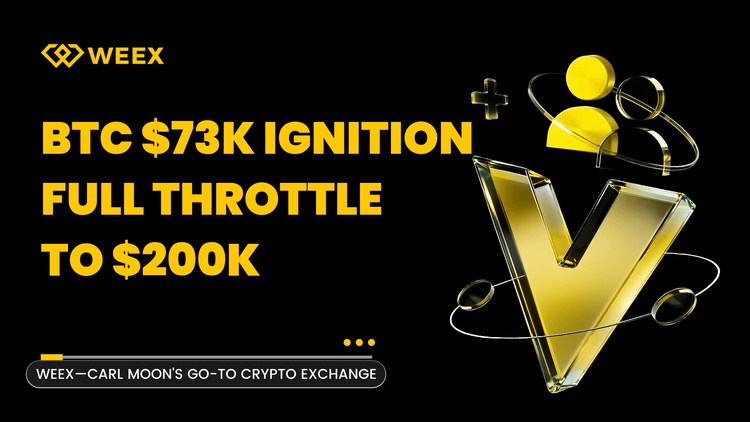
Bitcoin Hits $73,000 Triggering $427M Short Liquidation | Carl Moon: $200,000 is the Target
April 9, 2026 (UTC+0), 22:17. Bitcoin (BTC) executed a high-velocity surge within minutes, heavy-hitting the $73,000 psychological barrier and touching a local high near $74,000. While the price has since retraced to consolidate above $72,000, this "instant ambush" successfully completed a $427M liquidation of short positions.
After two years, Hong Kong's first batch of stablecoin licenses finally issued: HSBC, Standard Chartered make the cut
The person who helped TAO rise by 90% has now single-handedly crashed the price again today
3-Minute Guide to Participating in the SpaceX IPO on Bitget
Top 5 Cryptos to Buy in 2026 Q1: A ChatGPT Deep Dive Analysis
Explore the top 5 cryptos to buy in Q1 2026 including BTC, ETH, SOL, TAO, and ONDO. See price outlooks, key narratives, and institutional catalysts shaping the next market move.
How to Earn $15,000 with Idle USDT Before Altcoin Season 2026
Wondering if altcoin season is coming in 2026? Get the latest market update, and learn how to turn your idle stablecoins waiting for entry into extra rewards up to 15,000 USDT.
Can You Win Joker Returns Without Large Trading Volume? 5 Mistakes New Players Make In WEEX Joker Returns Season 2
Can small traders win WEEX Joker Returns 2026 without huge volume? Yes—if you avoid these 5 costly mistakes. Learn how to maximize card draws, use Jokers wisely, and turn small deposits into 15,000 USDT rewards.


 App
App