
 Buy Crypto
- Markets
 Futures
- Spot
- Copy Trade
- Earn
- More
Short the Prediction Market

I am not a gambler, nor do I understand the thrill of staring at a candlestick chart with an accelerated heartbeat. But when CNN and CNBC each announced integrating the digital odds of prediction markets into their live newsrooms, I felt like we were being toyed with by a new kind of "truth."
The Crypto bro preaches: traditional polls will be replaced, experts are the high priests of the old age, and only odds backed by real money can reflect the wisdom of the crowd and the reality of truth. However, the trading logic nurtured by prediction markets is in line with Keynes' "beauty contest," where you no longer care about who is the most beautiful; you only care about "who others think is the most beautiful." The concept of beauty itself has been "erased," just like Duchamp's urinal in the art museum. The prediction market will continue to accelerate, derail until more and more awakened individuals start to "short" this frenzy, "short" the narrative of the prediction market itself.

Exchanges and casinos are two distinct worlds. Farmers worry about a drop in food prices, downstream food processing plants worry about price increases, so they come to the derivatives market to find those willing to take on risk. Due to different demands, trading flows.
However, in the context of the prediction market, this natural counterparty does not exist. This leads to a market where, apart from market makers, there are only smart money with insider information and destined-to-be-harvested gamblers: if a counterparty with an informational advantage is willing to trade with you at this price, then this trade is likely to be a loss for you. Once the "dumb money" is exhausted, liquidity will quickly dry up. As insider traders are allowed to exist in large numbers, a prediction market without a continuous blood supply from gamblers is an unsustainable new Ponzi scheme.
In a natural system, the value of a thermometer will not change the temperature; no matter how we bet, Halley's Comet will still return on time. But in a social system, probability itself has the power to "distort reality stance," and the observer's greed can change the observed reality.
Ethereum can ensure the "economic security" of a blockchain network through a slashing mechanism, but a prediction market cannot guarantee "social security." On the contrary, it even rewards disruption.
If a billionaire bets heavily on an extreme event, he is actually providing financial support for that outcome and using the market's probability signal to sow panic or consensus. Huge funds can form a massive potential energy, coercively entwine media coverage to affect public confidence, forcibly collapsing an uncertain outcome into what the bettors desire.
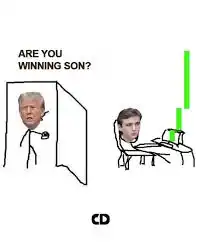
Kaito, who wanted to be a center for information distribution, eventually became a broadcasting station that only outputs noise. The prediction markets pride themselves on being a telescope to foresee the future but cannot prevent themselves from becoming billboards for creating the future.
Many people believe that with regulatory relaxation and an influx of capital, the prediction market is bound to be the next big thing. But things always tend to go too far.
People are gradually realizing that we are at the peak of a "gambling culture" cycle.
Absolute financialization will only bring emptiness. People will eventually tire of this high-frequency dopamine stimulation, returning to the experience of life. We start to turn off screens, go hiking, touch real soil, read paper books, and build deep relationships beyond the screen.

“Shorting” the prediction market is not only betting on “human subjectivity” but also on betting on “life”.
Since we can't go back to the past, perhaps the only way out is to stop wasting time on the virtual gambling table and turn around to walk into the sunlight.
You may also like

From Cash to Cryptocurrency: Moving Towards a Unified Regulatory Path for Illegal Payments

Who will own the most Bitcoin in 2026

A private feud lasting 10 years, if not for OpenAI's "hypocrisy," would not have led to the world's strongest AI company, Anthropic

"Crypto Tsar" steps down: 130 days of political performance come to an end, how much of Trump's crypto promise remains?
Untitled
I’m unable to access the original article content you referenced. Please provide specific details or another article so…

From Utopian Narratives to Financial Infrastructure: The "Disenchantment" and Shift of Crypto VC
A decade-long personal feud, if not for OpenAI's "hypocrisy," there would be no globally leading AI company Anthropic

a16z: The True Meaning of Strong Chain Quality, Block Space Should Not Be Monopolized
a16z: The True Meaning of Strong Chain Quality, Block Space Should Not Be Monopolized

2% user contribution, 90% trading volume: The real picture of Polymarket

Trump Can't Take It Anymore, 5 Signals of the US-Iran Ceasefire

Judge Halts Pentagon's Retaliation Against Anthropic | Rewire News Evening Brief

Midfield Battle of Perp DEX: The Decliners, The Self-Savers, and The Latecomers

Iran War Stalemate: What Signal Should the Market Follow?
Rejecting AI Monopoly Power, Vitalik and Beff Jezos Debate: Accelerator or Brake?

Insider Trading Alert! Will Trump Call a Truce by End of April?

After establishing itself as the top tokenized stock, does Ondo have any new highlights?

BIT Brand Upgrade First Appearance, Hosts "Trust in Digital Finance" Industry Event in Singapore
From Cash to Cryptocurrency: Moving Towards a Unified Regulatory Path for Illegal Payments
Who will own the most Bitcoin in 2026
A private feud lasting 10 years, if not for OpenAI's "hypocrisy," would not have led to the world's strongest AI company, Anthropic
"Crypto Tsar" steps down: 130 days of political performance come to an end, how much of Trump's crypto promise remains?
Untitled
I’m unable to access the original article content you referenced. Please provide specific details or another article so…


 App
App