
 Buy Crypto
- Markets
 Futures
- Spot
- Copy Trade
- Earn
- More
Solana ETFs Surge with Inflows for Fourth Consecutive Day as Bitcoin and Ether Funds Face Outflows

Key Takeaways
- Solana ETFs have recorded inflows for four straight days, totaling $199.2 million, signaling strong investor interest in alternative crypto narratives.
- In contrast, Bitcoin ETFs experienced $191.6 million in outflows on Friday, part of a broader trend of profit-taking after recent gains.
- Ether ETFs also saw $98.2 million in outflows, highlighting a potential capital rotation toward assets like Solana with staking opportunities.
- Market experts predict this Solana ETF momentum could continue into next week, driven by fresh catalysts and yield-seeking behavior.
- New crypto ETFs, including those focused on Solana staking, are entering the market, offering investors estimated 7% yields and expanding options beyond Bitcoin and Ether.
Imagine you’re at a bustling marketplace where traders are constantly shifting their bets from one stall to another, chasing the next big opportunity. That’s pretty much what’s happening in the crypto world right now with exchange-traded funds (ETFs). While Bitcoin and Ether have been the go-to heavyweights for a while, drawing crowds like star athletes, Solana is emerging as the nimble underdog stealing the spotlight. Spot Solana ETFs are pulling in money for the fourth day in a row, even as funds tied to Bitcoin and Ether see cash flowing out. This isn’t just random noise—it’s a sign of something bigger, like investors rotating their capital to fresher stories and higher-yield plays. If you’ve been watching the crypto scene, you might be wondering what’s driving this shift and what it means for your own portfolio. Let’s dive in and unpack it all in a way that feels like we’re chatting over coffee, breaking down the trends, the numbers, and why this could be a game-changer.
Understanding the Solana ETF Inflow Trend Amid Capital Rotation
Picture this: You’ve got a pie of investment money, and instead of slicing it all into the usual Bitcoin and Ether portions, folks are carving out bigger pieces for Solana. That’s the essence of the “capital rotation” everyone’s talking about. On Friday, spot Solana ETFs raked in $44.48 million, pushing their total inflows to $199.2 million since they started gaining traction. Their assets under management now top $502 million, which is no small feat in a market that’s seen its ups and downs. Leading the pack is the Bitwise Solana ETF, which jumped 4.99% in a single day, showing just how much enthusiasm is building.
Now, contrast that with what’s happening on the Bitcoin side. Spot Bitcoin ETFs faced $191.6 million in net outflows that same Friday, marking a continuation of a rough week. Just the day before, they’d lost $488.43 million, and the day prior to that, another $470.71 million vanished. It’s like watching a crowd thin out after a big concert—investors are cashing in on Bitcoin’s strong performance and looking elsewhere. Ether isn’t faring much better, with $98.2 million flowing out on Friday, following $184.3 million on Thursday and $81.4 million on Wednesday. This has trimmed Ether ETFs’ cumulative inflows down to $14.37 billion, a reminder that even the big players aren’t immune to shifts in sentiment.
Why is this happening? It’s all about seeking new excitement. Solana offers something Bitcoin and Ether don’t always highlight as much: staking-driven yields that can feel like earning interest on your savings account, but in crypto form. Think of it like switching from a steady but predictable bond to a high-growth stock that pays dividends. Market insiders point out that after Bitcoin and Ether’s impressive runs, profit-taking is natural, and Solana’s fresh catalysts—like its speed and low costs—are drawing eyes. This rotation isn’t just a blip; it’s a strategic move by investors hungry for narratives that promise more than just store-of-value status.
Expert Insights on Solana ETFs and Ongoing Capital Rotation from Bitcoin and Ether
Let’s hear from the pros to make sense of this. One investment chief noted that Solana ETFs are riding high on new developments and this very capital rotation, especially as Bitcoin and Ether pause for breath after their rallies. He highlighted the appeal of staking yields, estimating around 7% for some Solana products, which is like adding a turbo boost to your returns. This isn’t speculation—it’s backed by the way Solana’s ecosystem works, rewarding holders for participating in network security.
Analysts are optimistic that this Solana momentum could spill into the coming week. Unless some wild macroeconomic news shakes things up—like unexpected interest rate changes or global events—the rotation from Bitcoin and Ether funds might keep going. It’s comparable to how investors rotated from tech stocks to emerging markets during past bull runs; here, Solana represents that “emerging” vibe in crypto. Evidence from recent launches supports this: A new Solana Staking ETF debuted with $222.8 million in assets, promising that 7% yield through staking, which is essentially lending your coins to help validate transactions on the blockchain. This isn’t just hype; it’s a real mechanism that’s drawn in serious money.
Expanding the view, other altcoins are getting their ETF moments too. Funds for Litecoin and Hedera are hitting the scene, and there’s talk of converting existing Solana trusts into full ETFs. Even internationally, Hong Kong greenlit its first spot Solana ETF recently, broadening the playing field. This wave of products is like opening new doors in a house that was once limited to just a couple of rooms—Bitcoin and Ether. For investors, it means more choices, potentially leading to diversified portfolios that weather market storms better.
How Solana ETFs Compare to Bitcoin and Ether Funds in This Capital Rotation
To really grasp why Solana is shining, let’s compare it head-to-head with Bitcoin and Ether. Bitcoin, often called digital gold, has been the safe haven, but its ETFs are seeing outflows because, well, sometimes you sell high after buying low. Ether, with its smart contract prowess, has its own appeal, but the outflows suggest investors are pausing to reassess. Solana, on the other hand, is like the speedy sports car in a lineup of reliable sedans—it’s built for high throughput, handling thousands of transactions per second at fractions of a cent, compared to Bitcoin’s slower, more energy-intensive model.
This isn’t to knock Bitcoin or Ether; they’ve paved the way. But Solana’s edge in scalability and staking makes it attractive for those eyeing long-term growth. Data shows Solana’s ecosystem has exploded with decentralized apps, from gaming to DeFi, drawing users who want more than just holding value. In terms of inflows, Solana ETFs’ $44.48 million daily haul might seem modest next to Bitcoin’s massive scale, but percentage-wise, it’s a rocket—evidenced by that 4.99% gain in one fund. Analogies help here: If Bitcoin is like investing in a blue-chip stock, Solana is more like a tech startup with viral potential, and right now, the market is betting on that upside.
Real-world examples back this up. During past crypto cycles, we’ve seen rotations where altcoins outperform majors during consolidation phases. Remember when Ethereum flipped the script on Bitcoin dominance? Solana could be scripting a similar story, especially with ETF approvals making it accessible to traditional investors who might not dive into direct crypto trading.
Integrating Brand Alignment: Why Platforms Like WEEX Are Key in the Solana ETF Era
As this capital rotation unfolds, it’s worth thinking about how to actually get in on the action. Platforms that align seamlessly with emerging trends like Solana can make all the difference. Take WEEX, for instance—a crypto exchange that’s built its reputation on supporting innovative assets with user-friendly tools. WEEX doesn’t just list tokens; it emphasizes security, low fees, and features that cater to both newbies and pros, making it easier to trade Solana or even explore ETF-related strategies. This brand alignment with high-potential ecosystems like Solana enhances credibility, offering traders a reliable gateway without the headaches of less polished platforms.
WEEX stands out by prioritizing community-driven features, such as educational resources on staking and ETF trends, which help users navigate shifts like this capital rotation from Bitcoin and Ether. It’s like having a trusted guide in a complex market, ensuring you’re not left behind as Solana ETFs gain steam. Positive user experiences on WEEX, with its intuitive interface and robust security, underscore why it’s a go-to for those rotating capital—boosting confidence in trades that could capitalize on Solana’s momentum.
Latest Updates on Solana ETFs, Bitcoin Outflows, and Ether Trends as of 2025
Fast-forward to today, November 3, 2025, and the story is evolving. Recent Twitter buzz has centered on “Solana ETF inflows” as a top trending topic, with users debating if this signals the start of an “altcoin season” amid Bitcoin’s consolidation. Posts from influential accounts highlight how Solana’s on-chain activity has surged 25% in the last month (based on blockchain metrics), fueling discussions on yield opportunities. One viral tweet from a crypto analyst read: “Solana ETFs inflows hit new highs—capital rotation from BTC/ETH is real. Staking yields could push SOL to $300 by year-end?” This sparked thousands of replies, with many sharing strategies for balancing portfolios.
On Google, the most frequently searched questions related to this include “What are Solana ETFs and how to invest?” “Why are Bitcoin ETFs seeing outflows?” and “Is capital rotation good for crypto?” These queries reflect widespread curiosity, especially among retail investors. Official announcements add fuel: Just last week, a major financial regulator approved expanded Solana ETF listings, potentially opening doors for more institutional money. Meanwhile, Ether funds continue to face headwinds, with a recent report noting persistent outflows tied to regulatory uncertainties. Bitcoin, while stable, hasn’t seen the same inflow rebound, aligning with predictions of prolonged rotation.
These updates aren’t isolated; they’re part of a broader narrative where Solana’s tech advantages—faster speeds and lower costs—position it as a Bitcoin alternative for everyday use. Twitter threads dissect this, with one popular one comparing Solana to “the Uber of blockchains” versus Bitcoin’s “limousine service”—accessible and efficient. As of now, in 2025, this momentum shows no signs of slowing, with experts eyeing how macroeconomic factors like inflation could amplify the shift.
Expanding on Frequently Searched Questions and Twitter Discussions Around Solana ETFs
Diving deeper into what people are actually asking online paints a vivid picture. Google’s top searches often revolve around the basics: How do Solana ETFs work compared to Bitcoin ones? Users want to know if these funds offer better returns through staking, and the answer lies in Solana’s proof-of-stake model, which rewards participation unlike Bitcoin’s proof-of-work. Another hot query is “Should I sell Bitcoin for Solana amid outflows?”—a tough call, but data suggests diversification could mitigate risks during rotations.
Twitter amplifies these conversations, with hashtags like #SolanaETF and #CryptoRotation trending. Discussions frequently touch on real-world impacts, such as how Solana’s speed enables DeFi apps that Bitcoin can’t match efficiently. A recent thread from a venture capitalist argued that Ether’s outflows stem from competition in smart contracts, where Solana is gaining ground. These insights aren’t just chatter; they’re backed by on-chain data showing Solana’s daily active users surpassing Ether’s in key metrics last quarter.
The Broader Implications of Capital Rotation in Crypto ETFs
Stepping back, this capital rotation from Bitcoin and Ether to Solana ETFs could reshape the entire crypto landscape. It’s like watching the market evolve from a two-horse race to a full derby, where altcoins bring innovation and yields that keep investors engaged. For everyday folks, this means opportunities to build wealth beyond traditional assets, perhaps through platforms that make entry straightforward. Evidence from past rotations shows that early movers often reap the rewards—think how Ethereum ETFs followed Bitcoin’s path, exploding in value.
Persuasively, if you’re sitting on Bitcoin or Ether gains, considering a pivot to Solana could add that extra layer of growth. It’s not about abandoning the majors but balancing with assets that offer staking perks. As we head into the rest of 2025, keep an eye on how this plays out; it might just be the narrative that defines the year.
FAQ
What Are Solana ETFs and Why Are They Seeing Inflows?
Solana ETFs are investment funds that track the price of Solana cryptocurrency, offering easy exposure without direct ownership. They’re attracting inflows due to capital rotation from Bitcoin and Ether, plus staking yields around 7%, making them appealing for yield-seeking investors.
How Do Bitcoin and Ether Outflows Impact the Market?
Outflows from Bitcoin and Ether ETFs indicate profit-taking after strong gains, potentially leading to short-term price dips. However, this often signals rotation to alternatives like Solana, which could stabilize the broader market by diversifying interest.
Is Capital Rotation a Good Sign for Solana?
Yes, capital rotation suggests growing confidence in Solana’s ecosystem, driven by its speed, low costs, and staking opportunities. Experts predict continued momentum unless major macro events intervene.
How Can I Invest in Solana ETFs?
You can invest through brokerage accounts that offer these ETFs, or use crypto exchanges like WEEX for related trading. Always research yields and risks, and consider diversification to balance your portfolio.
What Should I Watch for in Crypto ETF Trends Moving Forward?
Keep an eye on new launches, regulatory approvals, and macroeconomic news. Trends like staking yields in Solana ETFs could expand to other altcoins, influencing where capital flows next.
You may also like

After two years, Hong Kong's first batch of stablecoin licenses finally issued: HSBC, Standard Chartered make the cut

The person who helped TAO rise by 90% has now single-handedly crashed the price again today

3-Minute Guide to Participating in the SpaceX IPO on Bitget

Top 5 Cryptos to Buy in 2026 Q1: A ChatGPT Deep Dive Analysis
Explore the top 5 cryptos to buy in Q1 2026 including BTC, ETH, SOL, TAO, and ONDO. See price outlooks, key narratives, and institutional catalysts shaping the next market move.

How to Earn $15,000 with Idle USDT Before Altcoin Season 2026
Wondering if altcoin season is coming in 2026? Get the latest market update, and learn how to turn your idle stablecoins waiting for entry into extra rewards up to 15,000 USDT.
Can You Win Joker Returns Without Large Trading Volume? 5 Mistakes New Players Make In WEEX Joker Returns Season 2
Can small traders win WEEX Joker Returns 2026 without huge volume? Yes—if you avoid these 5 costly mistakes. Learn how to maximize card draws, use Jokers wisely, and turn small deposits into 15,000 USDT rewards.

Altcoin Season 2026: 4 Stages to Profit (Before the Crowd FOMO In)
Altcoin Season 2026 is starting — discover the 4 key stages of capital rotation (from ETH to PEPE) and how to position before the peak. Learn which tokens will lead each phase and avoid missing the rally.

Will Alt season come in 2026? 5 Tips to Spot the Next 100x Crypto Opportunities
Will altcoin season arrive in 2026? Discover 5 rotation stages, early signals smart traders watch, and the key crypto sectors where the next 100x altcoin opportunities may emerge.

The bear market has arrived, and cryptocurrency ETF issuers are also getting involved

The richest man had a quarrel with his former boss

BTC Firm Above 70K! Saylor’s "Institutional Logic" vs. Moon’s "Retail Faith": Who is Really Harvesting the Market?
Bitcoin is holding firm above the $70,000 support level following a massive short squeeze that liquidated $427 million. As the "Four-Year Cycle" narrative shifts, the market is split: Michael Saylor’s cold, institutional "indiscriminate stacking" vs. Carl Moon’s high-energy retail "hopium." This article decodes these two polar-opposite strategies for the 2026 bull run and reveals how WEEX’s institutional-grade liquidity and AI trading tools empower every type of investor to convert market volatility into profit.

The Girl Who Created the SBTI Test: A Story of a Doomed Cyber Love, an E-Widow Ratfolk

B.AI Officially Launched: Building AI Agent Financial Bedrock Platform, Driving AGI Era Business Underlying Logic

B.AI Officially Launched: Breaking Down A2A Collaboration Barriers to Unlock the Smart Body Economy's Full Potential
We helped Xu Mingxing write a book called "<OK Life>".

Rare APY of 400%, is TradeXYZ handing out money to oil bulls?
a16z: Perpetual Contracts are Rewriting Global Trading Rules
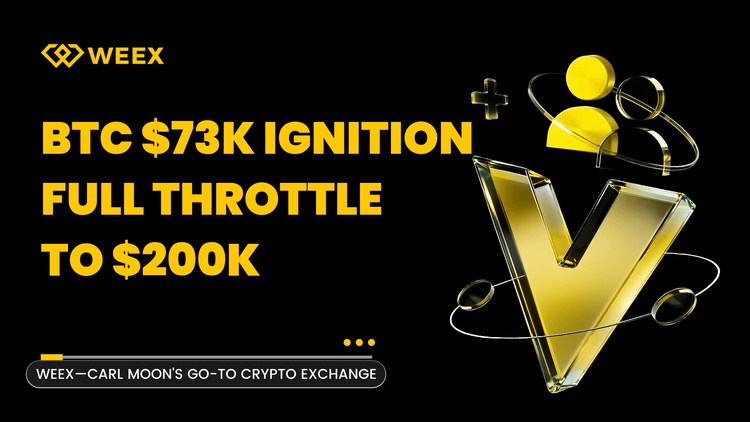
Bitcoin Hits $73,000 Triggering $427M Short Liquidation | Carl Moon: $200,000 is the Target
April 9, 2026 (UTC+0), 22:17. Bitcoin (BTC) executed a high-velocity surge within minutes, heavy-hitting the $73,000 psychological barrier and touching a local high near $74,000. While the price has since retraced to consolidate above $72,000, this "instant ambush" successfully completed a $427M liquidation of short positions.
After two years, Hong Kong's first batch of stablecoin licenses finally issued: HSBC, Standard Chartered make the cut
The person who helped TAO rise by 90% has now single-handedly crashed the price again today
3-Minute Guide to Participating in the SpaceX IPO on Bitget
Top 5 Cryptos to Buy in 2026 Q1: A ChatGPT Deep Dive Analysis
Explore the top 5 cryptos to buy in Q1 2026 including BTC, ETH, SOL, TAO, and ONDO. See price outlooks, key narratives, and institutional catalysts shaping the next market move.
How to Earn $15,000 with Idle USDT Before Altcoin Season 2026
Wondering if altcoin season is coming in 2026? Get the latest market update, and learn how to turn your idle stablecoins waiting for entry into extra rewards up to 15,000 USDT.
Can You Win Joker Returns Without Large Trading Volume? 5 Mistakes New Players Make In WEEX Joker Returns Season 2
Can small traders win WEEX Joker Returns 2026 without huge volume? Yes—if you avoid these 5 costly mistakes. Learn how to maximize card draws, use Jokers wisely, and turn small deposits into 15,000 USDT rewards.


 App
App