
Specialized blockchains are shaping the future of DeFi

By: cryptosheadlines|2025/05/04 18:30:01
0
Share
copy
Airdrop Is Live CaryptosHeadlines Media Has Launched Its Native Token CHT. Airdrop Is Live For Everyone, Claim Instant 5000 CHT Tokens Worth Of $50 USDT. Join the Airdrop at the official website, CryptosHeadlinesToken.com Disclosure: The views and opinions expressed here belong solely to the author and do not represent the views and opinions of crypto.news’ editorial. A new class of blockchains like Berachain, Story (IPfi), Unichain, Monad, and MegaETH are leading a wave of specialized blockchain launches designed to serve increasingly diverse decentralized finance applications. But these chains aren’t just niche alternatives—they’re breaking users free from the constraints of the general-purpose status quo. This approach challenges the long-standing notion that a handful of general-purpose networks can support all use cases—and declares that the future isn’t one monolithic chain to rule them all, but a unit of optimized environments competing, collaborating, and coexisting. Institutions are entering with expectations shaped by decades of traditional finance, and the demand is clear. They want performance-optimized platforms that cater to high-speed trading, tokenized intellectual property, and sophisticated real-world asset markets. As these ecosystems grow, questions around cross-chain interoperability, institutional adoption, and competitive dynamics in DeFi infrastructure become increasingly relevant. The game is changing under our feet, and those who cling to general-purpose chains could be left behind.Breaking free from general-purpose bottlenecksGeneral-purpose blockchains are beginning to show their cracks as financial institutions start stepping into DeFi. Proponents of specialization rightly argue that tailored infrastructures deliver more than technological advances, providing stronger security guarantees, improved scalability, and compliance features that appeal to institutional participants. For financial institutions exploring on-chain finance, predictable execution environments, regulatory-friendly frameworks, and reduced counterparty risk are especially mission-critical. These areas where specialized chains offer an edge, with these features already embedded to meet real-world demand, where general-purpose chains would require retrofitting to adapt. Some critics warn that a highly fragmented landscape could dilute liquidity and create inefficiencies, making it harder for assets to flow seamlessly across different platforms. Even though cross-chain solutions such as trust-minimized bridges and universal liquidity layers aim to mitigate these risks, their effectiveness remains a critical factor in whether specialization can scale without introducing friction. Thus, the trillion-dollar question remains: can we build this connective tissue fast enough to pace specialization?Nevertheless, emerging data from beta deployments indicates that specialized networks can attract robust ecosystems, offering developers more freedom to innovate in areas like algorithmic credit scoring, IP rights management, and tokenized commodities. Specialization may struggle in theory, but it’s already working in practice.DeFi’s future isn’t simpler—It’s smarterRecent traction in venture funding reinforces this shift, with projects integrating advanced data-validation methods and cross-chain bridges that facilitate rapid asset movement. Institutions aren’t watching from the sidelines. Adoption is soaring, driven by firms seeking on-chain access to structured financial products and real-world assets on their terms, creating further demand for the compliance-friendly environments that specialized blockchains increasingly provide. Experiments in liquid staking, real-world asset tokenization, and hybrid on-chain/off-chain data verification further validate the need for these chains as key infrastructure layers for the next wave of institutional DeFi. However, skeptics argue that increased complexity in managing assets across multiple chains may hinder mainstream adoption. While hurdles are to be expected, UX problems like these can be solved. And in a rapidly diversifying DeFi ecosystem, fragmentation is often a sign of progress. The challenge lies in developing seamless user interfaces and robust interoperability mechanisms that abstract away technical friction.To many investors, this fragmentation is an opportunity to diversify risk and foster a more competitive market, where specialized chains drive innovation without relying on monopolistic blockchain networks. In other words, it’s not fragmentation for fragmentation’s sake, but strategic and competitive modularity.The end of blockchain maximalismCompeting networks such as Berachain and Unichain may redefine how DeFi applications are built and adopted, fostering a more mature market structure where specialized blockchains thrive alongside established platforms. If these emerging networks can sustain liquidity, seamlessly integrate with existing ecosystems, and maintain institutional trust, they could unlock a new era of on-chain finance—one with highly tailored solutions that don’t rely on a one-size-fits-all approach. This isn’t just a technical shift, but a philosophical one.The long-term viability of this multi-chain paradigm will depend on whether interoperability frameworks can facilitate frictionless asset movement and whether institutions gain confidence in the governance and security of specialized chains. Whether this shift leads to a more efficient DeFi landscape or a web of isolated networks remains uncertain, but specialization is already reshaping the blockchain industry’s trajectory. What is sure is that the future of blockchains is not monolithic. It’s modular, specialized, and taking off. Marcin Kazmierczak Marcin Kazmierczak is a co-founder of RedStone Oracles, the fastest-growing blockchain oracle, backed by Arrington Capital. In crypto since 2017, Marcin has played a key role in developing several innovative DeFi prototypes, previously a Google Cloud PM with a background in quantitative methods in economics. He is also the Co-founder of ETHWarsaw and a Laureate of Forbes 30 under 30 Poland. With a deep understanding of cross-chain infrastructure, Marcin’s expertise spans from DeFi applications to oracles and blockchain data solutions. Source link

You may also like

Aave Founder: What Is the Secret of the DeFi Lending Market?

When on-chain lending becomes significantly cheaper to operate end-to-end compared to traditional lending, mass adoption becomes not a question of if, but of when.

The Trader's Playbook: 7 Market Cycle Lessons From LALIGA’s 90 Minutes

What do LALIGA matches teach about crypto markets? Learn how consolidation, breakouts, and late-cycle volatility shape disciplined trading decisions.

How Smart Money Tracker Survived Live AI Trading at WEEX AI Hackathon

Discover how WEEX AI Trading Hackathon tested strategies with real capital—no simulations. See how Smart Money Tracker survived flash crashes and leveraged 18x in live markets.

80% Win Rate to 40% Drawdown: An AI Trader's Brutal Recalibration at WEEX AI Wars

Dive into the technical blueprint of an AI trading system built on LLaMA reasoning and multi-agent execution. See how Quantum Quaser uses confidence thresholds & volatility filters at WEEX AI Wars, and learn the key to unlocking 95% win rate trades.
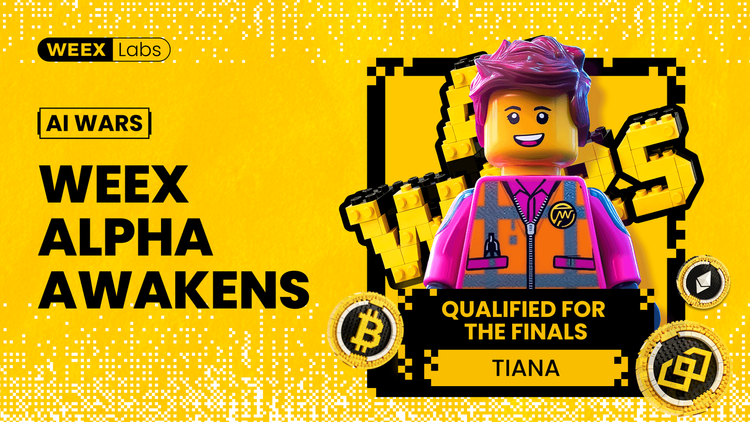
AI Trading Strategy Explained: How a Beginner Tiana Reached the WEEX AI Trading Hackathon Finals

Can AI trading really outperform human emotion? In this exclusive WEEX Hackathon finalist interview, discover how behavioral signal strategies, SOL trend setups, and disciplined AI execution secured a spot in the finals.

When AI Takes Over the 'Shopping Journey,' How Much Time Does PayPal Have Left?

Stripe and PayPal are shifting from payment tools to AI business infrastructure, competing to become the default engine for AI transactions.

Popular coins

Latest Crypto News

Read more









