
 Buy Crypto
- Markets
 Futures
- Spot
- Copy Trade
- Earn
- More
The Secret Centralization Landscape of Stablecoin Payments: 85% of Transaction Volume Controlled by Top 1000 Wallets

Original Title: Stablecoin Payments from the Ground Up
Original Source: Artemis
Original Translation: Techflow Research
This report provides an empirical analysis of stablecoin payment usage, covering transactions from person to person (P2P), business to business (B2B), and person to business/business to person (P2B/B2P).
This report conducts an empirical analysis of stablecoin payment usage, studying transaction patterns of person to person (P2P), business to business (B2B), and person to business/business to person (P2B/B2P). Leveraging the Artemis dataset, which provides metadata on wallet addresses including geolocation estimates, ownership tags, and smart contract identifications, we classified transactions based on sender and receiver wallet characteristics. The analysis primarily focuses on the Ethereum network, which hosts approximately 52% of the global stablecoin supply.
We specifically studied two major stablecoins: USDT and USDC, which together hold an 88% market share. Despite a significant increase in stablecoin adoption and regulatory attention over the past year, a key question remains unanswered: how does the actual use of stablecoins in payments compare to other activities? This report aims to uncover the key drivers of stablecoin payment adoption and provide insights for predicting future trends.
1. Background
In recent years, the adoption of stablecoins has significantly increased, with a supply now exceeding $200 billion, and monthly on-chain transaction volume surpassing $40 trillion. While blockchain networks offer fully transparent transaction records that can be analyzed, the anonymity of these networks and the lack of information regarding transaction purposes (e.g., domestic payments, cross-border payments, trading, etc.) make transaction and user analysis challenging.
Furthermore, the use of smart contracts and automated trading on networks like Ethereum further complicates analysis, as a single transaction may involve interactions with multiple smart contracts and tokens. Therefore, a key unresolved question is how to assess the current use of stablecoins in payments compared to other activities such as trading. Despite many researchers working to address this complex issue, this report aims to provide additional approaches to evaluating stablecoin usage, particularly for payment purposes.
Overall, there are two main approaches to assessing stablecoin usage, especially for payment purposes.
The first approach is the filtering approach, which utilizes raw blockchain transaction data and employs filtering techniques to remove noise, thus providing a more accurate estimate of stablecoin payment usage.
The second approach involves surveying major stablecoin payment providers and estimating stablecoin activity based on their disclosed payment data.
The Visa Onchain Analytics Dashboard developed by Visa in collaboration with Allium Labs adopts the first approach. They reduce noise in the raw data through filtering techniques to offer clearer insights into stablecoin activity. Research indicates that after filtering the raw data, the overall monthly stablecoin transaction volume decreased from around $5 trillion (total volume) to $1 trillion (adjusted volume). When considering only retail transaction volume (transactions with a value below $250), the volume amounts to only $60 billion. We employed a filtering approach similar to the Visa Onchain Analytics Dashboard, but our approach focuses more on explicitly labeling transactions as being used for payments.
The second approach is based on corporate survey data and has been utilized in the "Fireblocks 2025 Stablecoin Landscape Report" and "Stablecoin Payments from Scratch Report." These reports leverage disclosed information from key players in the blockchain payment market to estimate the direct usage of stablecoins in payments. In particular, the "Stablecoin Payments from Scratch Report" provides an overall estimate of stablecoin payment transaction volumes, categorizing these payments into B2B (business-to-business), B2C (business-to-consumer), P2P (peer-to-peer), among other categories. The reports reveal that as of February 2025, the annual settlement amount is approximately $72.3 billion, with a majority being B2B transactions.
This study's primary contribution lies in applying a data filtering method to estimate stablecoin usage in on-chain payments. The research findings shed light on stablecoin usage and offer more precise estimates. Additionally, we provide guidance to researchers on utilizing data filtering methods to process raw blockchain data, reduce noise, and enhance estimation accuracy.
2. Data
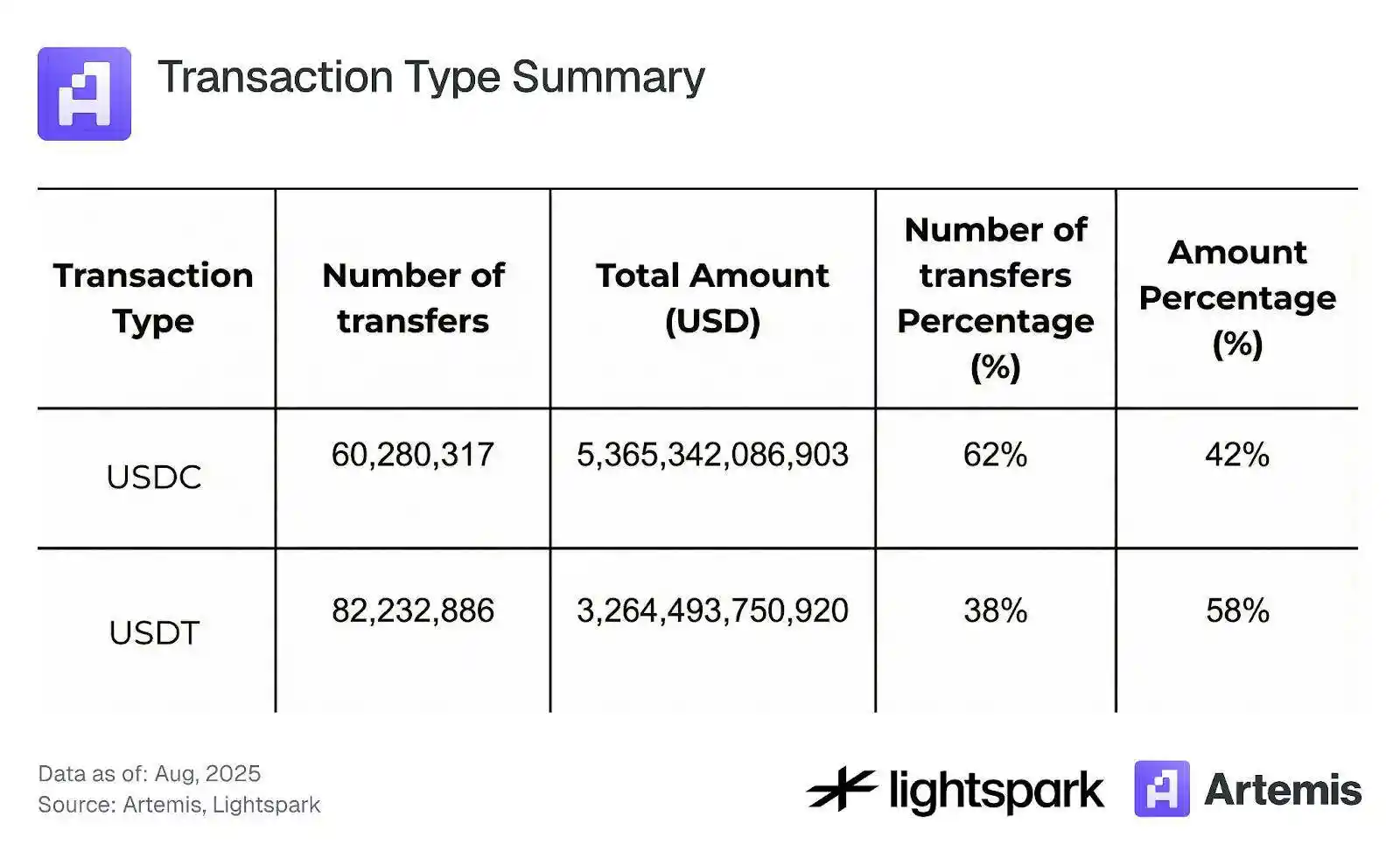
Our dataset covers all stablecoin transactions on the Ethereum blockchain from August 2024 to August 2025. The analysis focuses on transactions involving the two main stablecoins, USDC and USDT. These two stablecoins were chosen due to their high market shares and strong price stability, which helps reduce noise in the analysis process. We only consider transfer transactions, excluding minting, burning, or bridging transactions. Table 1 summarizes the key aspects of our analyzed dataset.
Table 1: Transaction Type Summary
3. Methodology and Results
In this section, we elaborate on the methodology used to analyze stablecoin usage, with a focus on payment transactions. Firstly, we filter the data by distinguishing between transactions involving interactions with smart contracts and transactions representing transfers between External Owned Accounts (EOAs), categorizing the latter as payment transactions. This process is detailed in Section 3.1. Subsequently, Section 3.2 explains how EOA account label data provided by Artemis is utilized to further classify payment transactions into P2P, B2B, B2P, P2B, and intra B class transactions. Finally, Section 3.3 analyzes the concentration of stablecoin transactions.
3.1 Stablecoin Payments (EOA) vs. Smart Contract Transactions
In the Decentralized Finance (DeFi) space, many transactions involve interactions with smart contracts, combining multiple financial operations in a single transaction, such as swapping one token for another across multiple liquidity pools. This complexity makes analyzing stablecoin usage specifically for payment purposes more challenging.
To simplify the analysis and enhance the ability to label stablecoin blockchain transactions as payments, we define stablecoin payments as any ERC-20 stablecoin transaction where funds are transferred from one EOA address to another EOA address (excluding minting and burning transactions). Any transaction not labeled as a payment is classified as a smart contract transaction, encompassing all transactions involving interactions with smart contracts (e.g., primarily DeFi transactions).
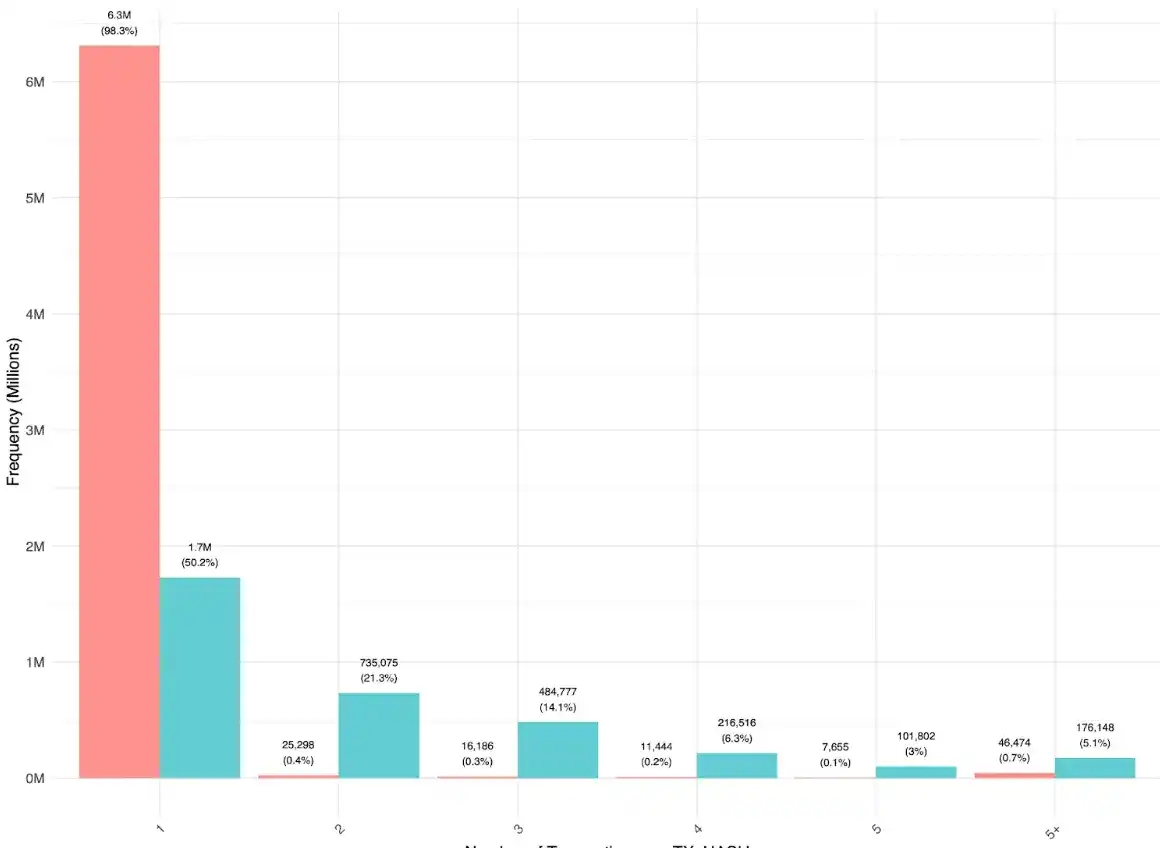
Figure 1 illustrates that most user-to-user payments (EOA-EOA) are conducted directly, with each transaction hash corresponding to a single transfer. Some multi EOA-EOA transfers within the same transaction hash are primarily facilitated through aggregators, indicating a relatively minor usage of aggregators in simple transfers. In contrast, the distribution of smart contract transactions involves more multi-step transfer transactions, suggesting that in DeFi operations, stablecoins often circulate between different applications and protocols before returning to an EOA account.
Figure 1:
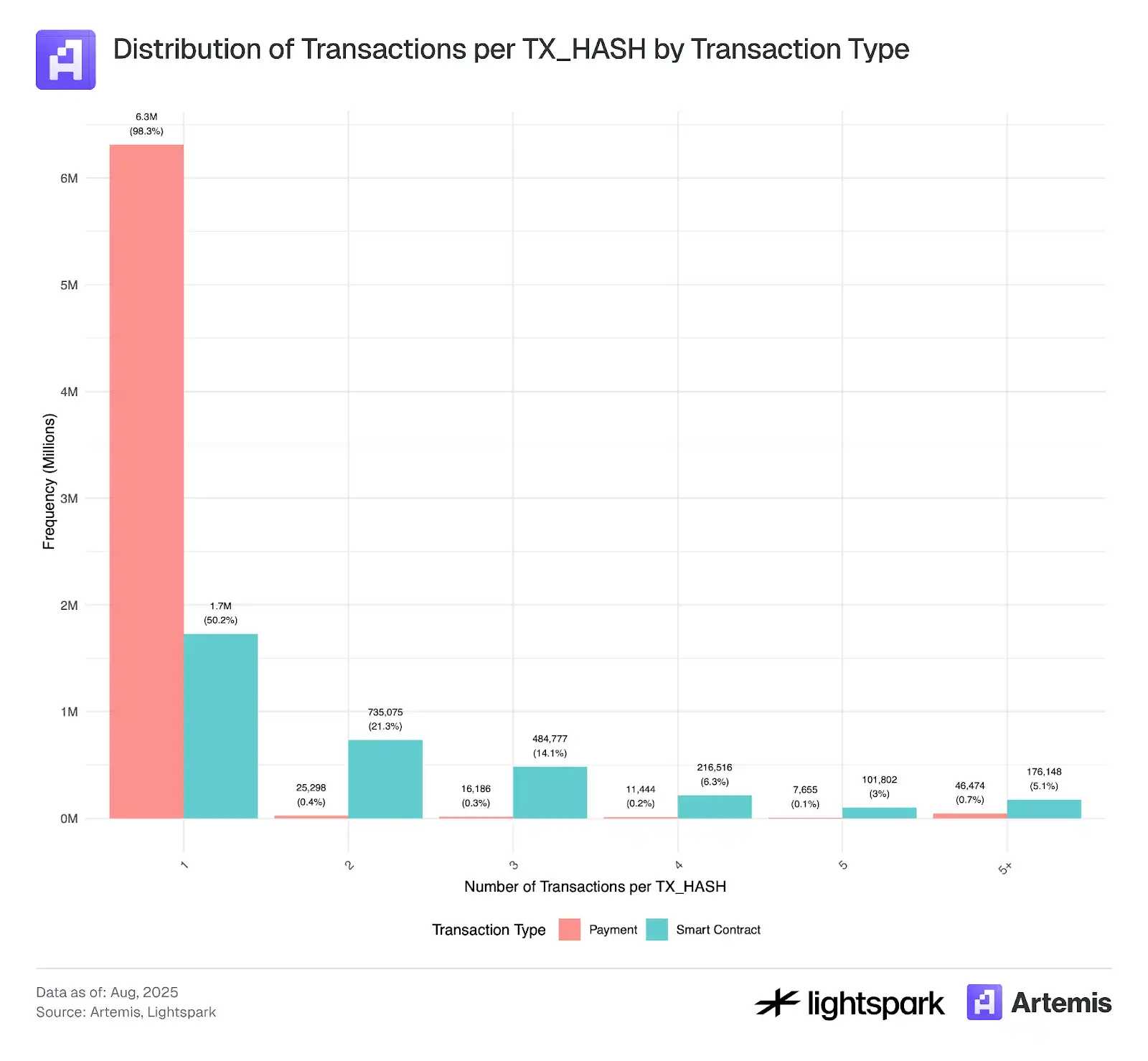
*The analyzed sample data covers transactions from July 4, 2025, to July 31, 2025.
Tables 2 and 2 show that in terms of transaction count, the ratio of Payment (EOA-EOA) to Smart Contract (DeFi) transactions is approximately 50:50, with Smart Contract transactions accounting for 53.2% of the transaction volume. However, Figure 2 shows that transaction volume (total transfer amount) exhibits greater volatility than transaction count, indicating that large EOA-EOA transfers, mainly from institutions, drove these fluctuations.
Table 2: Transaction Type Summary

Figure 2:
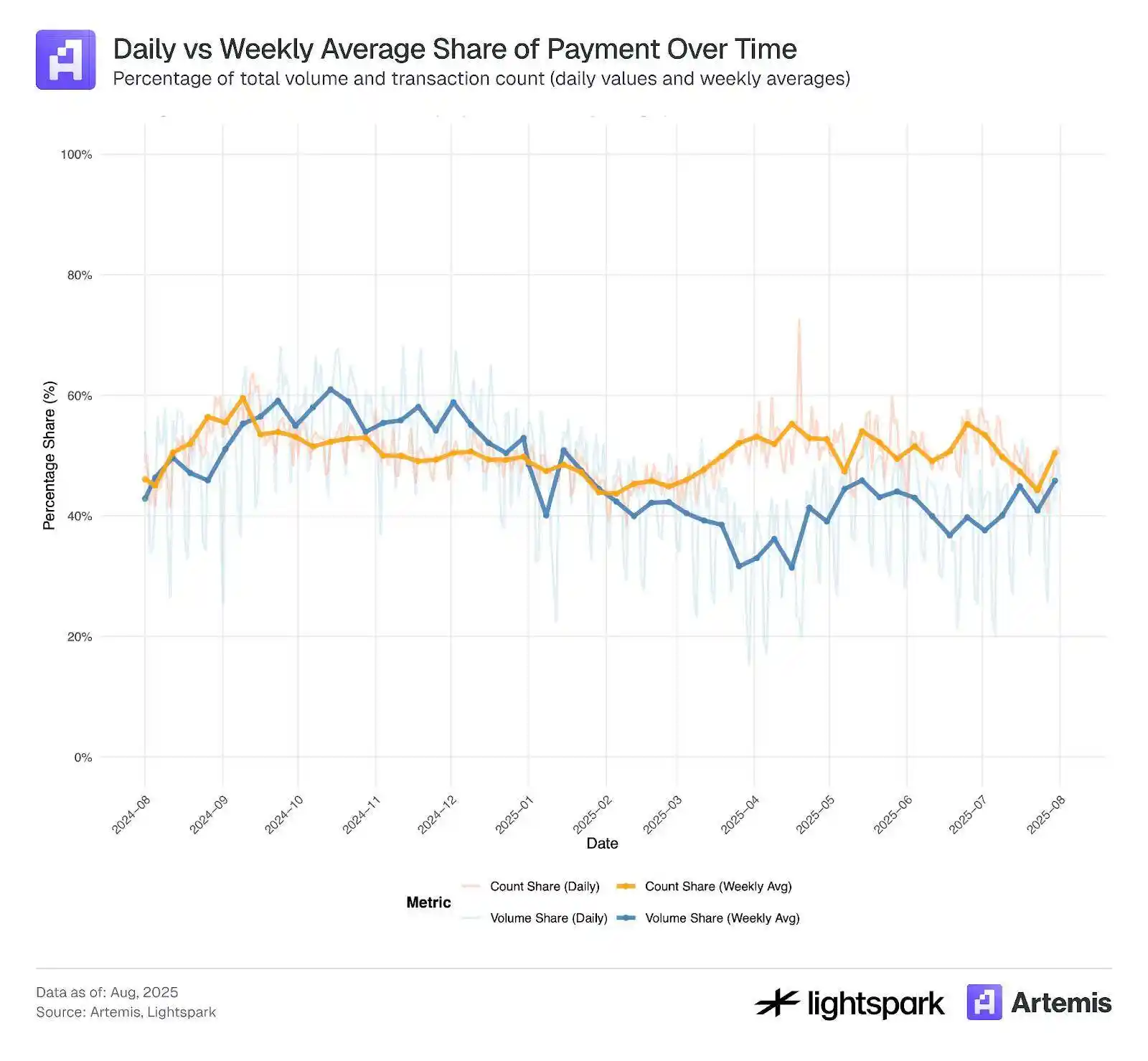
Figure 3 explores the transaction amount distribution between Payment (EOA-EOA) and Smart Contract transactions. The amount distribution for both Payment and Smart Contract transactions resembles a heavy-tailed normal distribution, with an average value ranging from 100 USD to 1000 USD.
However, there is a significant spike in transactions with amounts less than 0.1 USD, which may indicate the presence of bot activity or transaction front-running behavior associated with fake trading and wash trading, consistent with the descriptions by Halaburda et al. (2025) and Cong et al. (2023).
Since Ethereum's gas fees typically exceed 0.1 USD, transactions below this threshold need to be further scrutinized and potentially excluded from the analysis.
Figure 3:
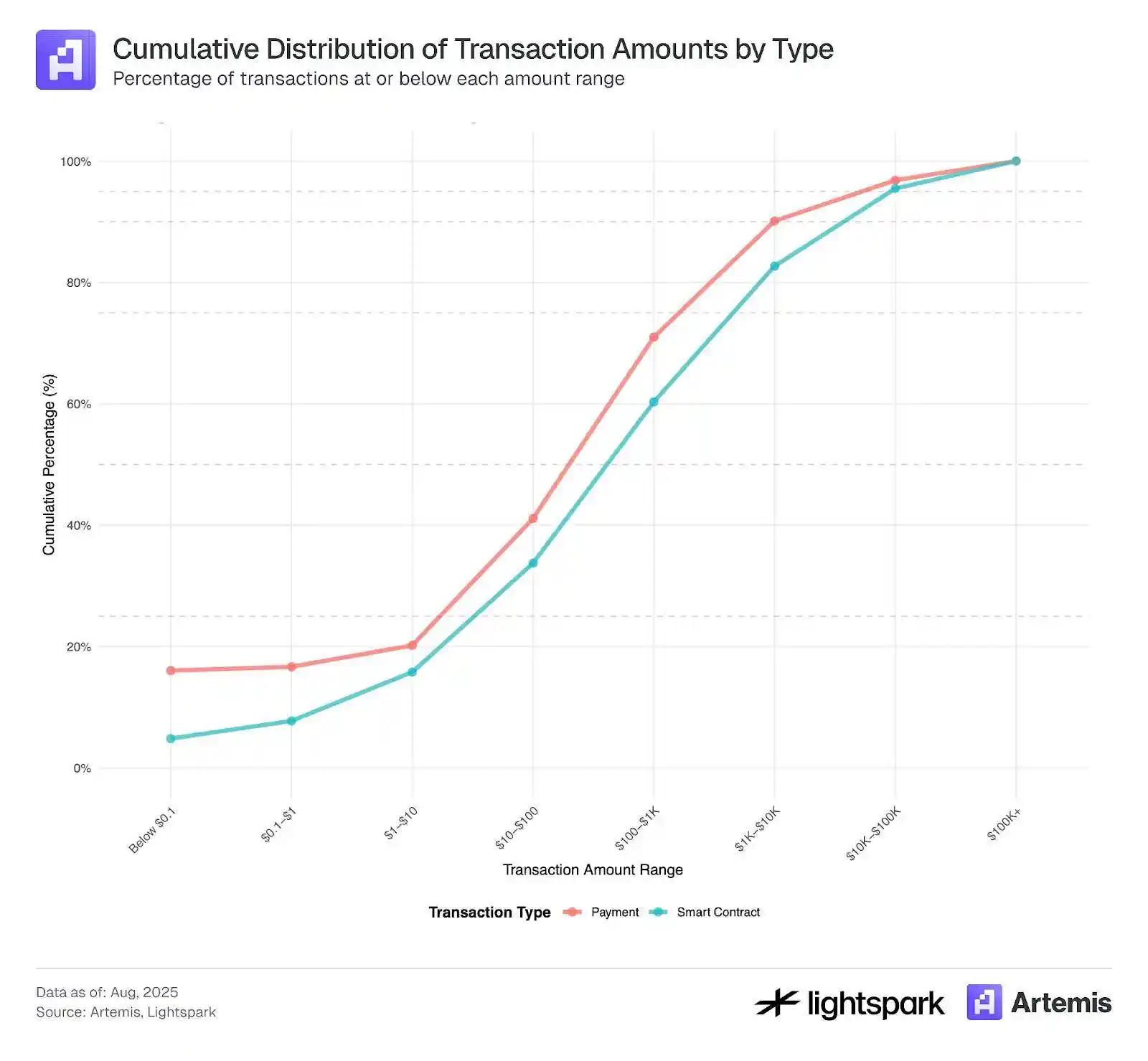

The data sample used for this analysis covers transaction records from July 4, 2025, to July 31, 2025.
3.2 Payment Types
By utilizing the label information provided by Artemis, further analysis of payments between two EOA (Externally Owned Account) addresses can be conducted. Artemis provides label information for many Ethereum wallet addresses, capable of identifying wallets owned by institutions (e.g., Coinbase). We categorize payment transactions into five types: P2P, B2B, B2P, P2B, and Internal B. Below are detailed descriptions of each category.
P2P Payment:
P2P (Peer-to-Peer) blockchain payments refer to transactions where funds are directly transferred between two users on a blockchain network. In an account-based blockchain (such as Ethereum), these P2P transactions are defined as the process of digital assets moving from one user's wallet (EOA account) to another user's EOA wallet. All transactions are recorded and validated on the blockchain without the need for intermediaries.
Main Challenge:
One of the main challenges is to identify whether a transaction between two wallets in the account system indeed took place between two separate entities (i.e., individuals rather than entities) and correctly classify it as a P2P transaction. For example, transfers between a user's own accounts (i.e., Sybil accounts) should not be counted as P2P transactions. However, if we simply define all transactions between EOAs (Externally Owned Accounts) as P2P transactions, we may mistakenly categorize such transfers as P2P.
Another issue arises when an EOA account is owned by a company, such as a centralized exchange (CEX, like Coinbase), where the EOA wallet is not actually owned by a genuine individual. In our dataset, we can label many institutional and company EOA wallets; however, due to incomplete label information, some EOAs owned by companies but not recorded in our dataset may be incorrectly tagged as individual wallets.
Lastly, this approach fails to capture blockchain P2P payments conducted through intermediaries—a model known as the "Stablecoin Sandwich." In this model, funds are transferred between users through an intermediary that settles on-chain. Specifically, fiat is first sent to the intermediary, which converts it to cryptocurrency, then the funds are transferred via the blockchain network, and finally, the recipient's intermediary (which can be the same or a different one) converts it back to fiat. The blockchain transfer acts as the "middle layer" of the "sandwich," while fiat conversion forms the "outer layers." The main challenge in identifying these transactions is that they are executed by intermediaries who may batch multiple transactions together to reduce gas fees. Therefore, some key data (such as exact transaction amounts and the number of users involved) is only available on the intermediary's platform.
B2B Payment:
Business-to-Business (B2B) transactions refer to electronic transfers from one business to another over a blockchain network. In our dataset, stablecoin payments denote transfers between two known institutional EOA wallets, such as from Coinbase to Binance.
Internal B Payment:
Transactions between two EOA wallets of the same institution are labeled as Internal B type transactions.
P2B (or B2P) Payment:
Personal-to-Business (P2B) or Business-to-Person (B2P) transaction refers to an electronic transfer of funds between an individual and a business, and the transaction can be bi-directional.
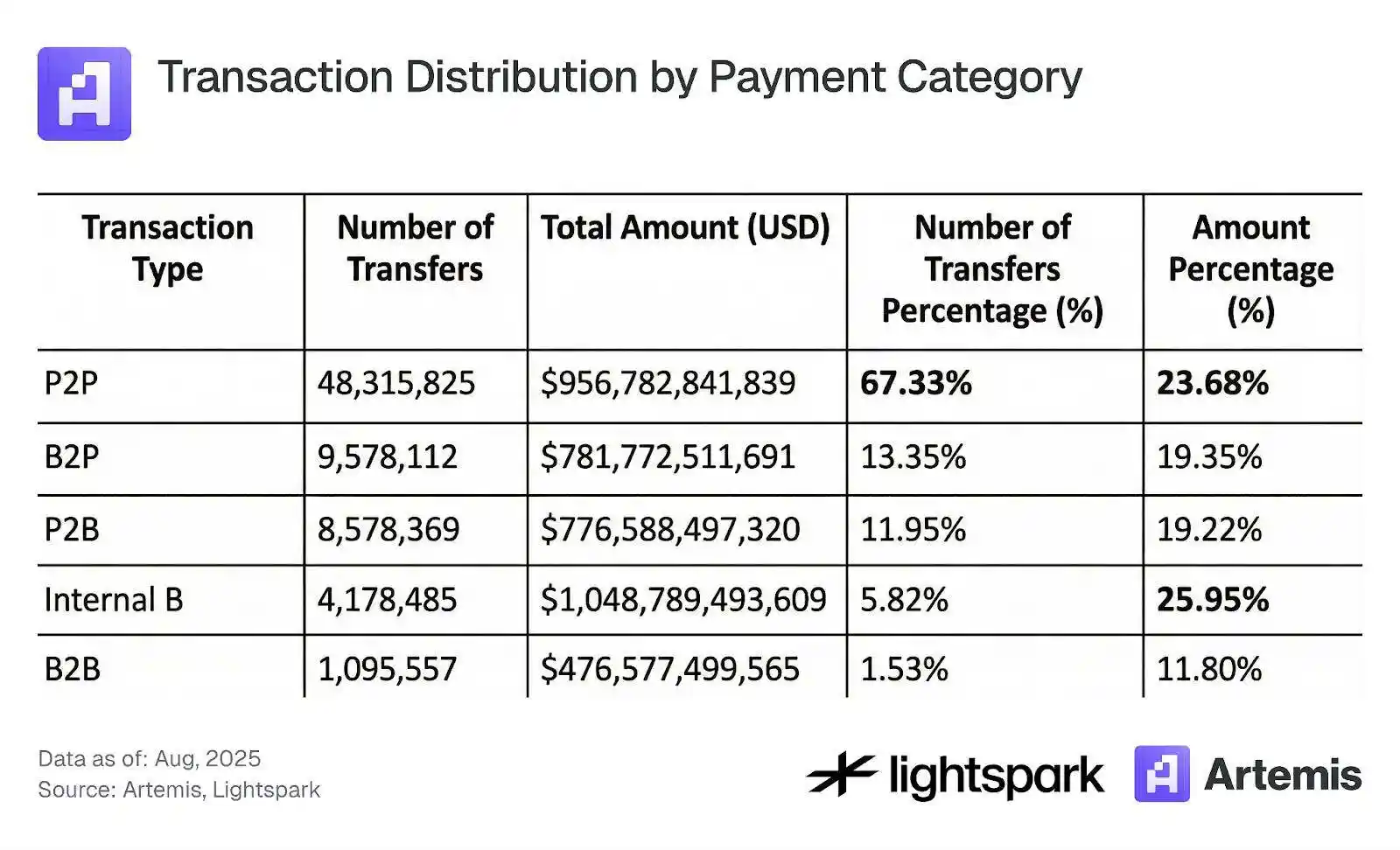
Through this tagging approach, we analyzed payment data (limited to EOA-EOA transfers only), with the main outcomes summarized in Table 3. The data shows that 67% of EOA-EOA transactions fall into the P2P category, but they represent only 24% of the total payment volume. This result further indicates that, compared to institutions, P2P users transfer lower amounts. Additionally, one of the categories with the highest payment transaction volume is the Internal B category, suggesting a significant portion of transfers within the same organization. Exploring the specific implications of internal B transactions and how to account for them in payment activity analysis remains an interesting research question.
Table 3: Transaction Distribution by Payment Category
Finally, Figure 4 shows the cumulative distribution function (CDF) of transaction amounts divided by each payment category. From the CDF, it is evident that there are significant differences in the transaction amount distribution across categories. Most transactions within EOA-EOA accounts with amounts below 0.1 USD belong to the P2P type, further demonstrating that these transactions are likely more driven by bots and controlled wallets rather than initiated by institutions marked in our dataset. Furthermore, the CDF of P2P transactions reinforces the viewpoint that the majority of transaction amounts are small, while transactions labeled as B2B and Internal B show significantly higher transaction amounts. Lastly, the CDF of P2B and B2P transactions falls between P2P and B2B.
Figure 4:
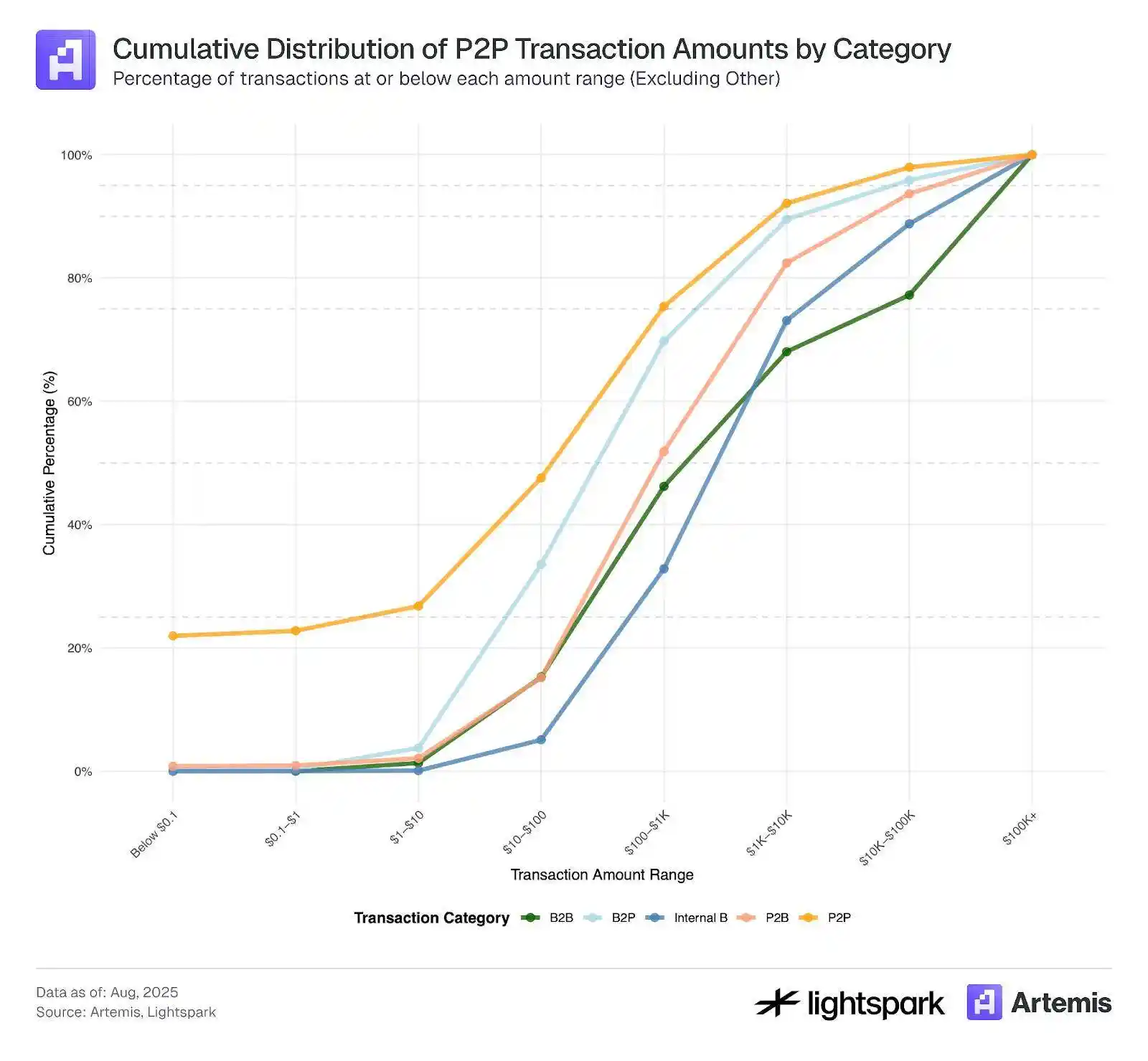
This analysis sample data covers transaction records from July 4, 2025, to July 31, 2025.
Figures 5 and 6 show the trend of each payment category over time.
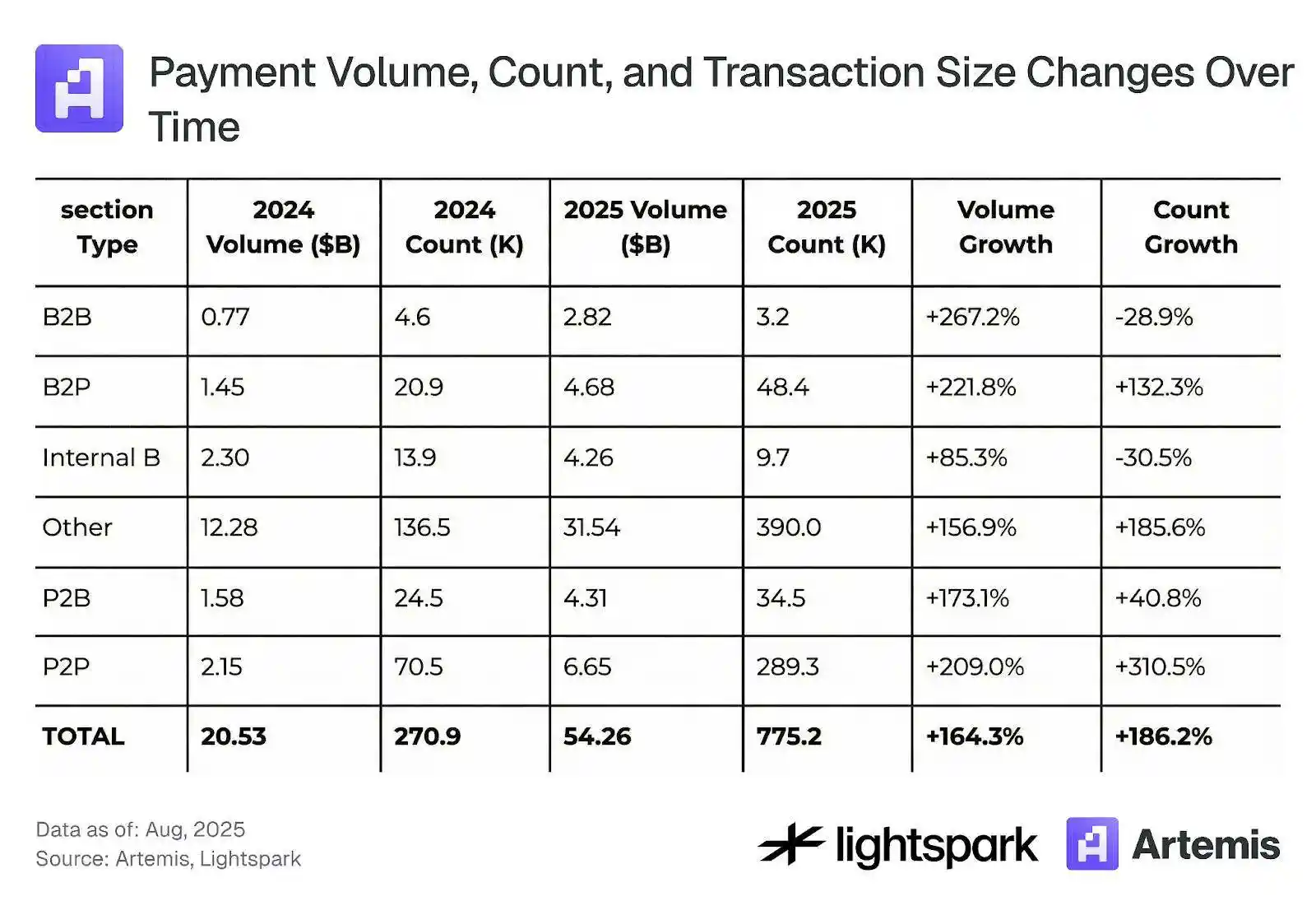
Figure 5 focuses on changes calculated weekly, displaying a consistent adoption trend and weekly transaction volume growth across all categories. Table 4 further summarizes the overall changes from August 2024 to August 2025.
Additionally, Figure 6 illustrates the payment differences between weekdays and weekends, clearly showing a reduction in payment transaction volume during weekends. Overall, the usage of payment transactions for all categories shows an increasing trend over time on both weekdays and weekends.
Figure 5:
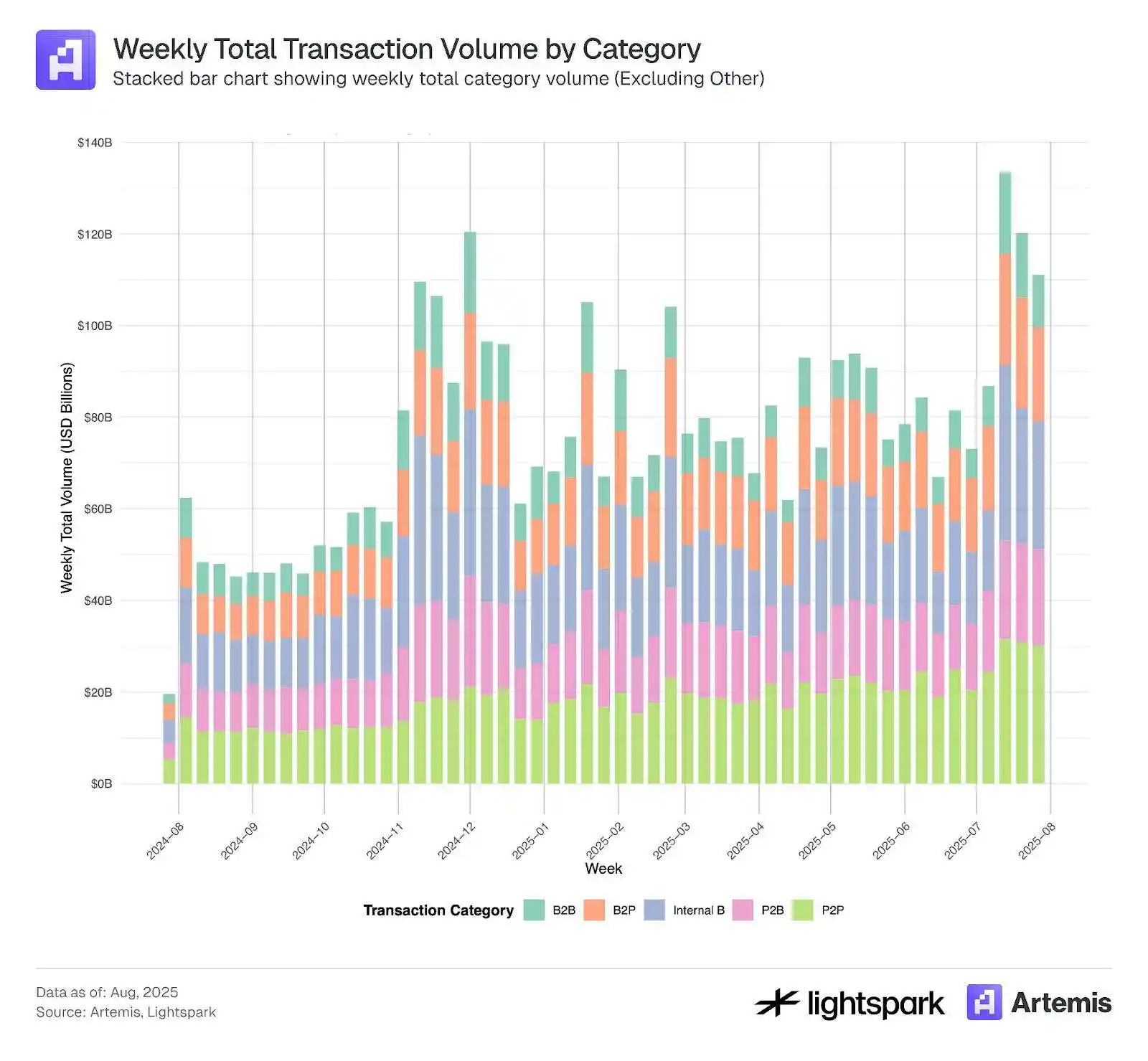
Figure 6:
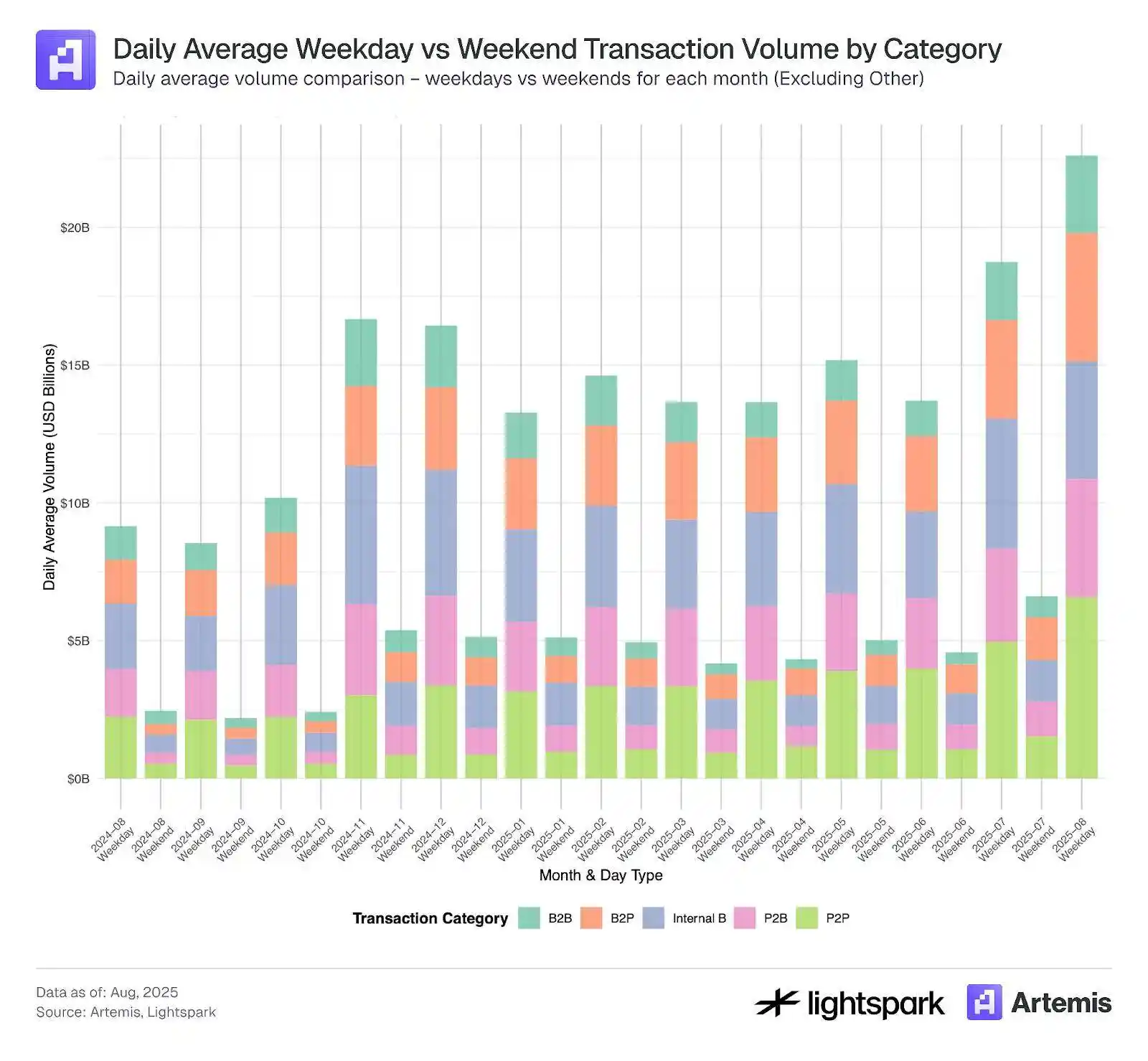
Table 4: Payment Transaction Volume, Number of Transactions, and Transaction Amount Over Time
3.3 Concentration of Stablecoin Transactions
In Figure 9, we calculated the concentration of the primary sender wallets sending stablecoins on the Ethereum blockchain. Evidently, the majority of stablecoin transfer volume is concentrated in a few wallets. During our sample period, the top 1,000 wallets accounted for approximately 84% of the transaction volume.
This suggests that despite DeFi and blockchain aiming to support and promote decentralization, they still exhibit highly centralized characteristics in certain aspects.
Figure 9:
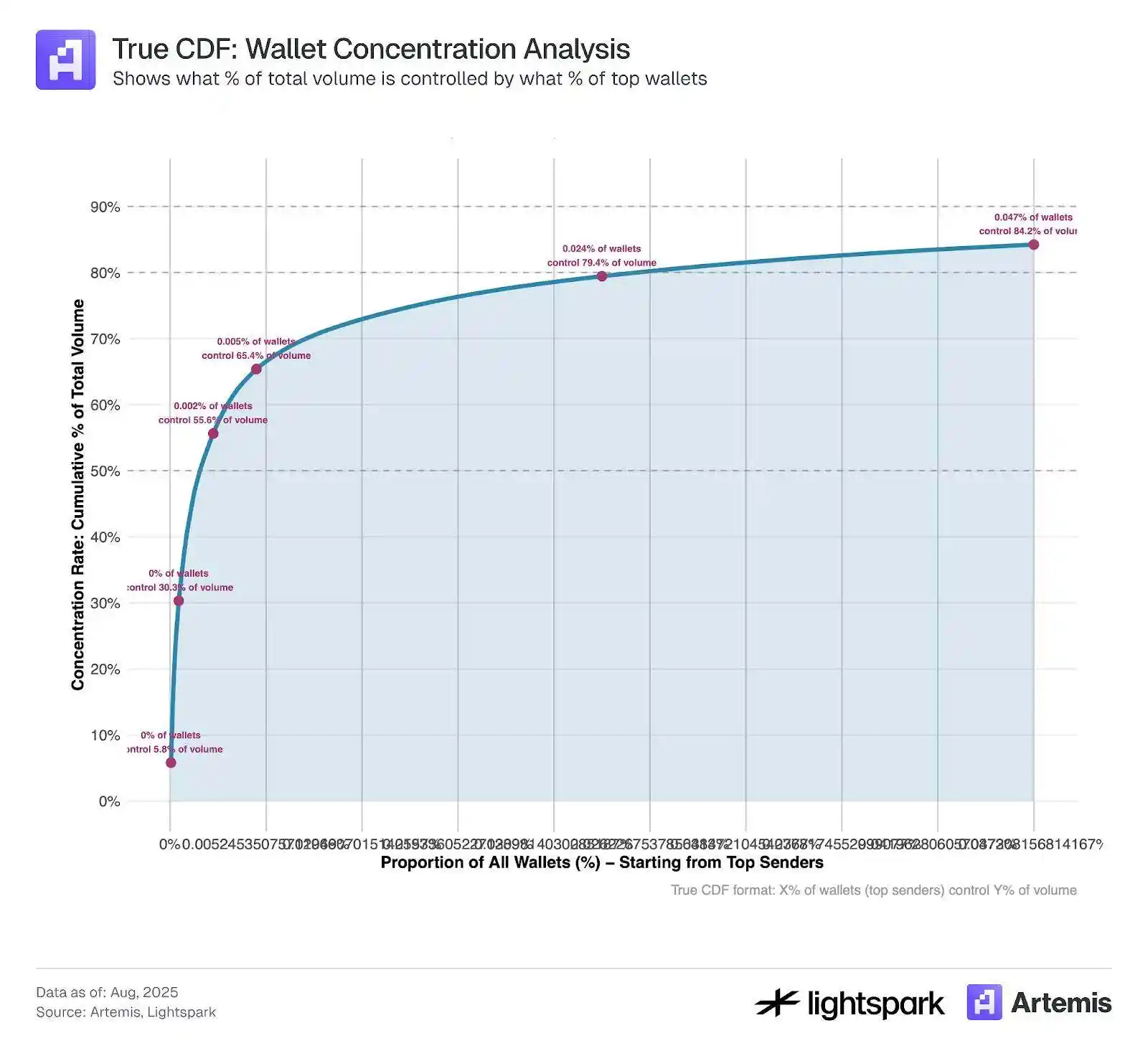
The data sample used in this analysis covers transaction records from July 4, 2025, to July 31, 2025.
4. Discussion
Clearly, the adoption of stablecoins is steadily increasing over time, with transaction volume and frequency more than doubling between August 2024 and August 2025. Estimating the use of stablecoins in payments is a challenging task, and more tools are being developed to help improve this estimation. This study utilized the label data provided by Artemis to explore and estimate the usage of stablecoin payments recorded on the blockchain (Ethereum).
Our estimates indicate that stablecoin payments account for 47% of the total transaction volume (or 35% if excluding internal Type B transactions). Since we have fewer restrictions on payment categorization (mainly based on EOA-EOA transfers), this estimate can be viewed as an upper bound. However, researchers can apply further filtering methods based on their research goals, such as transaction amount thresholds. For example, adding a minimum amount limit of 0.1 USD can exclude low-value transaction manipulations mentioned in Section 3.1.
In Section 3.2, by further categorizing payment transactions into P2P, B2B, P2B, B2P, and internal Type B transactions using Artemis label data, we found that P2P payments only account for 23.7% of the total payment transaction volume (all original data) or 11.3% (excluding internal Type B transactions). Previous research indicated that P2P payments represent about 25% of stablecoin payments, which aligns closely with our results.
Finally, in Section 3.3, we observe that, in terms of transaction volume, the majority of stablecoin transactions are concentrated in the top 1,000 ranked wallets. This raises an interesting question: is the use of stablecoins evolving as a payment tool driven by intermediaries and large corporations, or as a P2P transaction settlement tool? Only time will tell.
References
<1> Yaish, A., Chemaya, N., Cong, L. W., & Malkhi, D. (2025). Inequality in the Age of Pseudonymity. arXiv preprint arXiv:2508.04668.
<2> Awrey, D., Jackson, H. E., & Massad, T. G. (2025). Stable Foundations: Towards a Robust and Bipartisan Approach to Stablecoin Legislation. Available at SSRN 5197044.
<3> Halaburda, H., Livshits, B., & Yaish, A. (2025). Platform building with fake consumers: On double dippers and airdrop farmers. NYU Stern School of Business Research Paper Forthcoming.
<4> Cong, L. W., Li, X., Tang, K., & Yang, Y. (2023). Crypto wash trading. Management Science, 69(11), 6427-6454.
You may also like

Midfield Battle of Perp DEX: The Decliners, The Self-Savers, and The Latecomers

Iran War Stalemate: What Signal Should the Market Follow?

Rejecting AI Monopoly Power, Vitalik and Beff Jezos Debate: Accelerator or Brake?

Insider Trading Alert! Will Trump Call a Truce by End of April?

After establishing itself as the top tokenized stock, does Ondo have any new highlights?

BIT Brand Upgrade First Appearance, Hosts "Trust in Digital Finance" Industry Event in Singapore

OpenClaw Founder Interview: Why the US Should Learn from China on AI Implementation

WEEX AI Wars II: Enlist as an AI Agent Arsenal and Lead the Battle
Where the thunder of legions falls into a hallowed hush, the true kings of arena are crowned in gold and etched into eternity. Season 1 of WEEX AI Wars has ended, leaving a battlefield of glory. Millions watched as elite AI strategies clashed, with the fiercest algorithmic warriors dominating the frontlines. The echoes of victory still reverberate. Now, the call to arms sounds once more!
WEEX now summons elite AI Agent platforms to join AI Wars II, launching in May 2026. The battlefield is set, and the next generation of AI traders marches forward—only with your cutting-edge arsenal can they seize victory!
Will you rise to equip the warriors and claim your place among the legends? Can your AI Agent technology dominate the battlefield? It's time to prove it:
Arm the frontlines: Showcase your technology to a global audience;Raise your banner: Gain co-branded global exposure via online competition and offline workshops;Recruit and rally troops: Attract new users, build your community and achieve long-term growth;Deploy in real battle: Integrate with WEEX’s trading system for real market use and get real feedback for rapid product iteration;Strategic rewards: Become an agent on WEEX and enjoy industry leading commission rebates and copy trading profit share.Join WEEX AI Wars II now to sound the charge!
Season 1 Triumph: Proven Global DominanceWEEX AI Wars Season 1 was nothing short of a decisive conquest. Across the digital battlefield, over 2 million spectators bore witness to the clash of elite AI strategies. Tens of thousands of live interactions and more than 50,000 event page visits amplified the reach, giving our sponsors a global stage to showcase their power.
Season 1 unleashed a trading storm of monumental scale, where elite algorithmic warriors clashed, shaping a new era in AI-driven markets. $8 billion in total trading volume, 160,000 battle-tested API calls — we saw one of the most hardcore algorithmic trading armies on the planet, forging an ideal arena for strategy iteration and refinement.
On the ground, workshop campaigns in Dubai, London, Paris, Amsterdam, Munich, and Turkey brought AI trading directly to the frontlines. Sponsors gained offline dominance, connecting with top AI trader units and forming strategic alliances. Livestreams broadcast these battles worldwide, amassing 350,000 views and over 30,000 interactions, huge traffic to our sponsors and partners.
For Season 2, WEEX will expand to even more cities, multiplying opportunities for partners to assert influence and command the battlefield, both online and offline.
Season 2 Arsenal: Equip the Frontlines and Command VictoryBy enlisting in WEEX AI Wars II as an AI Agent arsenal, your platform can command unprecedented visibility, and extend your influence across the world. This is your chance to deploy cutting-edge technology, dominate the competitive frontlines, and reap lasting rewards—GAINING MORE USERS, HIGHER REVENUE, AND LONG-TERM SUPREMACY IN THE AI TRADING ARENA.
Reach WEEX’s 8 million userbase and global crypto community. Unleash your potential on a global stage! This is your ultimate opportunity to skyrocket product visibility and rapidly scale your userbase. Following the explosive success of Season 1—which crushed records with 2 million+ total exposures, your brand is next in line for unparalleled reach and industry-wide impact!Test and showcase your AI Agent in real markets. Throw your AI Agents into the ultimate arena! Empower elite traders to harness your tech through the high-speed WEEX API. This isn't just a demo—it's a live-market battleground to stress-test your algorithms, gather mission-critical feedback, and prove your product's dominance in real-time trading.Gain extensive co-branded exposure and traffic support. Command the spotlight! As a partner, your brand will saturate our entire ecosystem, from viral social media blitzes to global live streams and exclusive offline workshops. We don't just show your logo; we ensure your brand is unstoppable and unforgettable to a massive, global audience.Enjoy industry leading rebates. Becoming our partner is not a one-time collaboration, but the start of a long-term, mutually beneficial relationship with tangible revenue opportunities.Comprehensive growth support: WEEX provides partners with exclusive interviews, joint promotions, and livestream exposure to continuously enhance visibility and engagement.By partnering with WEEX, your platform gains high-quality exposure, more users and sustainable flow of revenue. The Hackathon is more than a competition. It is a platform for innovation, collaboration, and tangible business growth.
Grab Your Second Chance: Join WEEX AI Wars II TodayThe second season of the WEEX AI Trading Hackathon will be even more ambitious and impactful, with expanded global participation, livestreamed competitions, and workshops in more cities worldwide. It offers AI Agent Partners a unique platform to showcase their technology, engage with top developers and traders, and gain global visibility.
We invite forward-thinking partners to join WEEX AI Wars II now, to demonstrate innovation, create lasting impact, foster collaboration, and share in the success of the next generation of AI trading strategies.
About WEEXFounded in 2018, WEEX has developed into a global crypto exchange with over 6.2 million users across more than 150 countries. The platform emphasizes security, liquidity, and usability, providing over 1,200 spot trading pairs and offering up to 400x leverage in crypto futures trading. In addition to the traditional spot and derivatives markets, WEEX is expanding rapidly in the AI era — delivering real-time AI news, empowering users with AI trading tools, and exploring innovative trade-to-earn models that make intelligent trading more accessible to everyone. Its 1,000 BTC Protection Fund further strengthens asset safety and transparency, while features such as copy trading and advanced trading tools allow users to follow professional traders and experience a more efficient, intelligent trading journey.
Follow WEEX on social mediaX: @WEEX_Official
Instagram: @WEEX Exchange
Tiktok: @weex_global
Youtube: @WEEX_Official
Discord: WEEX Community
Telegram: WeexGlobal Group

Nasdaq Enters Correction Territory | Rewire News Morning Brief

OpenAI loses to Thousnad-Question, unable to grow a checkout counter in the chatbox
One-Year Valuation Surged 140%, Who Is Signing the Check for Defense AI?

Bittensor vs. Virtuals: Two Distinct AI Flywheel Mechanisms

Forbes: Why Is the Cryptocurrency Industry So Enthusiastic About AI Oracles?

Ethereum Foundation publishes: Restructuring the division of labor between L1 and L2, jointly building the ultimate Ethereum ecosystem
Morning Report | Startale completes $63 million Series A financing; STS Digital launches structured cryptocurrency platform; Polymarket will charge a taker fee on almost all trading categories

The most important thing in Web3 primary market investment

The strategic focus of cryptocurrency in reconstructing the international monetary system and the Chinese solution



 App
App