
Why does Naval say: ZCash is an insurance policy for Bitcoin privacy?
Original Article Title: "Why Naval Says: ZCash is Bitcoin's Privacy Insurance?"
Original Article Author: Max Wong @IOSG
Introduction
Over the past few months, Zcash ($ZEC) has been in the spotlight, with Zcash surging from $47 to $292 in 30 days in September 2025, an increase of 620%. It has currently reached its highest price in 8 years at $429, pushing its Fully Diluted Valuation (FDV) over $8 billion.
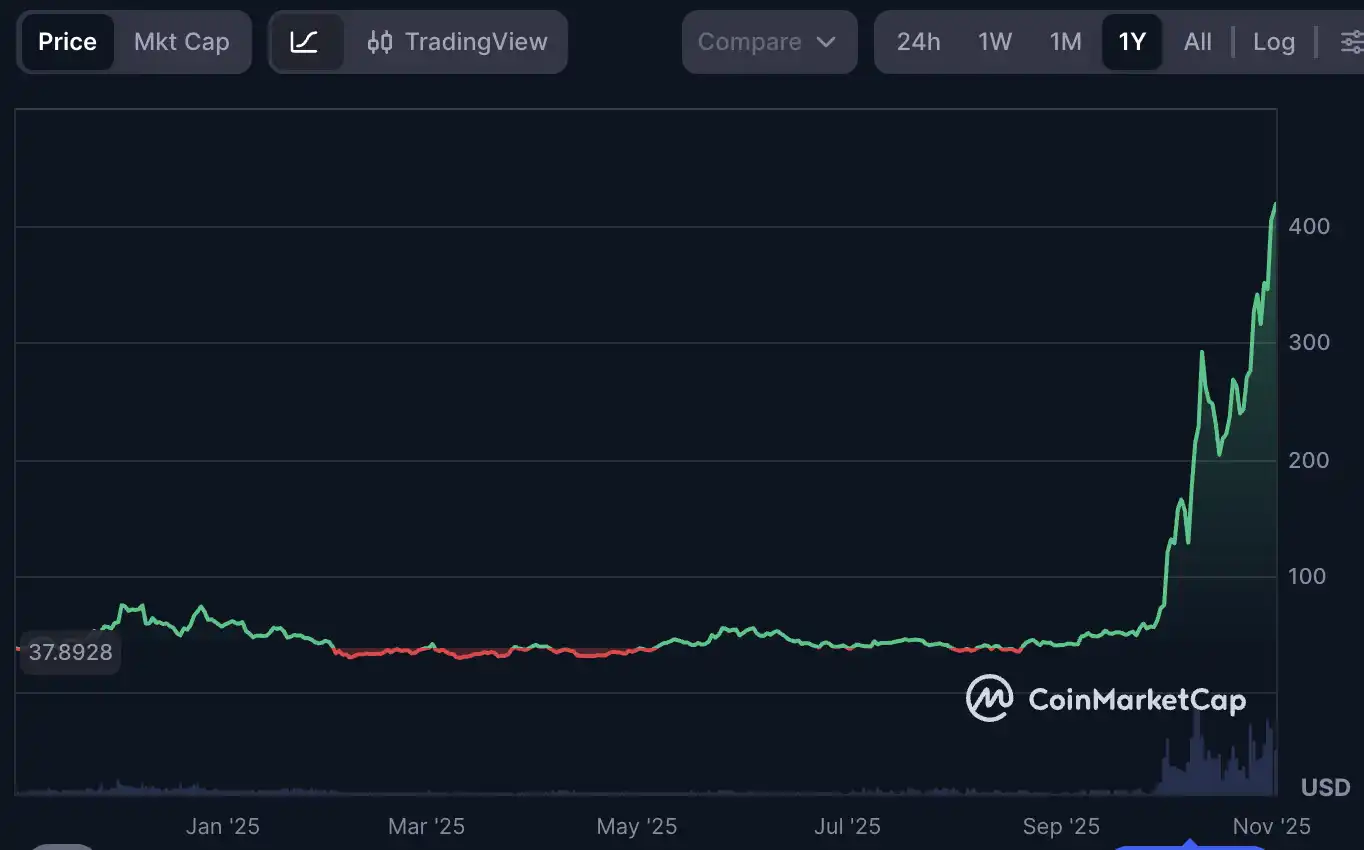
In an era of increasing financial regulation, privacy-focused projects have once again become the focus of cryptocurrency. Therefore, Zcash (ZEC), as one of the pioneers of privacy coins, has once again piqued people's interest. This wave of enthusiasm has reignited people's interest in "freedom money," which is often used to describe private, censorship-resistant digital cash. Zcash, as a rapidly growing privacy coin, brings true financial privacy through encryption technology, expanding on Bitcoin's vision.
This report aims to delve into Zcash's technology and infrastructure, compare it to other privacy participants, and analyze the catalyst behind the recent resurgence of the Zcash ecosystem.
Zcash - What is it and How Does it Work?
Zcash is a privacy-focused digital currency launched in October 2016, forked from the Bitcoin codebase. It intentionally borrows many of Bitcoin's monetary principles; Zcash operates on a proof-of-work blockchain,
while also featuring the following:
· Fixed Supply: A limit of 21 million coins and a predictable halving schedule.
· Fair Emission: No premine, similar to Bitcoin's issuance model.
· Decentralization: Permissionless, no central authority, does not rely on intermediaries.
Privacy Standard
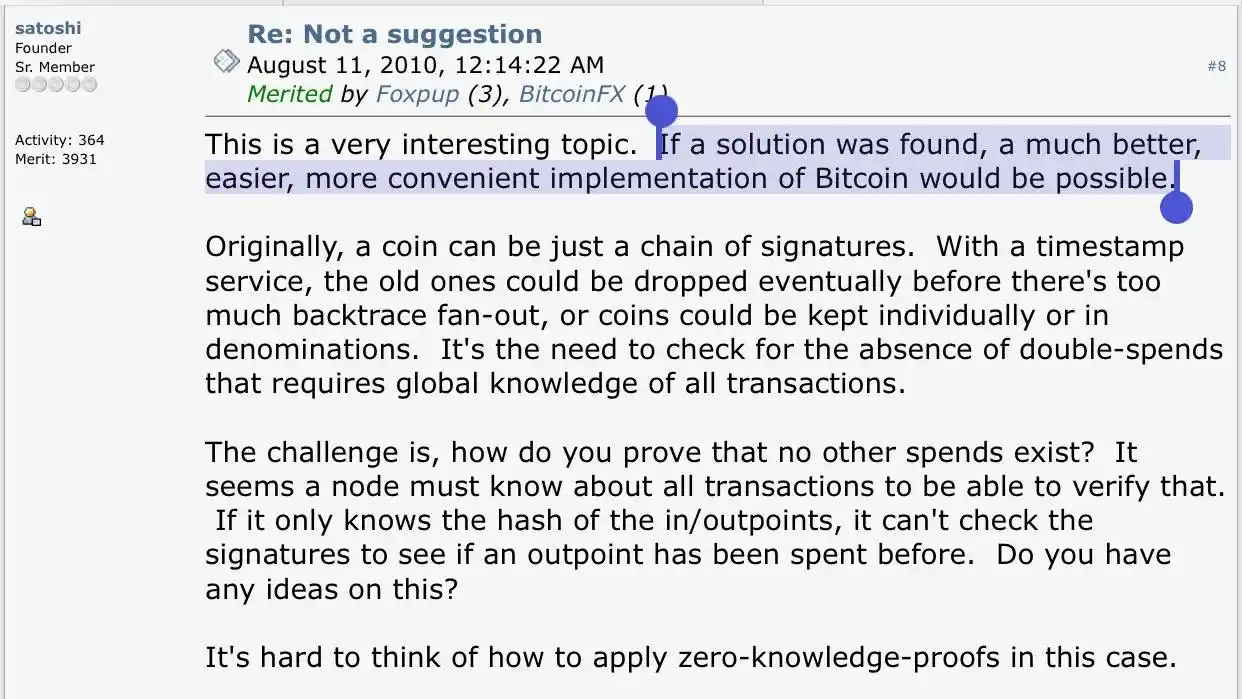
Zcash uses zk-SNARKs (Zero-Knowledge Succinct Non-Interactive Argument of Knowledge), which allows for transaction validation without revealing any details of the sender, receiver, or amount. In simple terms, Zcash provides users with fully encrypted transactions, masking on-chain data that Bitcoin's transparent ledger cannot achieve. In fact, this privacy mechanism of ZK is what Satoshi Nakamoto wanted to explore on Bitcoin but was not technically feasible at the time.
# Transaction Detail Encryption
When a user conducts a shielded transaction, key details such as the sender's address, recipient's address, and transaction amount are fully encrypted on the blockchain.
# Creating a ZK Proof
The sender (prover) uses their private key to generate a zk proof (zk-SNARK), confirming the satisfaction of several conditions, all without revealing sensitive data:
· The sender has sufficient funds to make the transaction.
· The spent funds were validly created in a previous transaction.
· The transaction input value equals the output value, preventing the generation of counterfeit coins.
· The sender is authorized to use the funds (has the correct private key).
· The funds have not been previously spent (using a mechanism called "nullifiers").
# Instant Verification
Other nodes on the Zcash network (verifiers) use public verification keys to instantly verify the zk-SNARK proof. The proof is very small (a few hundred bytes) and can be verified in milliseconds, making the verification process highly efficient.
Double-Spending Protection
It is important to note that Zcash's privacy is optional—users can remain transparent to meet compliance or auditing needs, or they can choose to be fully shielded.
ZEC uses a dual-address system, including transparent addresses (t addresses) and shielded addresses (z addresses). Transactions between transparent addresses are similar to any non-private blockchain transaction, but transactions involving shielded addresses are encrypted and private. When sending ZEC, the ledger will not display any information about the transacting parties or the value, only indicating a valid transaction has occurred. Only the participants (and those they choose to share an optional viewing key with) can see detailed information.
This feature gives Zcash fungibility (each unit is interchangeable), unaffected by past transaction history, thus achieving true financial privacy when using shielded transactions.
Three Main Funding Pools
The widespread implementation of shielded transactions is a significant technical challenge. Zcash has undergone three major upgrade iterations to enhance its encryption technology and efficiency:
#Sprout (2016)
--The initial release version--demonstrated that privacy based on zk-SNARKs is feasible on a public blockchain. However, Sprout transactions had a high computational cost (requiring several gigabytes of RAM, impractical on mobile devices) and relied on trusted setup (one-time parameter generation). Figures like Edward Snowden, using the alias "John-Doeb," participated in this notable setup to ensure no party could compromise the parameters. The traditional Sprout z addresses (typically starting with zc...) are now deprecated but still in use.
#Sapling (2018)
--A significant upgrade that greatly improved performance and usability. Sapling reduced proof times and memory requirements by over 100 times, ultimately making private ZEC transactions viable on everyday devices (even smartphones). It also introduced key features such as diversified addresses (allowing one key to have multiple shielded addresses, enhancing privacy) and viewing keys (enabling users to share read access to their transaction details for auditing or compliance purposes). Sapling still relies on a multiparty trusted setup but represents a significant step forward in practical private payments. Sapling z addresses (Bech32, zs...) are still supported, allowing users to transact with legacy tokens.
#Orchard (2022)
--The latest generation product, achieving trustless privacy. Orchard leverages the Halo 2 proof system (developed by Zcash engineers), requiring no new trusted setup. It further improves efficiency, supports batch transactions, and enhances synchronization, among other features. With Orchard, Zcash's privacy not only becomes stronger (without setup assumptions) but also more scalable—it aims to support future layer-two solutions like ZK-rollups. It also introduces Unified Addresses (UA, u1...), which can aggregate recipients of Orchard (and optionally Sapling + transparent) into one address; wallets typically default to routing new funds to Orchard. Thus, Orchard is now the default shielded pool for modern Zcash wallets.
A common summary of Zcash's development journey is: Sprout proved the possibility of private funds, Sapling made it usable, and Orchard made it trustless and scalable.
Upcoming Upgrades
Crosslink: Zcash's technical infrastructure is constantly evolving. The project is currently undergoing a significant upgrade called Crosslink, which will introduce a Hybrid Proof of Stake (PoS) layer on top of the existing Proof of Work consensus. This will allow ZEC holders to stake their coins to earn rewards and participate in finalizing blocks, while miners continue to produce blocks—combining the advantages of PoW and PoS. This hybrid approach is expected to improve network throughput and security (by providing quick finality and making 51% attacks more difficult).
Tachyon Project: Zcash developers (especially cryptographer Sean Bowe) are leading the implementation of the Tachyon project—aimed at significantly enhancing Zcash's shielded protocol scalability. The Tachyon project seeks to eliminate performance bottlenecks (such as every wallet having to download and scan every note) through innovative technologies like proof-carrying data, enabling "planetary-scale" private payments.
ZCash vs. Monero Comparison
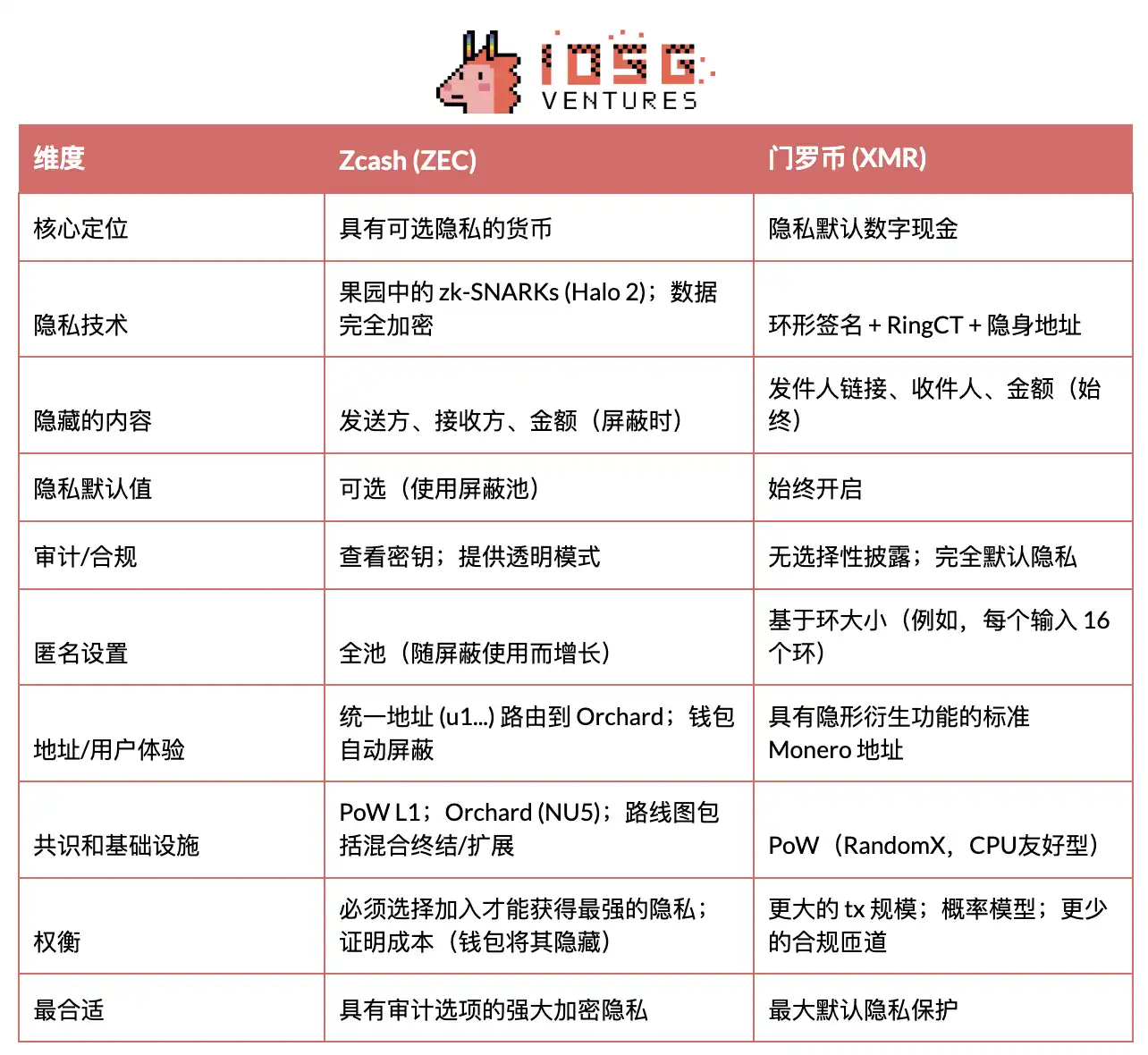
Zcash (ZEC) positions itself as a Bitcoin-like currency but with optional encrypted privacy. Its shielded transfers use zk-SNARK, allowing validators to verify transaction correctness without seeing the sender, receiver, or amount. With Opt-in Audits (OA), wallets can send funds to the correct recipient while maintaining auditability: users can still transparently transact or share a viewing key with auditors/regulators. The outcome is user choice; when actively using the shielded pool, privacy is strongest.
Monero (XMR) utilizes a different toolkit, providing privacy by default in each transaction: Ring Signatures (mixing the original transaction with many decoy transactions so observers cannot discern which wallet truly sent the funds), RingCT (hiding amounts), and Stealth Addresses (receivers obtain payment at a one-time hidden address, which cannot be linked back to their real wallets). This makes usability straightforward but privacy is probabilistic: strength depends on ring size (e.g., 16), decoy choice, and user behavior. In practice, its privacy is high but lacks opt-in disclosure for audits, and due to compliance friction, some exchanges avoid listing it.
In general: Ring signature achieves transaction anonymity by placing the transaction among multiple decoy transactions (one could say Monero just added plausible deniability), while zk-SNARK proves the validity of a statement without revealing any information beyond the validity of the statement itself. Initially, people were hesitant about ZCash due to the need for a trusted setup. However, with the recent introduction of the Halo upgrade, ZCash can generate zk-SNARKs without requiring a trusted setup. Despite many challenges, the Monero traceability heuristic paper has shown that Monero has some form of traceability through "Wallet App Bugs and Mordinal-P2Pool Perspective."
So, why did the market choose ZCash?
What Happened?
Over the past two months, from early September to now, $ZEC has been on a continuous upward trend, starting from ~$40 to ~$429, a growth of over 1000%. What was the catalyst for this surge? What are the reasons behind it?
Introduction of Zashi
One of the significant contributors to ZCash's recent growth is the Electric Coin Co's (ECC) focus on consumers. Previously, the protocol focused primarily on ZCash's core - establishing cryptography and technology. Now, they are more focused on user experience and user onboarding. A significant part of this work has been the development of Zashi, the official ZCash wallet.
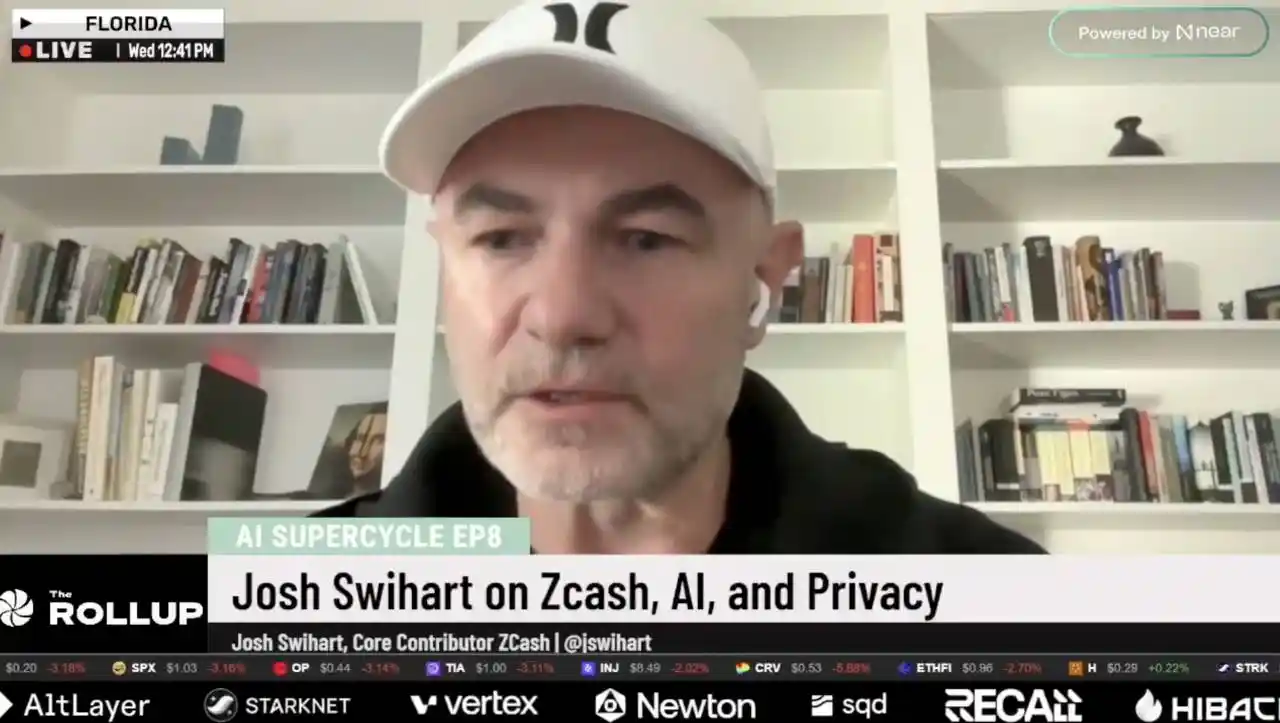
Josh Swihart - ECC CEO:
"When I took over as CEO of ECC in February 2024, we decided to truly focus on user experience... We built a wallet called Zashi. After Zashi was launched, you could see an exponential increase in shielded transaction totals and the ZEC amount in the shielded pool."
The launch of Zashi significantly improved the usability of ZCash. It provides a sleek interface comparable to popular EVM wallets, supports features such as view keys, hardware wallet integration, and plans to enable shielded watchtower and staking post-launch. More importantly, Zashi is designed specifically for shielded ZEC transactions, meaning all transactions sent using Zashi are private by default. If a user receives transparent ZEC, the wallet prompts you to shield it before spending. Additionally, Zashi supports single-address multisource from all different pools (Sprout, Sapling, Orchard), allowing users to seamlessly migrate funds between different pools.
Compared to a few years ago, this is a significant change, as back then, privately using Zcash required using multiple dedicated software across different products. Due to these breakthroughs in user experience, the adoption of shielded pools has grown exponentially, indicating that many users would indeed opt for privacy if there was a convenient option.
By making private transactions simple, just a few taps away, and abstracting the technical complexity, these wallets have driven the adoption by users with lower technical expertise. The improvement in wallet user experience is considered a primary driver of ZCash's recent growth.
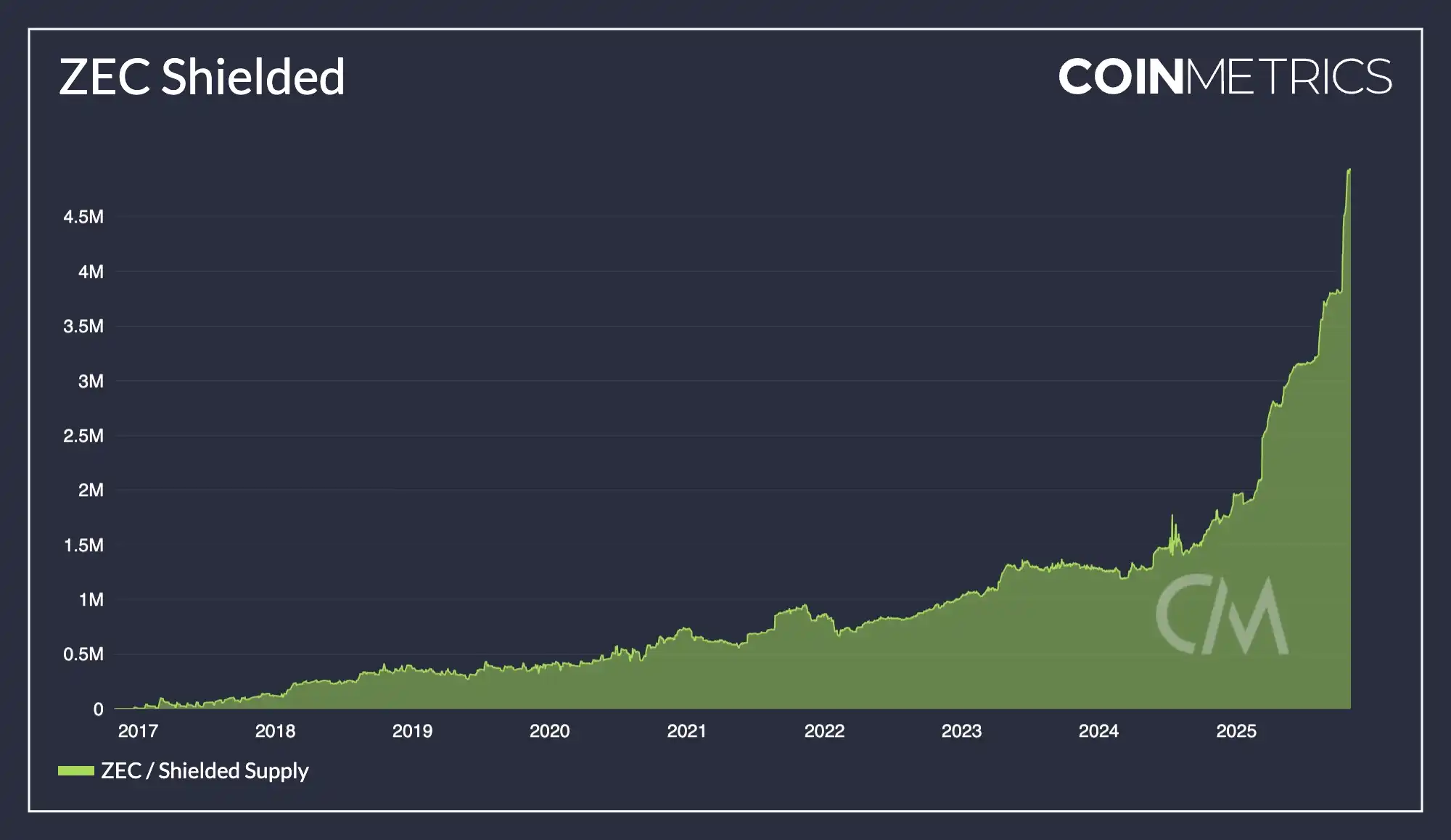
One of the most significant signs of Zashi's contribution to the Zcash ecosystem's momentum is the explosive growth in on-chain shielded usage. As of the fourth quarter of 2025, over 4.5 million ZEC is stored in shielded addresses, accounting for approximately 28% of the total supply. This is a record-breaking high, while a few years ago, this ratio was only 5%. The graph above illustrates how the shielded pool began to grow exponentially around 2024, directly coinciding with the release of Zashi.
This means that more ZEC has entered Zcash's shielded pool, which, in turn, enhances the network's privacy for everyone (a larger anonymity set). In practice, this also tightens the liquidity in circulation (as shielded funds are harder to trace and are often held long-term to protect privacy), thus having a positive impact on price dynamics.
Introducing NEAR Intents - Crosspay
Zashi's CrossPay also serves as Zcash's large-scale onboarding mechanism, fundamentally achieving interoperability within the Zcash ecosystem.
Crosspay is a cross-chain bridging/exchange solution that leverages NEAR Intents, allowing users to swap in and out of ZEC from another chain while still preserving privacy; Zashi also harnesses NEAR for decentralized off-chain, enabling users to swap from ZEC to another chain (or to a fiat gateway) without revealing their ZEC address—completely eliminating the need for CEX. This has driven a significant influx of capital and users into the ZEC ecosystem.
NEAR Intents is a chain-agnostic protocol: users (or agents) state what they want (e.g., "swap BTC→ZEC" or "pay 50 USDC to this address"), and a decentralized network of resolvers competes cross-chain to execute; users only need to sign one approval. It abstracts the bridge/DEX hops and optimal price/liquidity routes.
· User requests "Swap X → ZEC" or "Pay Y USDC on Z chain".
· NEAR Intents Resolver competes to return the best quote.
· User approves once in Zashi; Resolver executes cross-chain route; ZEC is shielded or recipient receives the exact token.
Exclude USDC and USDT amounts from this sample; currently, ZEC NEAR Intent amount represents over 30% of the NEAR Intent total.
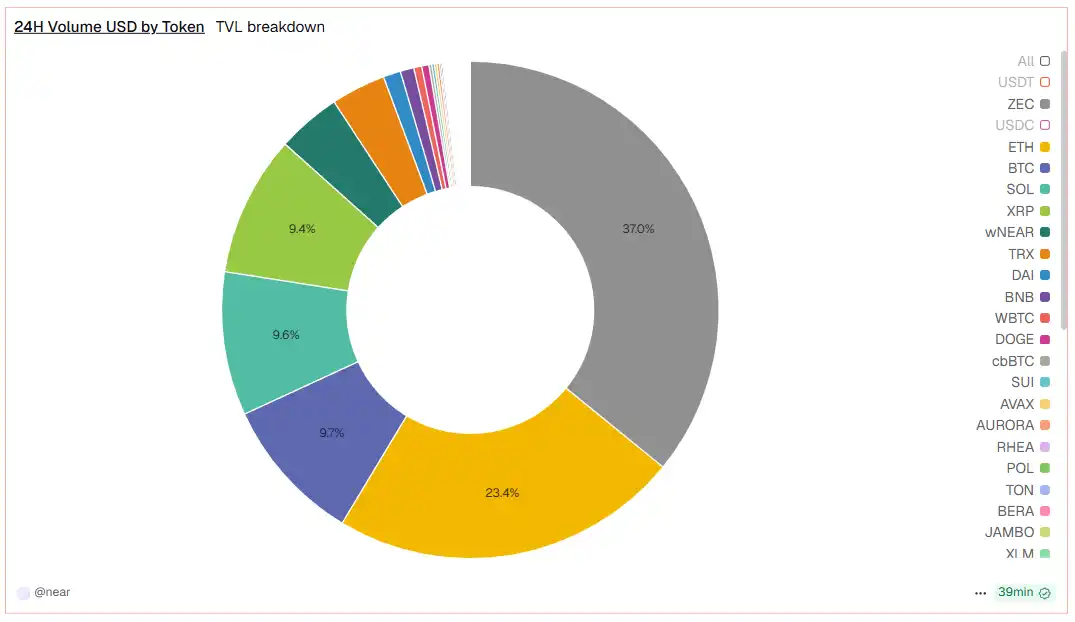
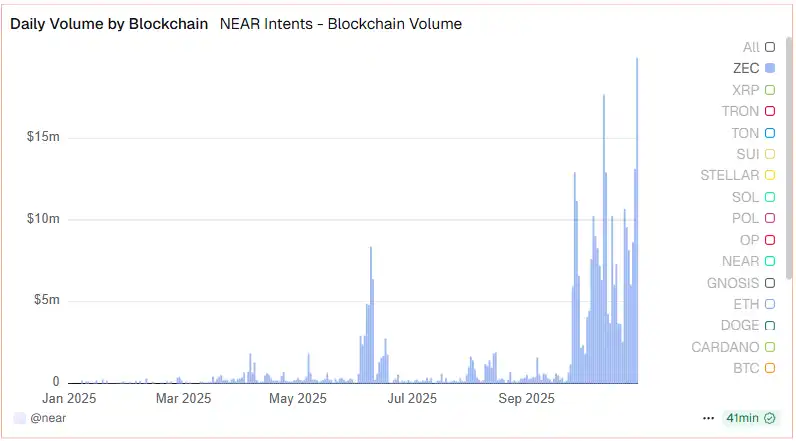
Overall, we can infer that the integration of Zashi with Crosspay is also a major driver of market share growth, with the magnitude of ZEC NEAR Intent set to increase significantly starting from September 2025, coinciding with the launch of Crosspay.
The New Significance of Double Transaction Type Privacy — A Story
As governments and regulatory bodies around the world intensify monitoring measures (from stricter KYC/AML to tracking central bank digital currencies), the cypherpunk ethos is once again in focus. Zcash provides a refuge for those concerned about these trends: a form of encrypted, untrackable currency.
"They only care about the digital rise, not noticing the fall of freedom."
As mainstream cryptocurrency users realize that privacy is being eroded (e.g., Tornado Cash and other mixer currencies being blacklisted), many are turning to on-chain privacy alternatives. Zcash stands out as a battle-tested L1, with its privacy-preserving capabilities stronger than mixer protocols (reportedly, Zcash has a broader use case than Tornado Cash).
In short, the rise of the "freedom narrative" has shaped Zcash into a key asset for upholding financial liberty — a narrative that resonates with both ideological investors and those purely seeking to hedge against "Big Brother".
Post-Halving Supply Dynamics
The second halving of Zcash (November 2024) significantly reduced its new coin issuance, and we are now seeing its impact. The block reward dropped from 3.125 ZEC to 1.5625 ZEC, cutting the annual inflation rate in half. Historically, Bitcoin's price didn't sustainably exceed $1000 until after the second halving—after which Bitcoin's price surged parabolically. Zcash's supply curve is identical to Bitcoin's, just shifted by a few years, and has just crossed the same milestone.
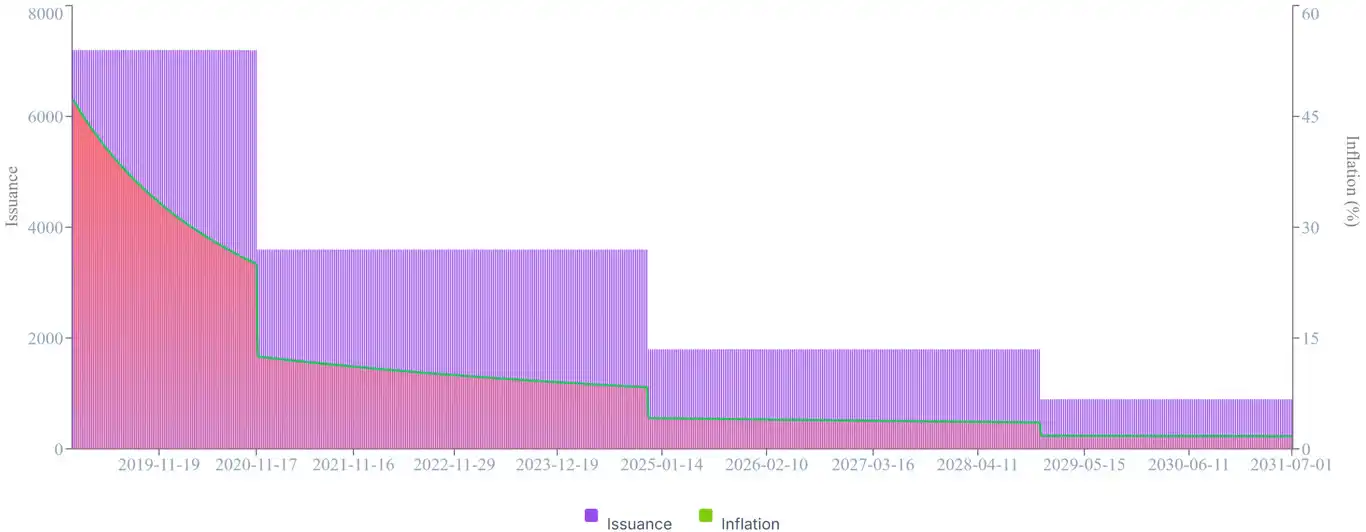
▲ ZEC USD Issuance and Inflation Schedule
While demand is rising, the circulating supply is tightening, creating the typical supply-demand squeeze. Investors speculate that, with the high-inflation 'suspense' gone, ZEC may follow the early Bitcoin trajectory. In fact, by the fourth quarter of 2025, ZEC's market performance has already outpaced most major coins. Some of this may be mere market timing, but fundamentally, Zcash's tokenomics are becoming increasingly appealing as it matures: it has a fixed cap, continuously decreasing emissions, and the end of miner rewards is approaching, akin to Bitcoin's development path.
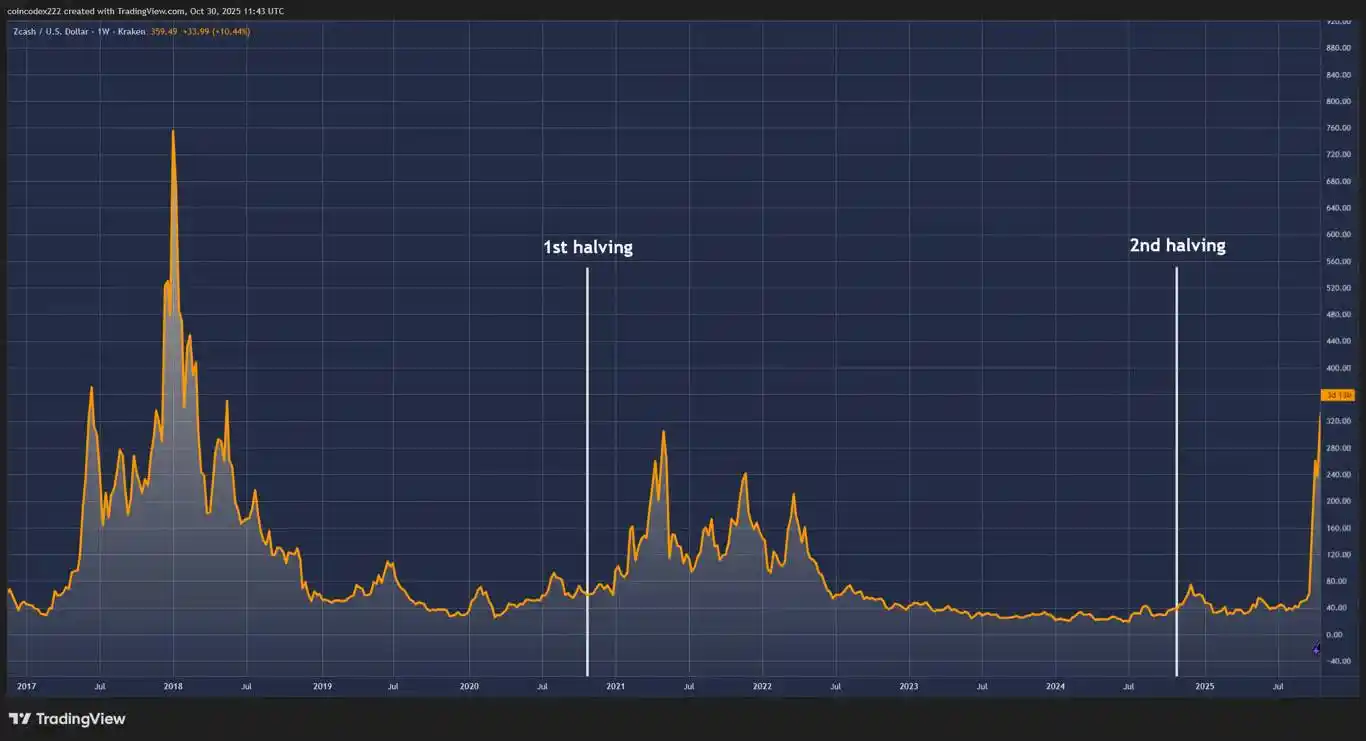
▲ ZEC USD Price and Halving Schedule
The notion of halving—though misunderstood by some traders (the rumor of a 2025 halving is false)—still drew attention to the Zcash narrative.
You may also like

Discover How to Participate in Staking
Staking is a digital asset yield product launched by the WEEX platform. By subscribing to Staking products, users can stake their idle digital assets and earn corresponding Staking rewards.

WEEX AI Trading Hackathon Rules & Guidelines
This article explains the rules, requirements, and prize structure for the WEEX AI Trading Hackathon Finals, where finalists compete using AI-driven trading strategies under real market conditions.

From 0 to $1 Million: Five Steps to Outperform the Market Through Wallet Tracking

Token Cannot Compound, Where Is the Real Investment Opportunity?

February 6th Market Key Intelligence, How Much Did You Miss?

China's Central Bank and Eight Other Departments' Latest Regulatory Focus: Key Attention to RWA Tokenized Asset Risk
Foreword: Today, the People's Bank of China's website published the "Notice of the People's Bank of China, National Development and Reform Commission, Ministry of Industry and Information Technology, Ministry of Public Security, State Administration for Market Regulation, China Banking and Insurance Regulatory Commission, China Securities Regulatory Commission, State Administration of Foreign Exchange on Further Preventing and Dealing with Risks Related to Virtual Currency and Others (Yinfa [2026] No. 42)", the latest regulatory requirements from the eight departments including the central bank, which are basically consistent with the regulatory requirements of recent years. The main focus of the regulation is on speculative activities such as virtual currency trading, exchanges, ICOs, overseas platform services, and this time, regulatory oversight of RWA has been added, explicitly prohibiting RWA tokenization, stablecoins (especially those pegged to the RMB). The following is the full text:
To the people's governments of all provinces, autonomous regions, and municipalities directly under the Central Government, the Xinjiang Production and Construction Corps:
Recently, there have been speculative activities related to virtual currency and Real-World Assets (RWA) tokenization, disrupting the economic and financial order and jeopardizing the property security of the people. In order to further prevent and address the risks related to virtual currency and Real-World Assets tokenization, effectively safeguard national security and social stability, in accordance with the "Law of the People's Republic of China on the People's Bank of China," "Law of the People's Republic of China on Commercial Banks," "Securities Law of the People's Republic of China," "Law of the People's Republic of China on Securities Investment Funds," "Law of the People's Republic of China on Futures and Derivatives," "Cybersecurity Law of the People's Republic of China," "Regulations of the People's Republic of China on the Administration of Renminbi," "Regulations on Prevention and Disposal of Illegal Fundraising," "Regulations of the People's Republic of China on Foreign Exchange Administration," "Telecommunications Regulations of the People's Republic of China," and other provisions, after reaching consensus with the Cyberspace Administration of China, the Supreme People's Court, and the Supreme People's Procuratorate, and with the approval of the State Council, the relevant matters are notified as follows:
(I) Virtual currency does not possess the legal status equivalent to fiat currency. Virtual currencies such as Bitcoin, Ether, Tether, etc., have the main characteristics of being issued by non-monetary authorities, using encryption technology and distributed ledger or similar technology, existing in digital form, etc. They do not have legal tender status, should not and cannot be circulated and used as currency in the market.
The business activities related to virtual currency are classified as illegal financial activities. The exchange of fiat currency and virtual currency within the territory, exchange of virtual currencies, acting as a central counterparty in buying and selling virtual currencies, providing information intermediary and pricing services for virtual currency transactions, token issuance financing, and trading of virtual currency-related financial products, etc., fall under illegal financial activities, such as suspected illegal issuance of token vouchers, unauthorized public issuance of securities, illegal operation of securities and futures business, illegal fundraising, etc., are strictly prohibited across the board and resolutely banned in accordance with the law. Overseas entities and individuals are not allowed to provide virtual currency-related services to domestic entities in any form.
A stablecoin pegged to a fiat currency indirectly fulfills some functions of the fiat currency in circulation. Without the consent of relevant authorities in accordance with the law and regulations, any domestic or foreign entity or individual is not allowed to issue a RMB-pegged stablecoin overseas.
(II)Tokenization of Real-World Assets refers to the use of encryption technology and distributed ledger or similar technologies to transform ownership rights, income rights, etc., of assets into tokens (tokens) or other interests or bond certificates with token (token) characteristics, and carry out issuance and trading activities.
Engaging in the tokenization of real-world assets domestically, as well as providing related intermediary, information technology services, etc., which are suspected of illegal issuance of token vouchers, unauthorized public offering of securities, illegal operation of securities and futures business, illegal fundraising, and other illegal financial activities, shall be prohibited; except for relevant business activities carried out with the approval of the competent authorities in accordance with the law and regulations and relying on specific financial infrastructures. Overseas entities and individuals are not allowed to illegally provide services related to the tokenization of real-world assets to domestic entities in any form.
(III) Inter-agency Coordination. The People's Bank of China, together with the National Development and Reform Commission, the Ministry of Industry and Information Technology, the Ministry of Public Security, the State Administration for Market Regulation, the China Banking and Insurance Regulatory Commission, the China Securities Regulatory Commission, the State Administration of Foreign Exchange, and other departments, will improve the work mechanism, strengthen coordination with the Cyberspace Administration of China, the Supreme People's Court, and the Supreme People's Procuratorate, coordinate efforts, and overall guide regions to carry out risk prevention and disposal of virtual currency-related illegal financial activities.
The China Securities Regulatory Commission, together with the National Development and Reform Commission, the Ministry of Industry and Information Technology, the Ministry of Public Security, the People's Bank of China, the State Administration for Market Regulation, the China Banking and Insurance Regulatory Commission, the State Administration of Foreign Exchange, and other departments, will improve the work mechanism, strengthen coordination with the Cyberspace Administration of China, the Supreme People's Court, and the Supreme People's Procuratorate, coordinate efforts, and overall guide regions to carry out risk prevention and disposal of illegal financial activities related to the tokenization of real-world assets.
(IV) Strengthening Local Implementation. The people's governments at the provincial level are overall responsible for the prevention and disposal of risks related to virtual currencies and the tokenization of real-world assets in their respective administrative regions. The specific leading department is the local financial regulatory department, with participation from branches and dispatched institutions of the State Council's financial regulatory department, telecommunications regulators, public security, market supervision, and other departments, in coordination with cyberspace departments, courts, and procuratorates, to improve the normalization of the work mechanism, effectively connect with the relevant work mechanisms of central departments, form a cooperative and coordinated working pattern between central and local governments, effectively prevent and properly handle risks related to virtual currencies and the tokenization of real-world assets, and maintain economic and financial order and social stability.
(5) Enhanced Risk Monitoring. The People's Bank of China, China Securities Regulatory Commission, National Development and Reform Commission, Ministry of Industry and Information Technology, Ministry of Public Security, State Administration of Foreign Exchange, Cyberspace Administration of China, and other departments continue to improve monitoring techniques and system support, enhance cross-departmental data analysis and sharing, establish sound information sharing and cross-validation mechanisms, promptly grasp the risk situation of activities related to virtual currency and real-world asset tokenization. Local governments at all levels give full play to the role of local monitoring and early warning mechanisms. Local financial regulatory authorities, together with branches and agencies of the State Council's financial regulatory authorities, as well as departments of cyberspace and public security, ensure effective connection between online monitoring, offline investigation, and fund tracking, efficiently and accurately identify activities related to virtual currency and real-world asset tokenization, promptly share risk information, improve early warning information dissemination, verification, and rapid response mechanisms.
(6) Strengthened Oversight of Financial Institutions, Intermediaries, and Technology Service Providers. Financial institutions (including non-bank payment institutions) are prohibited from providing account opening, fund transfer, and clearing services for virtual currency-related business activities, issuing and selling financial products related to virtual currency, including virtual currency and related financial products in the scope of collateral, conducting insurance business related to virtual currency, or including virtual currency in the scope of insurance liability. Financial institutions (including non-bank payment institutions) are prohibited from providing custody, clearing, and settlement services for unauthorized real-world asset tokenization-related business and related financial products. Relevant intermediary institutions and information technology service providers are prohibited from providing intermediary, technical, or other services for unauthorized real-world asset tokenization-related businesses and related financial products.
(7) Enhanced Management of Internet Information Content and Access. Internet enterprises are prohibited from providing online business venues, commercial displays, marketing, advertising, or paid traffic diversion services for virtual currency and real-world asset tokenization-related business activities. Upon discovering clues of illegal activities, they should promptly report to relevant departments and provide technical support and assistance for related investigations and inquiries. Based on the clues transferred by the financial regulatory authorities, the cyberspace administration, telecommunications authorities, and public security departments should promptly close and deal with websites, mobile applications (including mini-programs), and public accounts engaged in virtual currency and real-world asset tokenization-related business activities in accordance with the law.
(8) Strengthened Entity Registration and Advertisement Management. Market supervision departments strengthen entity registration and management, and enterprise and individual business registrations must not contain terms such as "virtual currency," "virtual asset," "cryptocurrency," "crypto asset," "stablecoin," "real-world asset tokenization," or "RWA" in their names or business scopes. Market supervision departments, together with financial regulatory authorities, legally enhance the supervision of advertisements related to virtual currency and real-world asset tokenization, promptly investigating and handling relevant illegal advertisements.
(IX) Continued Rectification of Virtual Currency Mining Activities. The National Development and Reform Commission, together with relevant departments, strictly controls virtual currency mining activities, continuously promotes the rectification of virtual currency mining activities. The people's governments of various provinces take overall responsibility for the rectification of "mining" within their respective administrative regions. In accordance with the requirements of the National Development and Reform Commission and other departments in the "Notice on the Rectification of Virtual Currency Mining Activities" (NDRC Energy-saving Building [2021] No. 1283) and the provisions of the "Guidance Catalog for Industrial Structure Adjustment (2024 Edition)," a comprehensive review, investigation, and closure of existing virtual currency mining projects are conducted, new mining projects are strictly prohibited, and mining machine production enterprises are strictly prohibited from providing mining machine sales and other services within the country.
(X) Severe Crackdown on Related Illegal Financial Activities. Upon discovering clues to illegal financial activities related to virtual currency and the tokenization of real-world assets, local financial regulatory authorities, branches of the State Council's financial regulatory authorities, and other relevant departments promptly investigate, determine, and properly handle the issues in accordance with the law, and seriously hold the relevant entities and individuals legally responsible. Those suspected of crimes are transferred to the judicial authorities for processing according to the law.
(XI) Severe Crackdown on Related Illegal and Criminal Activities. The Ministry of Public Security, the People's Bank of China, the State Administration for Market Regulation, the China Banking and Insurance Regulatory Commission, the China Securities Regulatory Commission, as well as judicial and procuratorial organs, in accordance with their respective responsibilities, rigorously crack down on illegal and criminal activities related to virtual currency, the tokenization of real-world assets, such as fraud, money laundering, illegal business operations, pyramid schemes, illegal fundraising, and other illegal and criminal activities carried out under the guise of virtual currency, the tokenization of real-world assets, etc.
(XII) Strengthen Industry Self-discipline. Relevant industry associations should enhance membership management and policy advocacy, based on their own responsibilities, advocate and urge member units to resist illegal financial activities related to virtual currency and the tokenization of real-world assets. Member units that violate regulatory policies and industry self-discipline rules are to be disciplined in accordance with relevant self-regulatory management regulations. By leveraging various industry infrastructure, conduct risk monitoring related to virtual currency, the tokenization of real-world assets, and promptly transfer issue clues to relevant departments.
(XIII) Without the approval of relevant departments in accordance with the law and regulations, domestic entities and foreign entities controlled by them may not issue virtual currency overseas.
(XIV) Domestic entities engaging directly or indirectly in overseas external debt-based tokenization of real-world assets, or conducting asset securitization activities abroad based on domestic ownership rights, income rights, etc. (hereinafter referred to as domestic equity), should be strictly regulated in accordance with the principles of "same business, same risk, same rules." The National Development and Reform Commission, the China Securities Regulatory Commission, the State Administration of Foreign Exchange, and other relevant departments regulate it according to their respective responsibilities. For other forms of overseas real-world asset tokenization activities based on domestic equity by domestic entities, the China Securities Regulatory Commission, together with relevant departments, supervise according to their division of responsibilities. Without the consent and filing of relevant departments, no unit or individual may engage in the above-mentioned business.
(15) Overseas subsidiaries and branches of domestic financial institutions providing Real World Asset Tokenization-related services overseas shall do so legally and prudently. They shall have professional personnel and systems in place to effectively mitigate business risks, strictly implement customer onboarding, suitability management, anti-money laundering requirements, and incorporate them into the domestic financial institutions' compliance and risk management system. Intermediaries and information technology service providers offering Real World Asset Tokenization services abroad based on domestic equity or conducting Real World Asset Tokenization business in the form of overseas debt for domestic entities directly or indirectly venturing abroad must strictly comply with relevant laws and regulations. They should establish and improve relevant compliance and internal control systems in accordance with relevant normative requirements, strengthen business and risk control, and report the business developments to the relevant regulatory authorities for approval or filing.
(16) Strengthen organizational leadership and overall coordination. All departments and regions should attach great importance to the prevention of risks related to virtual currencies and Real World Asset Tokenization, strengthen organizational leadership, clarify work responsibilities, form a long-term effective working mechanism with centralized coordination, local implementation, and shared responsibilities, maintain high pressure, dynamically monitor risks, effectively prevent and mitigate risks in an orderly and efficient manner, legally protect the property security of the people, and make every effort to maintain economic and financial order and social stability.
(17) Widely carry out publicity and education. All departments, regions, and industry associations should make full use of various media and other communication channels to disseminate information through legal and policy interpretation, analysis of typical cases, and education on investment risks, etc. They should promote the illegality and harm of virtual currencies and Real World Asset Tokenization-related businesses and their manifestations, fully alert to potential risks and hidden dangers, and enhance public awareness and identification capabilities for risk prevention.
(18) Engaging in illegal financial activities related to virtual currencies and Real World Asset Tokenization in violation of this notice, as well as providing services for virtual currencies and Real World Asset Tokenization-related businesses, shall be punished in accordance with relevant regulations. If it constitutes a crime, criminal liability shall be pursued according to the law. For domestic entities and individuals who knowingly or should have known that overseas entities illegally provided virtual currency or Real World Asset Tokenization-related services to domestic entities and still assisted them, relevant responsibilities shall be pursued according to the law. If it constitutes a crime, criminal liability shall be pursued according to the law.
(19) If any unit or individual invests in virtual currencies, Real World Asset Tokens, and related financial products against public order and good customs, the relevant civil legal actions shall be invalid, and any resulting losses shall be borne by them. If there are suspicions of disrupting financial order and jeopardizing financial security, the relevant departments shall deal with them according to the law.
This notice shall enter into force upon the date of its issuance. The People's Bank of China and ten other departments' "Notice on Further Preventing and Dealing with the Risks of Virtual Currency Trading Speculation" (Yinfa [2021] No. 237) is hereby repealed.

Former Partner's Perspective on Multicoin: Kyle's Exit, But the Game He Left Behind Just Getting Started
Why Bitcoin Is Falling Now: The Real Reasons Behind BTC's Crash & WEEX's Smart Profit Playbook
Bitcoin's ongoing crash explained: Discover the 5 hidden triggers behind BTC's plunge & how WEEX's Auto Earn and Trade to Earn strategies help traders profit from crypto market volatility.

Wall Street's Hottest Trades See Exodus

Vitalik Discusses Ethereum Scaling Path, Circle Announces Partnership with Polymarket, What's the Overseas Crypto Community Talking About Today?

Believing in the Capital Markets - The Essence and Core Value of Cryptocurrency

Polymarket's 'Weatherman': Predict Temperature, Win Million-Dollar Payout
$15K+ Profits: The 4 AI Trading Secrets WEEX Hackathon Prelim Winners Used to Dominate Volatile Crypto Markets
How WEEX Hackathon's top AI trading strategies made $15K+ in crypto markets: 4 proven rules for ETH/BTC trading, market structure analysis, and risk management in volatile conditions.

A nearly 20% one-day plunge, how long has it been since you last saw a $60,000 Bitcoin?

Raoul Pal: I've seen every single panic, and they are never the end.

Key Market Information Discrepancy on February 6th - A Must-Read! | Alpha Morning Report

2026 Crypto Industry's First Snowfall

The Harsh Reality Behind the $26 Billion Crypto Liquidation: Liquidity Is Killing the Market
Discover How to Participate in Staking
Staking is a digital asset yield product launched by the WEEX platform. By subscribing to Staking products, users can stake their idle digital assets and earn corresponding Staking rewards.
WEEX AI Trading Hackathon Rules & Guidelines
This article explains the rules, requirements, and prize structure for the WEEX AI Trading Hackathon Finals, where finalists compete using AI-driven trading strategies under real market conditions.
From 0 to $1 Million: Five Steps to Outperform the Market Through Wallet Tracking
Token Cannot Compound, Where Is the Real Investment Opportunity?
February 6th Market Key Intelligence, How Much Did You Miss?
China's Central Bank and Eight Other Departments' Latest Regulatory Focus: Key Attention to RWA Tokenized Asset Risk
Foreword: Today, the People's Bank of China's website published the "Notice of the People's Bank of China, National Development and Reform Commission, Ministry of Industry and Information Technology, Ministry of Public Security, State Administration for Market Regulation, China Banking and Insurance Regulatory Commission, China Securities Regulatory Commission, State Administration of Foreign Exchange on Further Preventing and Dealing with Risks Related to Virtual Currency and Others (Yinfa [2026] No. 42)", the latest regulatory requirements from the eight departments including the central bank, which are basically consistent with the regulatory requirements of recent years. The main focus of the regulation is on speculative activities such as virtual currency trading, exchanges, ICOs, overseas platform services, and this time, regulatory oversight of RWA has been added, explicitly prohibiting RWA tokenization, stablecoins (especially those pegged to the RMB). The following is the full text:
To the people's governments of all provinces, autonomous regions, and municipalities directly under the Central Government, the Xinjiang Production and Construction Corps:
Recently, there have been speculative activities related to virtual currency and Real-World Assets (RWA) tokenization, disrupting the economic and financial order and jeopardizing the property security of the people. In order to further prevent and address the risks related to virtual currency and Real-World Assets tokenization, effectively safeguard national security and social stability, in accordance with the "Law of the People's Republic of China on the People's Bank of China," "Law of the People's Republic of China on Commercial Banks," "Securities Law of the People's Republic of China," "Law of the People's Republic of China on Securities Investment Funds," "Law of the People's Republic of China on Futures and Derivatives," "Cybersecurity Law of the People's Republic of China," "Regulations of the People's Republic of China on the Administration of Renminbi," "Regulations on Prevention and Disposal of Illegal Fundraising," "Regulations of the People's Republic of China on Foreign Exchange Administration," "Telecommunications Regulations of the People's Republic of China," and other provisions, after reaching consensus with the Cyberspace Administration of China, the Supreme People's Court, and the Supreme People's Procuratorate, and with the approval of the State Council, the relevant matters are notified as follows:
(I) Virtual currency does not possess the legal status equivalent to fiat currency. Virtual currencies such as Bitcoin, Ether, Tether, etc., have the main characteristics of being issued by non-monetary authorities, using encryption technology and distributed ledger or similar technology, existing in digital form, etc. They do not have legal tender status, should not and cannot be circulated and used as currency in the market.
The business activities related to virtual currency are classified as illegal financial activities. The exchange of fiat currency and virtual currency within the territory, exchange of virtual currencies, acting as a central counterparty in buying and selling virtual currencies, providing information intermediary and pricing services for virtual currency transactions, token issuance financing, and trading of virtual currency-related financial products, etc., fall under illegal financial activities, such as suspected illegal issuance of token vouchers, unauthorized public issuance of securities, illegal operation of securities and futures business, illegal fundraising, etc., are strictly prohibited across the board and resolutely banned in accordance with the law. Overseas entities and individuals are not allowed to provide virtual currency-related services to domestic entities in any form.
A stablecoin pegged to a fiat currency indirectly fulfills some functions of the fiat currency in circulation. Without the consent of relevant authorities in accordance with the law and regulations, any domestic or foreign entity or individual is not allowed to issue a RMB-pegged stablecoin overseas.
(II)Tokenization of Real-World Assets refers to the use of encryption technology and distributed ledger or similar technologies to transform ownership rights, income rights, etc., of assets into tokens (tokens) or other interests or bond certificates with token (token) characteristics, and carry out issuance and trading activities.
Engaging in the tokenization of real-world assets domestically, as well as providing related intermediary, information technology services, etc., which are suspected of illegal issuance of token vouchers, unauthorized public offering of securities, illegal operation of securities and futures business, illegal fundraising, and other illegal financial activities, shall be prohibited; except for relevant business activities carried out with the approval of the competent authorities in accordance with the law and regulations and relying on specific financial infrastructures. Overseas entities and individuals are not allowed to illegally provide services related to the tokenization of real-world assets to domestic entities in any form.
(III) Inter-agency Coordination. The People's Bank of China, together with the National Development and Reform Commission, the Ministry of Industry and Information Technology, the Ministry of Public Security, the State Administration for Market Regulation, the China Banking and Insurance Regulatory Commission, the China Securities Regulatory Commission, the State Administration of Foreign Exchange, and other departments, will improve the work mechanism, strengthen coordination with the Cyberspace Administration of China, the Supreme People's Court, and the Supreme People's Procuratorate, coordinate efforts, and overall guide regions to carry out risk prevention and disposal of virtual currency-related illegal financial activities.
The China Securities Regulatory Commission, together with the National Development and Reform Commission, the Ministry of Industry and Information Technology, the Ministry of Public Security, the People's Bank of China, the State Administration for Market Regulation, the China Banking and Insurance Regulatory Commission, the State Administration of Foreign Exchange, and other departments, will improve the work mechanism, strengthen coordination with the Cyberspace Administration of China, the Supreme People's Court, and the Supreme People's Procuratorate, coordinate efforts, and overall guide regions to carry out risk prevention and disposal of illegal financial activities related to the tokenization of real-world assets.
(IV) Strengthening Local Implementation. The people's governments at the provincial level are overall responsible for the prevention and disposal of risks related to virtual currencies and the tokenization of real-world assets in their respective administrative regions. The specific leading department is the local financial regulatory department, with participation from branches and dispatched institutions of the State Council's financial regulatory department, telecommunications regulators, public security, market supervision, and other departments, in coordination with cyberspace departments, courts, and procuratorates, to improve the normalization of the work mechanism, effectively connect with the relevant work mechanisms of central departments, form a cooperative and coordinated working pattern between central and local governments, effectively prevent and properly handle risks related to virtual currencies and the tokenization of real-world assets, and maintain economic and financial order and social stability.
(5) Enhanced Risk Monitoring. The People's Bank of China, China Securities Regulatory Commission, National Development and Reform Commission, Ministry of Industry and Information Technology, Ministry of Public Security, State Administration of Foreign Exchange, Cyberspace Administration of China, and other departments continue to improve monitoring techniques and system support, enhance cross-departmental data analysis and sharing, establish sound information sharing and cross-validation mechanisms, promptly grasp the risk situation of activities related to virtual currency and real-world asset tokenization. Local governments at all levels give full play to the role of local monitoring and early warning mechanisms. Local financial regulatory authorities, together with branches and agencies of the State Council's financial regulatory authorities, as well as departments of cyberspace and public security, ensure effective connection between online monitoring, offline investigation, and fund tracking, efficiently and accurately identify activities related to virtual currency and real-world asset tokenization, promptly share risk information, improve early warning information dissemination, verification, and rapid response mechanisms.
(6) Strengthened Oversight of Financial Institutions, Intermediaries, and Technology Service Providers. Financial institutions (including non-bank payment institutions) are prohibited from providing account opening, fund transfer, and clearing services for virtual currency-related business activities, issuing and selling financial products related to virtual currency, including virtual currency and related financial products in the scope of collateral, conducting insurance business related to virtual currency, or including virtual currency in the scope of insurance liability. Financial institutions (including non-bank payment institutions) are prohibited from providing custody, clearing, and settlement services for unauthorized real-world asset tokenization-related business and related financial products. Relevant intermediary institutions and information technology service providers are prohibited from providing intermediary, technical, or other services for unauthorized real-world asset tokenization-related businesses and related financial products.
(7) Enhanced Management of Internet Information Content and Access. Internet enterprises are prohibited from providing online business venues, commercial displays, marketing, advertising, or paid traffic diversion services for virtual currency and real-world asset tokenization-related business activities. Upon discovering clues of illegal activities, they should promptly report to relevant departments and provide technical support and assistance for related investigations and inquiries. Based on the clues transferred by the financial regulatory authorities, the cyberspace administration, telecommunications authorities, and public security departments should promptly close and deal with websites, mobile applications (including mini-programs), and public accounts engaged in virtual currency and real-world asset tokenization-related business activities in accordance with the law.
(8) Strengthened Entity Registration and Advertisement Management. Market supervision departments strengthen entity registration and management, and enterprise and individual business registrations must not contain terms such as "virtual currency," "virtual asset," "cryptocurrency," "crypto asset," "stablecoin," "real-world asset tokenization," or "RWA" in their names or business scopes. Market supervision departments, together with financial regulatory authorities, legally enhance the supervision of advertisements related to virtual currency and real-world asset tokenization, promptly investigating and handling relevant illegal advertisements.
(IX) Continued Rectification of Virtual Currency Mining Activities. The National Development and Reform Commission, together with relevant departments, strictly controls virtual currency mining activities, continuously promotes the rectification of virtual currency mining activities. The people's governments of various provinces take overall responsibility for the rectification of "mining" within their respective administrative regions. In accordance with the requirements of the National Development and Reform Commission and other departments in the "Notice on the Rectification of Virtual Currency Mining Activities" (NDRC Energy-saving Building [2021] No. 1283) and the provisions of the "Guidance Catalog for Industrial Structure Adjustment (2024 Edition)," a comprehensive review, investigation, and closure of existing virtual currency mining projects are conducted, new mining projects are strictly prohibited, and mining machine production enterprises are strictly prohibited from providing mining machine sales and other services within the country.
(X) Severe Crackdown on Related Illegal Financial Activities. Upon discovering clues to illegal financial activities related to virtual currency and the tokenization of real-world assets, local financial regulatory authorities, branches of the State Council's financial regulatory authorities, and other relevant departments promptly investigate, determine, and properly handle the issues in accordance with the law, and seriously hold the relevant entities and individuals legally responsible. Those suspected of crimes are transferred to the judicial authorities for processing according to the law.
(XI) Severe Crackdown on Related Illegal and Criminal Activities. The Ministry of Public Security, the People's Bank of China, the State Administration for Market Regulation, the China Banking and Insurance Regulatory Commission, the China Securities Regulatory Commission, as well as judicial and procuratorial organs, in accordance with their respective responsibilities, rigorously crack down on illegal and criminal activities related to virtual currency, the tokenization of real-world assets, such as fraud, money laundering, illegal business operations, pyramid schemes, illegal fundraising, and other illegal and criminal activities carried out under the guise of virtual currency, the tokenization of real-world assets, etc.
(XII) Strengthen Industry Self-discipline. Relevant industry associations should enhance membership management and policy advocacy, based on their own responsibilities, advocate and urge member units to resist illegal financial activities related to virtual currency and the tokenization of real-world assets. Member units that violate regulatory policies and industry self-discipline rules are to be disciplined in accordance with relevant self-regulatory management regulations. By leveraging various industry infrastructure, conduct risk monitoring related to virtual currency, the tokenization of real-world assets, and promptly transfer issue clues to relevant departments.
(XIII) Without the approval of relevant departments in accordance with the law and regulations, domestic entities and foreign entities controlled by them may not issue virtual currency overseas.
(XIV) Domestic entities engaging directly or indirectly in overseas external debt-based tokenization of real-world assets, or conducting asset securitization activities abroad based on domestic ownership rights, income rights, etc. (hereinafter referred to as domestic equity), should be strictly regulated in accordance with the principles of "same business, same risk, same rules." The National Development and Reform Commission, the China Securities Regulatory Commission, the State Administration of Foreign Exchange, and other relevant departments regulate it according to their respective responsibilities. For other forms of overseas real-world asset tokenization activities based on domestic equity by domestic entities, the China Securities Regulatory Commission, together with relevant departments, supervise according to their division of responsibilities. Without the consent and filing of relevant departments, no unit or individual may engage in the above-mentioned business.
(15) Overseas subsidiaries and branches of domestic financial institutions providing Real World Asset Tokenization-related services overseas shall do so legally and prudently. They shall have professional personnel and systems in place to effectively mitigate business risks, strictly implement customer onboarding, suitability management, anti-money laundering requirements, and incorporate them into the domestic financial institutions' compliance and risk management system. Intermediaries and information technology service providers offering Real World Asset Tokenization services abroad based on domestic equity or conducting Real World Asset Tokenization business in the form of overseas debt for domestic entities directly or indirectly venturing abroad must strictly comply with relevant laws and regulations. They should establish and improve relevant compliance and internal control systems in accordance with relevant normative requirements, strengthen business and risk control, and report the business developments to the relevant regulatory authorities for approval or filing.
(16) Strengthen organizational leadership and overall coordination. All departments and regions should attach great importance to the prevention of risks related to virtual currencies and Real World Asset Tokenization, strengthen organizational leadership, clarify work responsibilities, form a long-term effective working mechanism with centralized coordination, local implementation, and shared responsibilities, maintain high pressure, dynamically monitor risks, effectively prevent and mitigate risks in an orderly and efficient manner, legally protect the property security of the people, and make every effort to maintain economic and financial order and social stability.
(17) Widely carry out publicity and education. All departments, regions, and industry associations should make full use of various media and other communication channels to disseminate information through legal and policy interpretation, analysis of typical cases, and education on investment risks, etc. They should promote the illegality and harm of virtual currencies and Real World Asset Tokenization-related businesses and their manifestations, fully alert to potential risks and hidden dangers, and enhance public awareness and identification capabilities for risk prevention.
(18) Engaging in illegal financial activities related to virtual currencies and Real World Asset Tokenization in violation of this notice, as well as providing services for virtual currencies and Real World Asset Tokenization-related businesses, shall be punished in accordance with relevant regulations. If it constitutes a crime, criminal liability shall be pursued according to the law. For domestic entities and individuals who knowingly or should have known that overseas entities illegally provided virtual currency or Real World Asset Tokenization-related services to domestic entities and still assisted them, relevant responsibilities shall be pursued according to the law. If it constitutes a crime, criminal liability shall be pursued according to the law.
(19) If any unit or individual invests in virtual currencies, Real World Asset Tokens, and related financial products against public order and good customs, the relevant civil legal actions shall be invalid, and any resulting losses shall be borne by them. If there are suspicions of disrupting financial order and jeopardizing financial security, the relevant departments shall deal with them according to the law.
This notice shall enter into force upon the date of its issuance. The People's Bank of China and ten other departments' "Notice on Further Preventing and Dealing with the Risks of Virtual Currency Trading Speculation" (Yinfa [2021] No. 237) is hereby repealed.