
 Buy Crypto
- Markets
 Futures
- Spot
- Copy Trade
- Earn
- More
Zcash: Why It’s Becoming the Stealth Bitcoin Amid Market Uncertainty

Key Takeaways
- Zcash emerges as a “stealth” alternative to Bitcoin, optimized for privacy and anonymity, while sharing Bitcoin’s supply and halving structure.
- The protocol’s origin from the cypherpunk movement, with contributions from prominent figures like Edward Snowden, underscores its commitment to privacy.
- Despite low early adoption of shielded transactions, advancements in wallet technology are driving increased user engagement.
- Regulatory challenges and ecosystem coordination remain hurdles, but Zcash’s adherence to privacy rights reflects its unique value proposition.
Introduction
In a world increasingly fascinated by cryptocurrencies, Zcash (ZEC) ventures beyond the mainstream narrative dominated by Bitcoin. Recognized as the “stealth Bitcoin,” Zcash fortifies its stance with core Bitcoin features while prioritizing privacy through advanced cryptographic techniques. Amidst growing surveillance and programmable currencies, Zcash emerges not merely as a currency but as a symbol of financial autonomy.
The Ideology Behind Zcash
Zcash wasn’t birthed to rival Bitcoin; instead, it sought to fortify the areas Bitcoin couldn’t quite reach—privacy and anonymity. Whereas Bitcoin exemplifies monetary sovereignty, Zcash emphasizes the sanctity of financial privacy. During the early days of Bitcoin, pioneers like Hal Finney foresaw the challenges posed by a transparent ledger. While Bitcoin’s open ledger offers unparalleled verification ease, it sacrifices fungibility as each coin’s history remains traceable. In stark contrast, Zcash leverages Zero-Knowledge Proofs to verify transactions without exposing transaction details, thus maintaining the core principle of digital cash; absolute privacy.
Drawing from cypherpunk roots, Zcash’s founding narrative intertwines modern cryptographic advancements with foundational privacy rights. Noteworthy is the involvement of figures like Edward Snowden in its creation process, highlighting the significance of privacy in digital transactions. Zcash’s mission redefines privacy from merely a protective veil to a fundamental right, advocated through cryptography rather than traditional regulation.
Zcash’s Unique Origin
The inception of Zcash involved an audacious pursuit to secure its cryptographic foundation, aimed at guaranteeing shielded transactions. This gave rise to “The Ceremony,” a captivating global event aimed at generating secure encryption parameters while mitigating inflation risks due to parameter compromise. This globally distributed computation, shrouded in secrecy and stringent security protocols, involved notable participation from Edward Snowden, further cementing Zcash’s dedication to privacy.
Where Bitcoin boasts a symbolic Genesis Block, Zcash recounts “The Ceremony,” where surreptitious operations ensured a robust genesis, encapsulated vividly by cloak-and-dagger tactics reminiscent of a spy thriller. The event underscores Zcash’s role as a custodian of encryption heritage, projecting privacy as an immutable right and not merely a feature.
Technological Backbone of Zcash
Zcash blazed the trail as the pioneer in deploying zero-knowledge succinct non-interactive arguments of knowledge (zk-SNARKs) on a permissionless blockchain, offering an advanced layer of anonymity absent in conventional blockchains. Traditional ledgers require transaction data disclosure, but Zcash introduces a paradigm shift where transaction validity is confirmed without revealing any underlying details.
Featuring dual address types, Zcash caters to both transparency via t-addresses and absolute privacy with z-addresses, allowing fluid transitions across the pools. Such flexibility distinguishes it from its competitors, enhancing its shielded pool where liquidity is veiled, enhancing privacy through anonymity set size.
Historically, the utilization of shielded addresses in Zcash has been sparse, largely due to technical complexities and resource demands. However, recent improvements in cryptographic efficiency and wallet interface developments have democratized privacy, evidenced by rising adoption rates and a surge in daily shielded transactions.
Market Position and Competitive Landscape
In the privacy-centric flair of the crypto realm, Zcash distinguishes itself with robust compliance flexibility, enabling exchange listings that elude peers like Monero, which wrestles with reputation challenges and regulatory delisting due to its absolute privacy stance. Unlike Monero’s reliance on ring signatures, Zcash opts for zero-knowledge proofs, offering a crafted balance between privacy and compliance.
Zcash’s dual-modality privacy caters to real-world applicability, ensuring its seamless integration into regulatory frameworks through selective disclosure of transaction data. This adaptability harbors potential for broader mainstream adoption where lawful financial transparency coexists with the genuine privacy offered by Zcash.
Economic Structure and Market Dynamics
Zcash mirrors Bitcoin’s monetary principles, reflecting a fixed supply complemented by a quadrennial halving schedule, albeit lagging two cycles behind Bitcoin. This design suggests an untapped phase in its financial lifecycle, facing institutional investors attuned to Bitcoin’s scarcity narrative.
Initiating with a steeper issuance curve allowed Zcash to outgrow early speculative turbulence, culminating in a pattern akin to Bitcoin’s post-second halving trajectory. Now at an inflection point with comprehensive wallet adoption and growing active address volume, Zcash’s market readiness dovetails with its strengthened infrastructure, gradually capturing investor consciousness.
Broader Economic Context
Zcash’s strategic positioning doesn’t happen in isolation. Amidst accelerating digital payment environments and systemic economic vulnerabilities, Zcash stands as a nonconformist financial alternative. The transparency inherent to Bitcoin, although praising deflationary protection, exposes user privacy—a domain Zcash decisively protects.
The onset of Central Bank Digital Currencies (CBDCs) and shrinking privacy rights urge an introspective reevaluation of monetary interactions, allowing Zcash to demonstrate the power of cryptography in preserving financial confidences, extending beyond the spectacle of speculative depository.
Challenges and Future Outlook
Though Zcash is steadfast in its operational and ideological objectives, it faces tangible hurdles in mass adoption and regulatory clarity. Its intricate cryptographic framework, requiring heightened user acquaintance, could deter widespread acceptance unless simplification endeavors persist.
Inherent regulatory challenges loom large, positioning Zcash at the periphery of legal acceptance. Its intricate privacy-focused architecture demands the reconciliation of privacy righteousness with evolving global regulatory expectations. Despite potential barriers, Zcash remains resolute, refining its foundational narrative to bolster crypto-economic privacy rights.
Investment Perspective
Zcash presents a compelling investment proposition founded on strategic timing synchronous with its halving approaches, an intrinsic understanding of its privacy ethos, and inherent anti-inflationary design. Its meticulous market orchestration epitomizes a disciplined, anticipatory approach to investment, drawing from established cryptography and monetary tenacity.
For the informed investor, Zcash offers a dual edge—an offensive digital asset with a mission-driven utility reflecting society’s advancing privacy challenges. As the dynamics of wealth protection evolve, Zcash poises itself as a substantive hedge within an ever-surveilled financial trajectory.
FAQ
What distinguishes Zcash from Bitcoin in terms of privacy?
Zcash employs zero-knowledge proofs, allowing users to validate transactions without revealing transaction details, providing a higher privacy level compared to Bitcoin’s transparent ledger system.
How does Zcash’s economic structure compare to Bitcoin’s?
Zcash replicates Bitcoin’s structure with a 21 million total supply and a four-year halving schedule, though its halving cycle is two steps behind Bitcoin’s timeline, suggesting a potential for growth.
What regulatory challenges does Zcash face?
Zcash navigates a complex regulatory landscape that often scrutinizes privacy-centric cryptocurrencies, although its compliant-friendly design mitigates absolute regulatory restrictions faced by some competitors.
How has Zcash managed shielded transaction adoption?
Recent technological enhancements and improved wallet interfaces have increased shielded transaction adoption, with more active wallets now supporting privacy features than before.
What is the investment rationale for Zcash now?
With its unique privacy features and solid economic design echoing Bitcoin, Zcash appeals as a counterbalance against surveillance-heavy financial systems, timed with forthcoming financial maturity indicators.
You may also like

Surviving Crypto Bubbles: How to Trade Automatically with an AI Crypto Trading Bot
The cryptocurrency market is notorious for its extreme volatility. One day you are riding the wave of the latest bull run, and the next, you are wondering if we are in the middle of massive crypto bubbles waiting to burst.
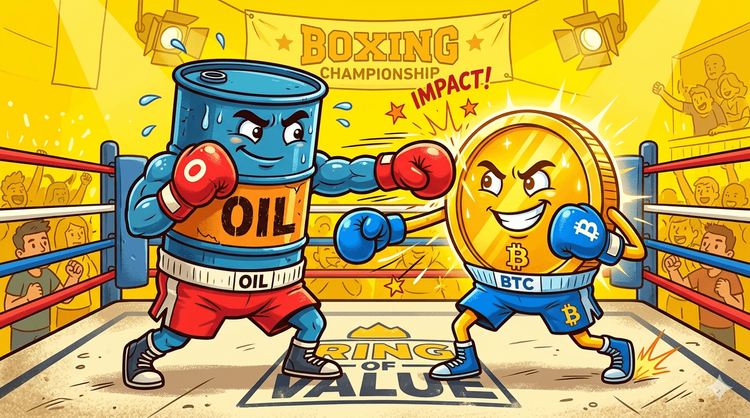
How the US-Iran War Could Affect Oil and Bitcoin Prices (Latest Analysis)
The outbreak of the US-Iran war on February 28, 2026, has provided an unprecedented real-time laboratory for understanding how geopolitical oil shocks interact with an increasingly institutionalized cryptocurrency market. This article examines the relationship between crude oil prices and Bitcoin throughout the conflict, analyzing price movements, correlation patterns, and the underlying transmission mechanisms.

OpenAI Wants to Write Its Own Rules|Rewire News Brief

Chaos Labs Exits, Who Will Pick Up Aave's Risk?
Stealthy Financial War? Iran Collects Strait Transit Fees in Stablecoin

OpenAlice: One Person, That's a Jane Street | Project Overview

The Small-Town Youth Labeling Big AI Models

Morning Report | Strategy increased its holdings by 4,871 BTC last week; Toss plans to develop its own blockchain and issue a native cryptocurrency; OpenAI's CFO privately questioned the timing of the IPO in 2026

Research: Stablecoins have a trading volume of 35 trillion a year, how much of it is real payment?

Galaxy Research: AI agents are giving rise to new species on the blockchain, how zero-human companies activate the financial flywheel

Data Research: How big is the liquidity gap between Hyperliquid and CME crude oil?

WEEX P2P now supports GHS, ETB & ZAR—Merchant Recruitment Now Open
To make crypto deposits easier, WEEX has officially launched its P2P trading platform and continues to expand fiat support. We're excited to announce that the Ghana Cedi (GHS), Ethiopian Birr (ETB) and South African Rand (ZAR) are now available on WEEX P2P!
Why Are GPU Prices Skyrocketing Out of Control?

How to Master Claude Cowork Completely?

70-Page Confidential Letter Alleges First Charge of 'Lying,' Altman Tells Board 'I Can't Change My Personality'
Is Altcoin Season Starting in 2026? What Traders Should Watch Now
Altcoin season signals are becoming clearer in 2026 as capital rotation across crypto markets accelerates. Here’s what traders should watch and how strategy-based participation is evolving in the current market cycle.
Bitcoin ETF Inflows in 2026: Impact on BTC Price and Crypto Market Trends
Bitcoin ETF inflows are reshaping BTC price trends and crypto market liquidity in 2026. See how institutional capital is influencing volatility, trading behavior, and portfolio allocation strategies across crypto markets.
Visa's Stablecoin Strategy: Cards, Settlement, and the Future
Surviving Crypto Bubbles: How to Trade Automatically with an AI Crypto Trading Bot
The cryptocurrency market is notorious for its extreme volatility. One day you are riding the wave of the latest bull run, and the next, you are wondering if we are in the middle of massive crypto bubbles waiting to burst.
How the US-Iran War Could Affect Oil and Bitcoin Prices (Latest Analysis)
The outbreak of the US-Iran war on February 28, 2026, has provided an unprecedented real-time laboratory for understanding how geopolitical oil shocks interact with an increasingly institutionalized cryptocurrency market. This article examines the relationship between crude oil prices and Bitcoin throughout the conflict, analyzing price movements, correlation patterns, and the underlying transmission mechanisms.


 App
App